
Articles | Volume 8, issue 1
https://doi.org/10.5194/gchron-8-143-2026
© Author(s) 2026. This work is distributed under
the Creative Commons Attribution 4.0 License.
the Creative Commons Attribution 4.0 License.
https://doi.org/10.5194/gchron-8-143-2026
© Author(s) 2026. This work is distributed under
the Creative Commons Attribution 4.0 License.
the Creative Commons Attribution 4.0 License.
Research article
| 
11 Mar 2026
Research article |
| 11 Mar 2026
| 11 Mar 2026
U-Pb dating of chrysocolla from supergene copper deposits in the Coastal Cordillera of northern Chile, Atacama Desert
Juan Ríos-Contesse
CORRESPONDING AUTHOR

Departmento de Ciencias Geológicas, Universidad Católica del Norte, Antofagasta, 1240000, Chile
Richard Albert
CORRESPONDING AUTHOR
Frankfurt Isotope and Element Research Center (FIERCE), Goethe University Frankfurt, Frankfurt, 60438, Germany
Department of Geosciences, Goethe University Frankfurt, Frankfurt, 60438, Germany
Benedikt Ritter-Prinz
CORRESPONDING AUTHOR
Institute of Geology and Mineralogy, University of Cologne, Cologne, 50674, Germany
Axel Gerdes
Frankfurt Isotope and Element Research Center (FIERCE), Goethe University Frankfurt, Frankfurt, 60438, Germany
Department of Geosciences, Goethe University Frankfurt, Frankfurt, 60438, Germany
Tibor Dunai
Institute of Geology and Mineralogy, University of Cologne, Cologne, 50674, Germany
Eduardo Campos
Departmento de Ciencias Geológicas, Universidad Católica del Norte, Antofagasta, 1240000, Chile
Related authors
No articles found.

Aratz Beranoaguirre, Leo J. Millonig, Richard Albert, Horst R. Marschall, and Axel Gerdes
Geochronology, 8, 495–509, https://doi.org/10.5194/gchron-8-495-2026, https://doi.org/10.5194/gchron-8-495-2026, 2026
Short summary
Short summary
We present a high-sensitivity laser ablation multi-collector inductively coupled plasma mass spectrometry (LA-MC-ICP-MS) method for in-situ U–Pb dating of garnet with under 1 ng g⁻¹ U. Using ion counters, geologically meaningful ages are obtained from garnets with up to three orders of magnitude less uranium than standard in-situ U–Pb dating. This expands garnet petrochronology to low-U metamorphic rocks.
Jesse B. Walters, Joshua M. Garber, Aratz Beranoaguirre, Leo J. Millonig, Axel Gerdes, Tobias Grützner, and Horst R. Marschall
Geochronology, 7, 309–333, https://doi.org/10.5194/gchron-7-309-2025, https://doi.org/10.5194/gchron-7-309-2025, 2025
Short summary
Short summary
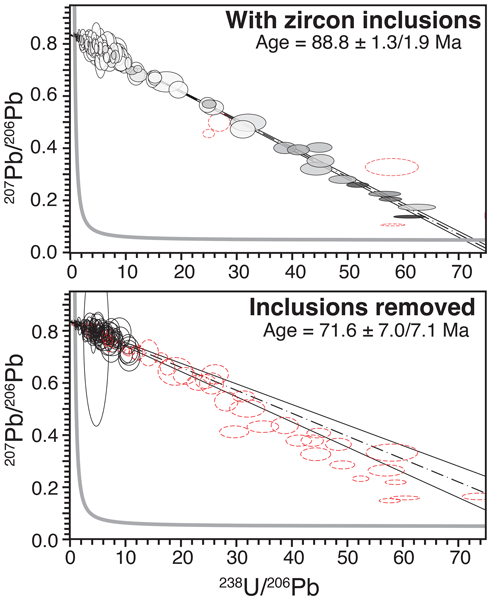
Garnet U–Pb dating is useful for dating geologic events. However, contamination by U-rich minerals included in garnet is a risk. Inclusions are often spotted by high-U spikes or large errors in the age. We dated garnets in metamorphic rocks and calculated ages 10–15 Myr older than expected, reflecting contamination by the mineral zircon. We provide recommendations for identifying contamination and suggest that the bulk dating of zircon inclusions in garnet may also provide valuable information.
Volker Wennrich, Julia Diederich-Leicher, Bárbara Nataly Blanco-Arrué, Christoph Büttner, Stefan Buske, Eduardo Campos Sepulveda, Tibor Dunai, Jacob Feller, Emma Galego, Ascelina Hasberg, Niklas Leicher, Damián Alejandro López, Jorge Maldonado, Alicia Medialdea, Lukas Ninnemann, Russell Perryman, Juan Cristóbal Ríos-Contesse, Benedikt Ritter, Stephanie Scheidt, Barbara Vargas-Machuca, Pritam Yogeshwar, and Martin Melles
Sci. Dril., 34, 1–20, https://doi.org/10.5194/sd-34-1-2025, https://doi.org/10.5194/sd-34-1-2025, 2025
Short summary
Short summary
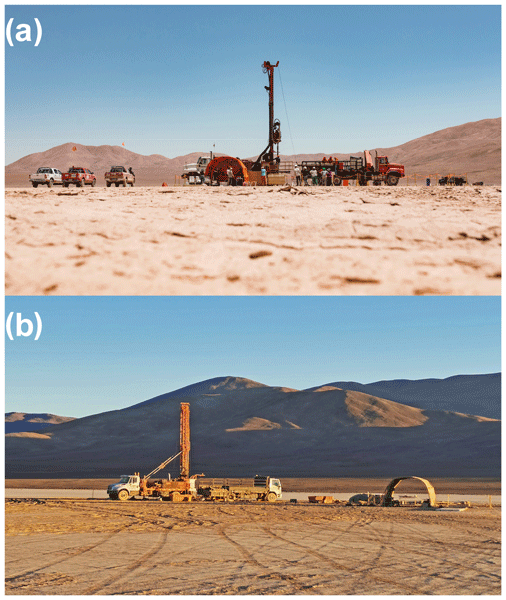
We present the results of comprehensive pre-site surveys and deep drillings in two clay pans in the central Atacama Desert of northern Chile, one of the driest deserts on Earth. The results of the site surveys as well as lithological and downhole-logging data of the deep-drilling operations highlight the potential of the sediment records from the PAG (Playa Adamito Grande) and Paranal clay pans to provide unprecedented information on the Neogene precipitation history of the hyperarid core of the Atacama Desert.
Aline Zinelabedin, Joel Mohren, Maria Wierzbicka-Wieczorek, Tibor Janos Dunai, Stefan Heinze, and Benedikt Ritter
Earth Surf. Dynam., 13, 257–276, https://doi.org/10.5194/esurf-13-257-2025, https://doi.org/10.5194/esurf-13-257-2025, 2025
Short summary
Short summary
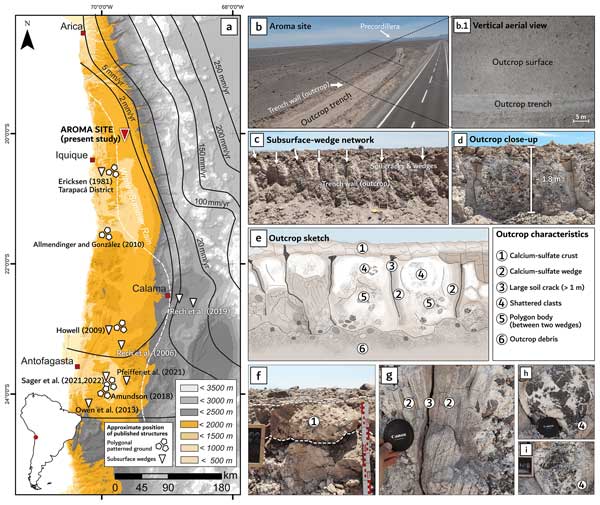
In order to interpret the formation processes of subsurface salt wedges and polygonal patterned grounds from the northern Atacama Desert, we present a multi-methodological approach. Due to the high salt content of the wedges, we suggest that their formation is dominated by subsurface salt dynamics requiring moisture. We assume that the climatic conditions during the wedge growth were slightly wetter than today, offering the potential to use the wedges as palaeoclimate archives.
Joel Mohren, Hendrik Wiesel, Wulf Amelung, L. Keith Fifield, Alexandra Sandhage-Hofmann, Erik Strub, Steven A. Binnie, Stefan Heinze, Elmarie Kotze, Chris Du Preez, Stephen G. Tims, and Tibor J. Dunai
Biogeosciences, 22, 1077–1094, https://doi.org/10.5194/bg-22-1077-2025, https://doi.org/10.5194/bg-22-1077-2025, 2025
Short summary
Short summary
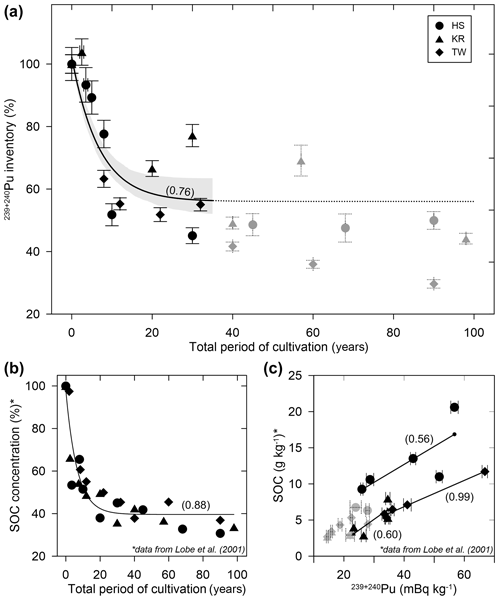
We measured concentrations of nuclear fallout in soil samples taken from arable land in South Africa. We find that during the second half of the 20th century, the data strongly correlate with the organic matter content of the soils. The finding implies that wind erosion strongly influenced the loss of organic matter in the soils we investigated. Furthermore, the exponential decline of fallout concentrations and organic matter content over time peaks shortly after native grassland is ploughed.
Benedikt Ritter, Richard Albert, Aleksandr Rakipov, Frederik M. Van der Wateren, Tibor J. Dunai, and Axel Gerdes
Geochronology, 5, 433–450, https://doi.org/10.5194/gchron-5-433-2023, https://doi.org/10.5194/gchron-5-433-2023, 2023
Short summary
Short summary
Chronological information on the evolution of the Namib Desert is scarce. We used U–Pb dating of silcretes formed by pressure solution during calcrete formation to track paleoclimate variability since the Late Miocene. Calcrete formation took place during the Pliocene with an abrupt cessation at 2.9 Ma. The end took place due to deep canyon incision which we dated using TCN exposure dating. With our data we correct and contribute to the Neogene history of the Namib Desert and its evolution.
Tibor János Dunai, Steven Andrew Binnie, and Axel Gerdes
Geochronology, 4, 65–85, https://doi.org/10.5194/gchron-4-65-2022, https://doi.org/10.5194/gchron-4-65-2022, 2022
Short summary
Short summary
We develop in situ-produced terrestrial cosmogenic krypton as a new tool to date and quantify Earth surface processes, the motivation being the availability of six stable isotopes and one radioactive isotope (81Kr, half-life 229 kyr) and of an extremely weathering-resistant target mineral (zircon). We provide proof of principle that terrestrial Krit can be quantified and used to unravel Earth surface processes.
Cited articles
Ague, J. J. and Brimhall, G. H.: Geochemical Modeling of Steady State Fluid Flow and Chemical Reaction during Supergene Enrichment of Porphyry Copper Deposits, Econ. Geol., 84, 506–528, https://doi.org/10.2113/gsecongeo.84.3.506, 1989.
Alpers, C. N. and Brimhall, G. H.: Middle Miocene climatic change in the Atacama Desert, northern Chile: Evidence from supergene mineralization at La Escondida, Geol. Soc. Am. Bull., 100, 1640–1656, https://doi.org/10.1130/0016-7606(1988)100<1640:MMCCIT>2.3.CO;2, 1988.
Amundson, R., Dietrich, W., Bellugi, D., Ewing, S., Nishiizumi, K., Chong, G., Owen, J., Finkel, R., Heimsath, A., Stewart, B., and Caffee, M.: Geomorphologic evidence for the late Pliocene onset of hyperaridity in the Atacama Desert, Geol. Soc. Am. Bull., 124, 1048–1070, https://doi.org/10.1130/B30445.1, 2012.
Arancibia, G., Matthews, S. J., and Pérez de Arce, C.: K-Ar and
Barra, F., Reich, M., Selby, D., Rojas, P., Simon, A., Salazar, E., and Palma, G.: Unraveling the origin of the Andean IOCG clan: A Re-Os isotope approach, Ore Geol. Rev., 81, 62–78, https://doi.org/10.1016/j.oregeorev.2016.10.016, 2017.
Bissig, T. and Riquelme, R.: Andean uplift and climate evolution in the southern Atacama Desert deduced from geomorphology and supergene alunite-group minerals, Earth Planet. Sc. Lett., 299, 447–457, https://doi.org/10.1016/j.epsl.2010.09.028, 2010.
Boric, R., Díaz, F., and Maksaev, V.: Geología y yacimientos metalíferos de la Región de Antofagasta, Servicio Nacional de Geología y Minería (SERNAGEOMIN), Santiago, Chile, 246 pp., 1990.
Bouzari, F. and Clark, A. H.: Anatomy, evolution, and metallogenic significance of the supergene orebody of the Cerro Colorado Porphyry Copper Deposit, I Región, Northern Chile, Econ. Geol., 97, 1701–1740, https://doi.org/10.2113/gsecongeo.97.8.1701, 2002.
Cameron, E. M., Leybourne, M. I., and Palacios, C.: Atacamite in the oxide zone of copper deposits in northern Chile: Involvement of deep formation waters?, Miner. Depos., 42, 205–218, https://doi.org/10.1007/s00126-006-0108-0, 2007.
Cameron, E. M., Leybourne, M. I., Reich, M., and Palacios, C.: Geochemical anomalies in northern Chile as a surface expression of the extended supergene metallogenesis of buried copper deposits, Geochem. Explor. Environ. Anal., 10, 157–169, https://doi.org/10.1144/1467-7873/09-228, 2010.
Carvajal, D., Mora-Carreño, M., Sandoval, C., and Espinoza, S.: Assessing fog water collection in the coastal mountain range of Antofagasta, Chile, J. Arid Environ., 198, 104679, https://doi.org/10.1016/j.jaridenv.2021.104679, 2022.
Cereceda, P., Osses, P., Larrain, H., Farías, M., Lagos, M., Pinto, R., and Schemenauer, R. S.: Advective, orographic and radiation fog in the Tarapacá region, Chile, Atmos. Res., 64, 261–271, https://doi.org/10.1016/S0169-8095(02)00097-2, 2002.
Cereceda, P., Larrain, H., Osses, P., Farías, M., and Egaña, I.: The spatial and temporal variability of fog and its relation to fog oases in the Atacama Desert, Chile, Atmos. Res., 87, 312–323, https://doi.org/10.1016/j.atmosres.2007.11.012, 2008.
Charrier, R., Pinto, L., and Rodríguez, M. P.: Tectonostratigraphic evolution of the Andean Orogen in Chile, Geol. Soc. Spec. Publ., 21–114, https://doi.org/10.1144/goch.3, 2007.
Charrier, R., Farías, M., and Maksaev, V.: Evolución tectónica, paleogeográfica y metalogénica durante el cenozoico en los Andes de Chile Norte y Central e implicaciones para las regiones adyacentes de Bolivia y Argentina, Rev. Asoc. Geol. Argent., 65, 5–35, 2009.
Chávez, W. X.: Supergene Oxidation of Copper Deposits: Zoning and Distribution of Copper Oxide Minerals, SEG Newsl., 41, 1–21, https://doi.org/10.5382/SEGnews.2000-41.fea, 2000.
Clarke, J. D. A.: Antiquity of aridity in the Chilean Atacama Desert, Geomorphology, 73, 101–114, https://doi.org/10.1016/j.geomorph.2005.06.008, 2006.
Coira, B., Davidson, J., Mpodozis, C., and Ramos, V.: Tectonic and magmatic evolution of the Andes of northern Argentina and Chile, Earth Sci. Rev., 18, 303–332, https://doi.org/10.1016/0012-8252(82)90042-3, 1982.
Craig, J. R. and Vaughan, D. J.: Ore microscopy and ore petrography, Wiley, New York, https://doi.org/10.1016/s0892-6875(96)90069-2, 1981.
Crane, M. J., Sharpe, J. L., and Williams, P. A.: Formation of chrysocolla and secondary copper phosphates in the highly weathered supergene zones of some Australian deposits, Rec. Aust. Museum, 53, 49–56, https://doi.org/10.3853/j.0067-1975.53.2001.1323, 2001.
del Río, C., García, J. L., Osses, P., Zanetta, N., Lambert, F., Rivera, D., Siegmund, A., Wolf, N., Cereceda, P., Larrain, H., and Lobos, F.: ENSO Influence on Coastal Fog-Water Yield in the Atacama Desert, Chile, Aerosol Air Qual. Res., 18, 127–144, https://doi.org/10.4209/aaqr.2017.01.0022, 2018.
De Putter, T., Mees, F., Decrée, S., and Dewaele, S.: Malachite, an indicator of major Pliocene Cu remobilization in a karstic environment (Katanga, Democratic Republic of Congo), Ore Geol. Rev., 38, 90–100, https://doi.org/10.1016/j.oregeorev.2010.07.001, 2010.
Dold, B.: Geochemical modeling of the exotic mineralization of the Exótica deposit at Chuquicamata, in: Proceedings of the XI Congreso Geológico Chileno, Antofagasta, Chile, 7–11 August 2006, 2, 247–250, 2006.
Dold, B., Caroline, M., and Lluís, P.: Genesis of the exotic chrysocolla – “copper pitch/wad” – atacamite/brochantite ore at the Exótica (Mina Sur) deposit, Chuquicamata, Chile, Miner. Depos., 58, 569–591, https://doi.org/10.1007/s00126-022-01147-7, 2023.
Dunai, T. J., González López, G. A., and Juez-Larré, J.: Oligocene-Miocene age of aridity in the Atacama Desert revealed by exposure dating of erosion-sensitive landforms, Geology, 33, 321–324, https://doi.org/10.1130/G21184.1, 2005.
Dunai, T. J., Melles, M., Quandt, D., Knief, C., and Amelung, W.: Whitepaper: Earth – Evolution at the dry limit, Glob. Planet. Change, 193, https://doi.org/10.1016/j.gloplacha.2020.103275, 2020.
Evenstar, L. A., Hartley, A. J., Stuart, F. M., Mather, A. E., Rice, C. M., and Chong, G.: Multiphase development of the Atacama Planation Surface recorded by cosmogenic 3He exposure ages: Implications for uplift and Cenozoic climate change in Western South America, Geology, 37, 27–30, https://doi.org/10.1130/G25437A.1, 2009.
Evenstar, L. A., Mather, A. E., Hartley, A. J., Stuart, F. M., Sparks, R. S. J., and Cooper, F. J.: Geomorphology on geologic timescales: Evolution of the late Cenozoic Pacific paleosurface in Northern Chile and Southern Peru, Earth Sci. Rev., 171, 1–27, https://doi.org/10.1016/j.earscirev.2017.04.004, 2017.
Evenstar, L., Dahlström, S., Hartley, A., Mccuaig, T. C., Mather, A., and Shaw, J.: Global constraints on exhumation rates during porphyry copper formation and supergene enrichment: applications to exploration as illustrated from the Central Andes, Miner. Depos., https://doi.org/10.1007/s00126-024-01303-1, 2024.
FAO: Arid zone forestry: A guide for field technicians, FAO Forestry Paper 20, Food and Agriculture Organization of the United Nations, Rome, 1989.
Frost, R. L. and Xi, Y.: Is chrysocolla (Cu,Al)2H2Si2O 5(OH)4⋅nH2O related to spertiniite Cu(OH)2? – A vibrational spectroscopic study, Vib. Spectrosc., 64, 33–38, https://doi.org/10.1016/j.vibspec.2012.10.001, 2013.
García, F.: Geología del Norte Grande de Chile, in: Symposium sobre el Geosinclinal Andino, No. 3, Sociedad Geológica de Chile, Santiago, Chile, 138, 1967.
Garreaud, R., Barichivich, J., Christie, D. A., and Maldonado, A.: Interannual variability of the coastal fog at Fray Jorge relict forests in semiarid Chile, J. Geophys. Res.-Biogeo., 113, 1–16, https://doi.org/10.1029/2008JG000709, 2008.
Gerdes, A. and Zeh, A.: Combined U-Pb and Hf isotope LA-(MC-)ICP-MS analyses of detrital zircons: Comparison with SHRIMP and new constraints for the provenance and age of an Armorican metasediment in Central Germany, Earth Planet. Sc. Lett., 249, 47–61, https://doi.org/10.1016/j.epsl.2006.06.039, 2006.
Gerdes, A. and Zeh, A.: Zircon formation versus zircon alteration – New insights from combined U-Pb and Lu-Hf in-situ LA-ICP-MS analyses, and consequences for the interpretation of Archean zircon from the Central Zone of the Limpopo Belt, Chem. Geol., 261, 230–243, https://doi.org/10.1016/j.chemgeo.2008.03.005, 2009.
Guilbert, J. M. and Park, C. F.: The Geology of Ore Deposits, W. H. Freeman and Company, New York, 1986.
Gustafson, L. B. and Hunt, J. P.: The porphyry copper deposit at El Salvador, Chile, Econ. Geol., 70, 857–912, https://doi.org/10.2113/gsecongeo.70.5.857, 1975.
Hariu, T., Arima, H., and Sugiyama, K.: The structure of hydrated copper-silicate gels, an analogue compound for natural chrysocolla, J. Mineral. Petrol. Sci., 108, 111–115, https://doi.org/10.2465/jmps.121022c, 2013.
Hartley, A. J. and Chong, G.: Late Pliocene age for the Atacama Desert: Implications for the desertification of western South America, Geology, 30, 43–46, https://doi.org/10.1130/0091-7613(2002)030<0043:LPAFTA>2.0.CO;2, 2002.
Hartley, A. J. and Rice, C. M.: Controls on supergene enrichment of porphyry copper deposits in the Central Andes: A review and discussion, Miner. Depos., 40, 515–525, https://doi.org/10.1007/s00126-005-0017-7, 2005.
Hartley, A. J., Mather, A. E., Jolley, E., and Turner, P.: Climatic controls an alluvial-fan activity, Coastal Cordillera, northern Chile, Geol. Soc. Spec. Publ., 251, 95–116, https://doi.org/10.1144/GSL.SP.2005.251.01.08, 2005.
Herrera, C. and Custodio, E.: Origin of waters from small springs located at the northern coast of Chile, in the vicinity of Antofagasta, Andean Geol., 41, 314–341, https://doi.org/10.5027/andgeoV41n2-a03, 2014.
Hervé, M., Sillitoe, R. H., Wong, C., Fernández, P., Crignola, F., Ipinza, M., and Urzúa, F.: Geologic Overview of the Escondida Porphyry Copper District, Northern Chile, in: Geology and Genesis of Major Copper Deposits and Districts of the World: A Tribute to Richard H. Sillitoe, edited by: Hedenquist, J. W., Harris, M., and Camus, F., Society of Economic Geologists, Littleton, USA, 55–78, https://doi.org/10.5382/SP.16.03, 2012.
Jordan, T. E., Kirk-Lawlor, N. E., Nicolás Blanco, P., Rech, J. A., and Cosentino, N. J.: Landscape modification in response to repeated onset of hyperarid paleoclimate states since 14 Ma, Atacama Desert, Chile, Geol. Soc. Am. Bull., 126, 1016–1046, https://doi.org/10.1130/B30978.1, 2014.
Juez-Larré, J., Kukowski, N., Dunai, T. J., Hartley, A. J., and Andriessen, P. A. M.: Thermal and exhumation history of the Coastal Cordillera arc of northern Chile revealed by thermochronological dating, Tectonophysics, 495, 48–66, https://doi.org/10.1016/j.tecto.2010.06.018, 2010.
Kahou, Z. S., Brichau, S., Poujol, M., Duchêne, S., Campos, E., Leisen, M., D'Abzac, F. X., Riquelme, R., and Carretier, S.: First U-Pb LA-ICP-MS in situ dating of supergene copper mineralization: case study in the Chuquicamata mining district, Atacama Desert, Chile, Miner. Depos., 56, 239–252, https://doi.org/10.1016/j.oregeorev.2021.104078, 2021.
Kojima, S., Astudillo, J., Rojo, J., Tristá, D., and Hayashi, K. I.: Ore mineralogy, fluid inclusion, and stable isotopic characteristics of stratiform copper deposits in the coastal Cordillera of northern Chile, Miner. Depos., 38, 208–216, https://doi.org/10.1007/s00126-002-0304-5, 2003.
Kojima, S., Trista-Aguilera, D., and Hayashi, K. I.: Genetic aspects of the manto-type copper deposits based on geochemical studies of North Chilean deposits, Resour. Geol., 59, 87–98, https://doi.org/10.1111/j.1751-3928.2008.00081.x, 2009.
Lafuente, B., Downs, R. T., Yang, H., and Stone, N.: The power of databases: The RRUFF project, Highlights Mineral. Crystallogr., 1–29, https://doi.org/10.1515/9783110417104-003, 2016.
Lambiel, F., Dold, B., Spangenberg, J. E., and Fontboté, L.: Neoformation of exotic copper minerals from gel-like precursors at the Exótica deposit, Chuquicamata, Chile, Miner. Depos., 58, 661–680, https://doi.org/10.1007/s00126-022-01148-6, 2023.
Larrain, H., Velásquez, F., Cereceda, P., Espejo, R., Pinto, R., Osses, P., and Schemenauer, R. S.: Fog measurements at the site “Falda Verde” north of Chañaral compared with other fog stations of Chile, Atmos. Res., 64, 273–284, https://doi.org/10.1016/S0169-8095(02)00098-4, 2002.
Lobos-Roco, F., Suárez, F., Aguirre-Correa, F., Keim, K., Aguirre, I., Vargas, C., Abarca, F., Ramírez, C., Escobar, R., Osses, P., and del Río, C.: Understanding inland fog and dew dynamics for assessing potential non-rainfall water use in the Atacama, J. Arid Environ., 221, 105125, https://doi.org/10.1016/j.jaridenv.2024.105125, 2024.
Maksaev, V. and Zentilli, M.: Chilean Strata-bound Cu- (Ag) deposits: an overview, in: Hydrothermal Iron Oxide Copper-Gold & Related Deposits: A Global Perspective, edited by: Porter, T. M., PGC Publishing, Adelaide, Australia, 185–205, 2002.
Maksaev, V., Munizaga, F., Fanning, M., Palacios, C., and Tapia, J.: SHRIMP U-Pb dating of the Antucoya porphyry copper deposit: New evidence for an Early Cretaceous porphyry-related metallogenic epoch in the Coastal Cordillera of northern Chile, Miner. Depos., 41, 637–644, https://doi.org/10.1007/s00126-006-0091-5, 2006.
Marsh, T. M., Einaudi, M. T., and McWilliams, M.:
Martinod, J., Regard, V., Riquelme, R., Aguilar, G., Guillaume, B., Carretier, S., Cortés-Aranda, J., Leanni, L., and Hérail, G.: Pleistocene uplift, climate and morphological segmentation of the Northern Chile coasts (24° S–32° S): Insights from cosmogenic 10Be dating of paleoshorelines, Geomorphology, 274, 78–91, https://doi.org/10.1016/j.geomorph.2016.09.010, 2016.
Mateo, L., Tornos, F., Hanchar, J. M., Villa, I. M., Stein, H. J., and Delgado, A.: The Montecristo mining district, northern Chile: the relationship between vein-like magnetite-(apatite) and iron oxide-copper–gold deposits, Miner. Depos., 58, 1023–1049, https://doi.org/10.1007/s00126-023-01172-0, 2023.
Maureira, I., Barra, F., Reich, M., and Palma, G.: Geology of the Altamira and Las Luces deposits, Coastal Cordillera, northern Chile: implications for the origin of stratabound Cu–(Ag) deposits, Miner. Depos., 58, 379–402, https://doi.org/10.1007/s00126-022-01132-0, 2022.
Morales-Leal, J. E., Campos, E., Kouzmanov, K., and Riquelme, R.: Alunite supergroup minerals from advanced argillic alteration assemblage in the southern Atacama Desert as indicators of paleo-hydrothermal and supergene environments, Miner. Depos., 58, 593–615, https://doi.org/10.1007/s00126-022-01149-5, 2023.
Moreton, S.: Copper-bearing silica gel from the walls of Tankardstown mine, Co. Waterford, Ireland, J. Russell Soc., 10, 10–17, 2007.
Mote, T. I., Becker, T. A., Renne, P., and Brimhall, G. H.: Chronology of exotic mineralization at El Salvador, Chile, by
Muñoz-Farías, S., Ritter, B., Dunai, T. J., Morales-Leal, J., Campos, E., Spikings, R., and Riquelme, R.: Geomorphological significance of the Atacama Pediplain as a marker for the climatic and tectonic evolution of the Andean forearc, between 26° to 28° S, Geomorphology, 420, 108504, https://doi.org/10.1016/j.geomorph.2022.108504, 2023.
Muñoz-Schick, M., Pinto, R., Mesa, A., and Moreira-Muñoz, A.: Fog oases during the El Niño Southern Oscillation 1997–1998, in the coastal hills south of Iquique, Tarapacá region, Chile, Rev. Chil. Hist. Nat., 74, 389–405, 2001.
Murray, R. C.: Isotopic composition of hydration water in gypsum, SEPM J. Sediment. Res., 34, 512–523, https://doi.org/10.1306/74d710d2-2b21-11d7-8648000102c1865d, 1964.
Newberg, D. W.: Geochemical implications of chrysocolla-bearing alluvial gravels, Econ. Geol., 62, 932–956, https://doi.org/10.1080/00206816909475091, 1967.
Oerter, E., Amundson, R., Heimsath, A., Jungers, M., Chong, G., and Renne, P.: Early to Middle Miocene climate in the Atacama Desert of Northern Chile, Palaeogeogr. Palaeoclimatol. Palaeoecol., 441, 890–900, https://doi.org/10.1016/j.palaeo.2015.10.038, 2016.
Oliveros, V., Vásquez, P., Creixell, C., Lucassen, F., Ducea, M. N., Ciocca, I., González, J., Espinoza, M., Salazar, E., Coloma, F., and Kasemann, S. A.: Lithospheric evolution of the Pre- and Early Andean convergent margin, Chile, Gondwana Res., 80, 202–227, https://doi.org/10.1016/j.gr.2019.11.002, 2020.
Palacios, C., Ramírez, L. E., Townley, B., Solari, M., and Guerra, N.: The role of the Antofagasta-Calama Lineament in ore deposit deformation in the Andes of northern Chile, Miner. Depos., 42, 301–308, https://doi.org/10.1007/s00126-006-0113-3, 2007.
Palacios, C., Rouxel, O., Reich, M., Cameron, E. M., and Leybourne, M. I.: Pleistocene recycling of copper at a porphyry system, Atacama Desert, Chile: Cu isotope evidence, Miner. Depos., 46, 1–7, https://doi.org/10.1007/s00126-010-0315-6, 2011.
Perelló, J., Martini, R., Arcos, R., and Muhr, R.: Buey Muerto: Porphyry Copper Mineralization in the Early Cretaceous Arc of Northern Chile, in: Proceedings of the X Congreso Geológico Chileno, Concepción, Chile, 6–10 October 2003, 1, 2003.
Perelló, J., Muhr, R., Mora, R., Martínez, E., Brockway, H., Artal, J., Mpodozis, C., Munchmeyer, C., Clifford, J., Acuña, E., Swaneck, T., Valenzuela, E., and Argandoña, R.: Wealth Creation through Exploration in a Mature Terrain: The Case History of the Centinela District, Northern Chile Porphyry Copper Belt, Econ. Geol. Spec. Publ., 15, 229–252, https://doi.org/10.5382/SP.15.1.13, 2010.
Placzek, C., Granger, D. E., Matmon, A., Quade, J., and Ryb, U.: Geomorphic process rates in the central atacama desert, Chile: Insights from cosmogenic nuclides and implications for the onset of hyperaridity, Am. J. Sci., 314, 1462–1512, https://doi.org/10.2475/10.2014.03, 2014.
Placzek, C. J., Matmon, A., Granger, D. E., Quade, J., and Niedermann, S.: Evidence for active landscape evolution in the hyperarid Atacama from multiple terrestrial cosmogenic nuclides, Earth Planet. Sc. Lett., 295, 12–20, https://doi.org/10.1016/j.epsl.2010.03.006, 2010.
Quezada, J., Cerda, J. L., and Jensen, A.: Efectos de la tectónica y el clima en la configuración morfológica del relieve costero del norte de Chile, Andean Geol., 37, 78–109, https://doi.org/10.5027/andgeov37n1-a04, 2010.
Rech, J. A., Quade, J., and Hart, W. S.: Isotopic evidence for the source of Ca and S in soil gypsum, anhydrite and calcite in the Atacama Desert, Chile, Geochim. Cosmochim. Ac., 67, 575–586, https://doi.org/10.1016/S0016-7037(02)01175-4, 2003.
Rech, J. A., Currie, B. S., Shullenberger, E. D., Dunagan, S. P., Jordan, T. E., Blanco, N., Tomlinson, A. J., Rowe, H. D., and Houston, J.: Evidence for the development of the Andean rain shadow from a Neogene isotopic record in the Atacama Desert, Chile, Earth Planet. Sc. Lett., 292, 371–382, https://doi.org/10.1016/j.epsl.2010.02.004, 2010.
Reich, M., Palacios, C., Parada, M. A., Fehn, U., Cameron, E. M., Leybourne, M. I., and Zúñiga, A.: Atacamite formation by deep saline waters in copper deposits from the Atacama Desert, Chile: Evidence from fluid inclusions, groundwater geochemistry, TEM, and 36Cl data, Miner. Depos., 43, 663–675, https://doi.org/10.1007/s00126-008-0184-4, 2008.
Reich, M., Palacios, C., Vargas, G., Luo, S., Cameron, E. M., Leybourne, M. I., Parada, M. A., Zúñiga, A., and You, C.-F.: Supergene enrichment of copper deposits since the onset of modern hyperaridity in the Atacama Desert, Chile, Miner. Depos., 44, 497–504, https://doi.org/10.1007/s00126-009-0229-3, 2009.
Riquelme, R., Tapia, M., Campos, E., Mpodozis, C., Carretier, S., González, R., Muñoz, S., Fernández-Mort, A., Sanchez, C., and Marquardt, C.: Supergene and exotic Cu mineralization occur during periods of landscape stability in the Centinela Mining District, Atacama Desert, Basin Res., 30, 395–425, https://doi.org/10.1111/bre.12258, 2018.
Ritter, B., Stuart, F. M., Binnie, S. A., Gerdes, A., Wennrich, V., and Dunai, T. J.: Neogene fluvial landscape evolution in the hyperarid core of the Atacama Desert, Sci. Rep., 8, 1–16, https://doi.org/10.1038/s41598-018-32339-9, 2018a.
Ritter, B., Binnie, S. A., Stuart, F. M., Wennrich, V., and Dunai, T. J.: Evidence for multiple Plio-Pleistocene lake episodes in the hyperarid Atacama Desert, Quat. Geochronol., 44, 1–12, https://doi.org/10.1016/j.quageo.2017.11.002, 2018b.
Sáez, A., Cabrera, L., Garcés, M., van den Bogaard, P., Jensen, A., and Gimeno, D.: The stratigraphic record of changing hyperaridity in the Atacama desert over the last 10 Ma, Earth Planet. Sc. Lett., 355–356, 32–38, https://doi.org/10.1016/j.epsl.2012.08.029, 2012.
Sato, T.: Manto Type Copper Deposit in Chile-a Review, Bull. Geol. Surv., 35, 565–582, 1984.
Scheuber, E. and González, G.: Tectonics of the Jurassic-Early Cretaceous magmatic arc of the north Chilean Coastal Cordillera (22°–26° S): A story of crustal deformation along a convergent plate boundary, Tectonics, 18, 895–910, https://doi.org/10.1029/1999TC900024, 1999.
Scheuber, E., Bogdanic, T., Jensen, A., and Reutter, K.-J.: Tectonic Development of the North Chilean Andes in Relation to Plate Convergence and Magmatism Since the Jurassic, Tectonics South. Cent. Andes, 121–139, https://doi.org/10.1007/978-3-642-77353-2_9, 1994.
Schwartz, G. M.: Paragenesis of the oxidized ores of copper, Econ. Geol., 29, 55–75, https://doi.org/10.2113/gsecongeo.29.1.55, 1934.
Schween, J. H., del Rio, C., García, J.-L., Osses, P., Westbrook, S., and Löhnert, U.: Life cycle of stratocumulus clouds over 1 year at the coast of the Atacama Desert, Atmos. Chem. Phys., 22, 12241–12267, https://doi.org/10.5194/acp-22-12241-2022, 2022.
Shaw, J. M., Evenstar, L., Cooper, F. J., Adams, B. A., Boyce, A. J., Hofmann, F., and Farley, K. A.: A Rusty Record of Weathering and Groundwater Movement in the Hyperarid Central Andes, Geochem. Geophys. Geosyst., 22, 1–24, https://doi.org/10.1029/2021gc009759, 2021.
Sillitoe, R. H.: Supergene Oxidized and Enriched Porphyry Copper and Related Deposits, in: One Hundredth Anniversary Volume, edited by: Hedenquist, J. W., Thompson, J. F. H., Goldfarb, R. J., and Richards, J. P., Society of Economic Geologists, Littleton, Colorado, USA, 723–768, https://doi.org/10.5382/AV100.22, 2005.
Sillitoe, R. H. and McKee, E. H.: Age of Supergene Oxidation and Enrichment in the Chilean Porphyry Copper Province, Econ. Geol., 91, 164–179, https://doi.org/10.2113/gsecongeo.91.1.164, 1996.
Sofer, Z.: Isotopic composition of hydration water in gypsum, Geochim. Cosmochim. Ac., 42, 1141–1149, https://doi.org/10.1016/0016-7037(78)90109-6, 1978.
Throop, A. H. and Buseck, P. R.: Nature and Origin of Black Chrysocolla at the Inspiration Mine, Arizona, Econ. Geol., 66, 1168–1175, https://doi.org/10.2113/gsecongeo.66.8.1168, 1971.
Torpy, A., Fan, R., Wilson, N., MacRae, C., and Austin, P.: Quantifying Trace Element Variations in Chrysocolla by Clustering FEG-EPMA Hyperspectral Maps, Microsc. Microanal., 27, 1870–1872, https://doi.org/10.1017/s1431927621006826, 2021.
Trista, D. and Kojima, S.: Mineral paragenesis and fluid inclusions of some pluton-hosted vein-type copper deposits in the Coastal Cordillera, northern Chile, Resour. Geol., 53, 21–28, https://doi.org/10.1111/j.1751-3928.2003.tb00154.x, 2003.
Tristá-Aguilera, D., Barra, F., Ruiz, J., Morata, D., Talavera-Mendoza, O., Kojima, S., and Ferraris, F.: Re-Os isotope systematics for the Lince-Estefanía deposit: Constraints on the timing and source of copper mineralization in a stratabound copper deposit, Coastal Cordillera of Northern Chile, Miner. Depos., 41, 99–105, https://doi.org/10.1007/s00126-006-0048-8, 2006.
Vasconcelos, P. M.: K-Ar and (
Vivallo, W. and Henríquez, F.: Génesis común de los yacimientos estratoligados y vetiformes de cobre del Jurásico Medio a Superior en la Cordillera de la Costa, Región de Antofagasta, Chile, Rev. Geol. Chile, 25, 199–228, 1998.
Warren, I., Archibald, D. A., and Simmons, S. F.: Geochronology of epithermal Au-Ag mineralization, magmatic-hydrothermal alteration, and supergene weathering in the El Peñón district, Northern Chile, Econ. Geol., 103, 851–864, https://doi.org/10.2113/gsecongeo.103.4.851, 2008.
Wörner, G., Uhlig, D., Kohler, I., and Seyfried, H.: Evolution of the West Andean Escarpment at 18° S (N. Chile) during the last 25 Ma: Uplift, erosion and collapse through time, Tectonophysics, 345, 183–198, https://doi.org/10.1016/S0040-1951(01)00212-8, 2002.
Yates, D. M., Joyce, K. J., and Heaney, P. J.: Complexation of copper with polymeric silica in aqueous solution, Appl. Geochemistry, 13, 235–241, https://doi.org/10.1016/S0883-2927(97)00062-0, 1998.
Short summary
This study dated chrysocolla, a supergene copper mineral, from copper deposits hosted in the Coastal Cordillera of northern Chile, with ages between 8.0 and 0.045 million years. Results show that from the Late Miocene to the Pleistocene, short periods of moisture triggered mineral formation despite the hyperarid climate. These wetter periods were likely caused by occasional rainfall or stronger coastal fog, causing repeated pulses of supergene activity in the Coastal Cordillera.
This study dated chrysocolla, a supergene copper mineral, from copper deposits hosted in the...


