
Articles | Volume 8, issue 3
https://doi.org/10.5194/gchron-8-511-2026
© Author(s) 2026. This work is distributed under
the Creative Commons Attribution 4.0 License.
the Creative Commons Attribution 4.0 License.
https://doi.org/10.5194/gchron-8-511-2026
© Author(s) 2026. This work is distributed under
the Creative Commons Attribution 4.0 License.
the Creative Commons Attribution 4.0 License.
Research article
| 
11 Sep 2026
Research article |
| 11 Sep 2026
| 11 Sep 2026
Challenges of initial Thorium and Approaches to Robust Speleothem Age Models: A case study from the Yucatán peninsula, Mexico
Nils Schorndorf
Institute of Environmental Physics, Heidelberg University, 69120 Heidelberg, Germany
Institute of Earth Sciences, Heidelberg University, 69120 Heidelberg, Germany
Sophie F. Warken
CORRESPONDING AUTHOR

Institute of Environmental Physics, Heidelberg University, 69120 Heidelberg, Germany
Institute of Earth Sciences, Heidelberg University, 69120 Heidelberg, Germany
René Eichstädter
Institute of Environmental Physics, Heidelberg University, 69120 Heidelberg, Germany
deceased
Aaron S. Mielke
Institute of Environmental Physics, Heidelberg University, 69120 Heidelberg, Germany
Institute of Earth Sciences, Heidelberg University, 69120 Heidelberg, Germany
Jerónimo Avilés Olguín
Museo del Desierto, Saltillo 25022, Coahuila, Mexico
Grupo Espeleológico Ajau, Merida, Yucatán, Mexico
Frank Keppler
Institute of Earth Sciences, Heidelberg University, 69120 Heidelberg, Germany
Dominik Hennhöfer
Hessisches Landesmuseum Darmstadt, Friedensplatz 1, 64283 Darmstadt, Germany
Fátima Tec Pool
Grupo Espeleológico Ajau, Merida, Yucatán, Mexico
Department of Comparative Religion, Faculty of Arts, Comenius University, Bratislava, Slovakia
Carlos Evia
Grupo Espeleológico Ajau, Merida, Yucatán, Mexico
María José Gómez
Grupo Espeleológico Ajau, Merida, Yucatán, Mexico
Wolfgang Stinnesbeck
Institute of Earth Sciences, Heidelberg University, 69120 Heidelberg, Germany
Norbert Frank
Institute of Environmental Physics, Heidelberg University, 69120 Heidelberg, Germany
Institute of Earth Sciences, Heidelberg University, 69120 Heidelberg, Germany
Related authors
No articles found.
Hannah F. Janecke, Sahra Greve, and Norbert Frank
EGUsphere, https://doi.org/10.5194/egusphere-2026-5095, https://doi.org/10.5194/egusphere-2026-5095, 2026
This preprint is open for discussion and under review for Ocean Science (OS).
Short summary
Short summary
The Arctic Ocean, vital for global circulation, is affected by climate warming. This study analyzes Uranium Isotopes in water samples from six stations of the SAS-Oden 2021 expedition. Enriched 234U levels, tracing freshwater input, in surface water decrease with circulation and mixing. δ234U values in surface waters are lower than in a 2007 study, indicating stronger downward mixing due to climate change. Deeper waters match global and 2001 Arctic means, unaffected by surface changes.
Amelie T. Steinberg and Norbert Frank
EGUsphere, https://doi.org/10.5194/egusphere-2026-5117, https://doi.org/10.5194/egusphere-2026-5117, 2026
This preprint is open for discussion and under review for Biogeosciences (BG).
Short summary
Short summary
This manuscript presents a first global estimate of carbon burial through cold-water coral (CWC) ecosystems, addressing a critical gap in understanding marine carbon sequestration. The study compiles data from 32 published studies and uses Monte-Carlo simulations to estimate global carbon accumulation rates. The manuscript is well-structured and aligns with the scope of Biogeoscience, which focuses on biogeochemical processes in the Earth system.
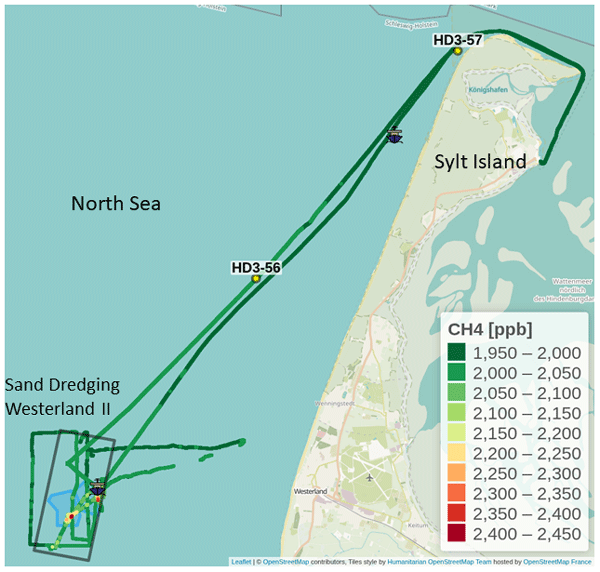
Martina Schmidt, Ingeborg Bussmann, Sarah J. E. Reith, Annika Palzer, Cedric Couret, Frank Keppler, Daniela Polag, Lasse Sander, Moritz Schroll, and Julia B. Wietzel
Biogeosciences, 23, 5095–5115, https://doi.org/10.5194/bg-23-5095-2026, https://doi.org/10.5194/bg-23-5095-2026, 2026
Short summary
Short summary
Methane (CH4) measurements near a sand dredging site off Sylt (North Sea) revealed elevated concentrations in both air and water, particularly during summer. CH4 fluxes were significantly higher at the dredging site compared to surrounding areas. Isotopic signatures suggest a microbial origin. These findings indicate that coastal sand extraction may represent a previously unaccounted source of atmospheric CH4.
Sahra Greve, Norbert Frank, Sophie Warken, Paolo Montagna, Amos Winter, Serguei Damián Rico-Esenaro, Juan P. Carricart-Ganivet, Joan-Albert Sanchez-Cabeza, Ana Carolina Ruiz-Fernández, Carlos Alonso-Hernández, Miguel Gomez–Batista, Marco Taviani, and Steffen Hetzinger
EGUsphere, https://doi.org/10.5194/egusphere-2026-3519, https://doi.org/10.5194/egusphere-2026-3519, 2026
Short summary
Short summary
Coral skeletons record subtle changes in the uranium composition of seawater, providing a window into past environmental conditions. By comparing different coral species, colonies, and sampling methods, we show that corals can reliably detect very small changes (0.6 ‰) associated with freshwater input and climate variability. This makes them a valuable tool for reconstructing past changes in reef and coastal environments.
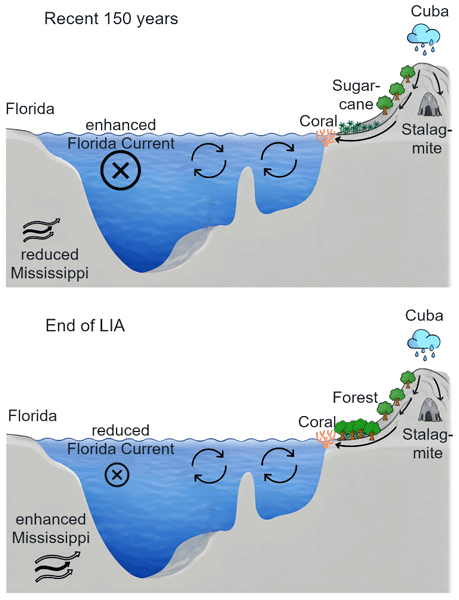
Sahra Greve, Norbert Frank, Paolo Montagna, Carlos Manuel Alonso-Hernández, Miguel Gomez-Batista, Eric Douville, and Sophie Warken
Ocean Sci., 22, 1529–1544, https://doi.org/10.5194/os-22-1529-2026, https://doi.org/10.5194/os-22-1529-2026, 2026
Short summary
Short summary
We studied uranium isotopes in a 237-year-old coral from Cuba to understand how freshwater influences the ocean. The coral’s mostly stable uranium values vary with regional rainfall. During the late 1700s, variability increased sharply, revealing stronger distant river uranium input or changes in local terrestrial uranium sources. These findings show that corals Uranium ratios record past climate and ocean changes with high precision.
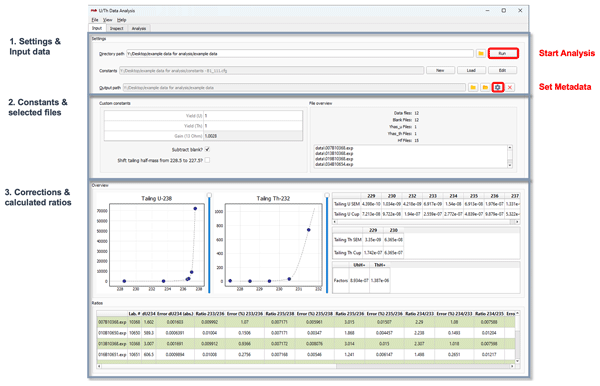
Inga Kristina Kerber, Fabian Kontor, Aaron Mielke, Sophie Warken, and Norbert Frank
Geochronology, 7, 1–13, https://doi.org/10.5194/gchron-7-1-2025, https://doi.org/10.5194/gchron-7-1-2025, 2025
Short summary
Short summary
A stand-alone data analysis application for Th/U dating on multi-collector inductively coupled plasma mass spectrometers features a Python-based algorithm with a graphical user interface. It handles data treatment, corrections, age calculus, and error estimation and supports various detector layouts including Faraday and electron multiplier detectors. Key features include reproducibility, user-friendly reanalysis, and automated data storage. A case study demonstrates the software’s performance.
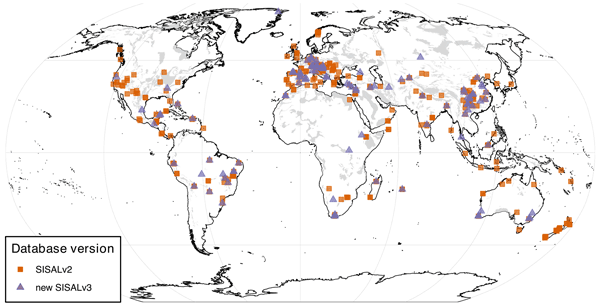
Nikita Kaushal, Franziska A. Lechleitner, Micah Wilhelm, Khalil Azennoud, Janica C. Bühler, Kerstin Braun, Yassine Ait Brahim, Andy Baker, Yuval Burstyn, Laia Comas-Bru, Jens Fohlmeister, Yonaton Goldsmith, Sandy P. Harrison, István G. Hatvani, Kira Rehfeld, Magdalena Ritzau, Vanessa Skiba, Heather M. Stoll, József G. Szűcs, Péter Tanos, Pauline C. Treble, Vitor Azevedo, Jonathan L. Baker, Andrea Borsato, Sakonvan Chawchai, Andrea Columbu, Laura Endres, Jun Hu, Zoltán Kern, Alena Kimbrough, Koray Koç, Monika Markowska, Belen Martrat, Syed Masood Ahmad, Carole Nehme, Valdir Felipe Novello, Carlos Pérez-Mejías, Jiaoyang Ruan, Natasha Sekhon, Nitesh Sinha, Carol V. Tadros, Benjamin H. Tiger, Sophie Warken, Annabel Wolf, Haiwei Zhang, and SISAL Working Group members
Earth Syst. Sci. Data, 16, 1933–1963, https://doi.org/10.5194/essd-16-1933-2024, https://doi.org/10.5194/essd-16-1933-2024, 2024
Short summary
Short summary
Speleothems are a popular, multi-proxy climate archive that provide regional to global insights into past hydroclimate trends with precise chronologies. We present an update to the SISAL (Speleothem Isotopes
Synthesis and AnaLysis) database, SISALv3, which, for the first time, contains speleothem trace element records, in addition to an update to the stable isotope records available in previous versions of the database, cumulatively providing data from 365 globally distributed sites.
Synthesis and AnaLysis) database, SISALv3, which, for the first time, contains speleothem trace element records, in addition to an update to the stable isotope records available in previous versions of the database, cumulatively providing data from 365 globally distributed sites.
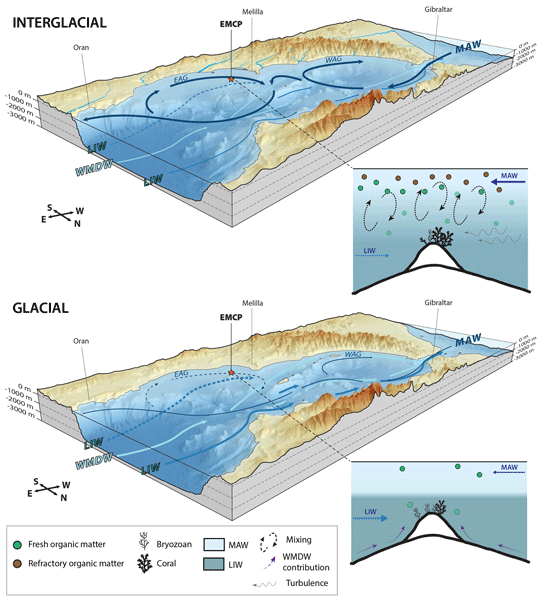
Robin Fentimen, Eline Feenstra, Andres Rüggeberg, Efraim Hall, Valentin Rime, Torsten Vennemann, Irka Hajdas, Antonietta Rosso, David Van Rooij, Thierry Adatte, Hendrik Vogel, Norbert Frank, and Anneleen Foubert
Clim. Past, 18, 1915–1945, https://doi.org/10.5194/cp-18-1915-2022, https://doi.org/10.5194/cp-18-1915-2022, 2022
Short summary
Short summary
The investigation of a 9 m long sediment core recovered at ca. 300 m water depth demonstrates that cold-water coral mound build-up within the East Melilla Coral Province (southeastern Alboran Sea) took place during both interglacial and glacial periods. Based on the combination of different analytical methods (e.g. radiometric dating, micropaleontology), we propose that corals never thrived but rather developed under stressful environmental conditions.
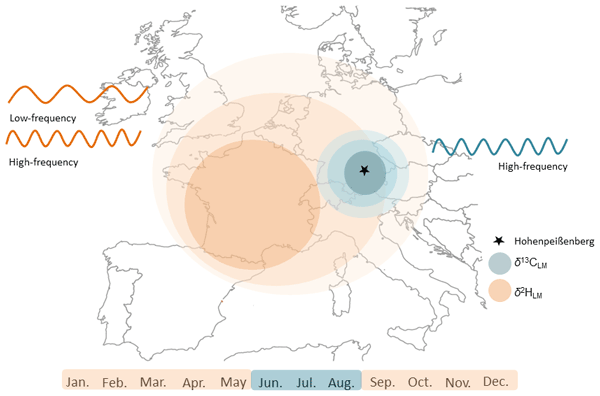
Anna Wieland, Markus Greule, Philipp Roemer, Jan Esper, and Frank Keppler
Clim. Past, 18, 1849–1866, https://doi.org/10.5194/cp-18-1849-2022, https://doi.org/10.5194/cp-18-1849-2022, 2022
Short summary
Short summary
We examined annually resolved stable carbon and hydrogen isotope ratios of wood lignin methoxy groups of beech trees growing in temperate, low elevation environments. Here, carbon isotope ratios reveal highest correlations with regional summer temperatures while hydrogen isotope ratios correlate more strongly with large-scale temperature changes. By combining the dual isotope ratios of wood lignin methoxy groups, a proxy for regional- to subcontinental-scale temperature patterns can be applied.
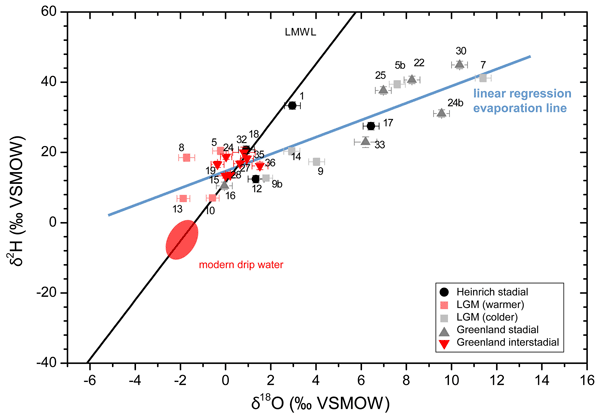
Sophie F. Warken, Therese Weißbach, Tobias Kluge, Hubert Vonhof, Denis Scholz, Rolf Vieten, Martina Schmidt, Amos Winter, and Norbert Frank
Clim. Past, 18, 167–181, https://doi.org/10.5194/cp-18-167-2022, https://doi.org/10.5194/cp-18-167-2022, 2022
Short summary
Short summary
The analysis of fluid inclusions from a Puerto Rican speleothem provides quantitative information about past rainfall conditions and temperatures during the Last Glacial Period, when the climate was extremely variable. Our data show that the region experienced a climate that was generally colder and drier. However, we also reconstruct intervals when temperatures reached nearly modern values, and convective activity was comparable to or only slightly weaker than the present day.
Cited articles
Akers, P. D., Brook, G. A., Railsback, L. B., Liang, F. Y., Iannone, G., Webster, J. W., Reeder, P. P., Cheng, H., and Edwards, R. L.: An extended and higher-resolution record of climate and land use from stalagmite MC01 from Macal Chasm, Belize, revealing connections between major dry events, overall climate variability, and Maya sociopolitical changes, Palaeogeogr. Palaeocl., 459, 268–288, https://doi.org/10.1016/j.palaeo.2016.07.007, 2016.
Akers, P. D., Brook, G. A., Railsback, L. B., Cherkinksy, A., Liang, F., Ebert, C. E., Hoggarth, J. A., Awe, J. J., Cheng, H., and Edwards, R. L.: Integrating U-Th, 14C, and 210 Pb methods to produce a chronologically reliable isotope record for the Belize River Valley Maya from a low-uranium stalagmite, The Holocene, 29, 1234–1248, https://doi.org/10.1177/0959683619838047, 2019.
Arienzo, M. M., Swart, P. K., Pourmand, A., Broad, K., Clement, A. C., Murphy, L. N., Vonhof, H. B., and Kakuk, B.: Bahamian speleothem reveals temperature decrease associated with Heinrich stadials, Earth Planet. Sci. Lett., 430, 377–386, https://doi.org/10.1016/j.epsl.2015.08.035, 2015.
Baker, A., Hartmann, A., Duan, W., Hankin, S., Comas-Bru, L., Cuthbert, M. O., Treble, P. C., Banner, J., Genty, D., and Baldini, L. M.: Global analysis reveals climatic controls on the oxygen isotope composition of cave drip water, Nat. Commun. 10, 2984, https://doi.org/10.1038/s41467-019-11027-w, 2019.
Beck, J. W., Richards, D. A., Edwards, R. L., Silverman, B. W., Smart, P. L., Donahue, D. J., Hererra-Osterheld, S., Burr, G. S., Calsoyas, L., Jull, A. J., and Biddulph, D.: Extremely large variations of atmospheric 14C concentration during the last glacial period, Science, 292, 2453–2458, https://doi.org/10.1126/science.1056649, 2001.
Beisel, E., Therre, S., Wienberg, C., Friedrich, R., and Frank, N.: Status report of the Heidelberg Radiocarbon Laboratory: Precision and application in Mauritanian cold-water corals over the last 30,000 years, Radiocarbon, 67, 450–460, 2025.
Blaauw, M. and Christen, J. A.: Flexible paleoclimate age-depth models using an autoregressive gamma process, Bayesian Anal., 6, 457–474, https://doi.org/10.1214/11-BA618, 2011.
Blaauw, M., Christen, J. A., Lopez, M. A. A., Vazquez, J. E., Belding, T., Theiler, J., Gough, B., Karney, C., Rcpp, L., and Blaauw, M. M.: Package “rbacon”, R package documentation, https://doi.org/10.32614/CRAN.package.rbacon, 2021.
Breitenbach, S. F. M., Rehfeld, K., Goswami, B., Baldini, J. U. L., Ridley, H. E., Kennett, D. J., Prufer, K. M., Aquino, V. V., Asmerom, Y., Polyak, V. J., Cheng, H., Kurths, J., and Marwan, N.: COnstructing Proxy Records from Age models (COPRA), Clim. Past, 8, 1765–1779, https://doi.org/10.5194/cp-8-1765-2012, 2012.
Carolin, S. A., Cobb, K. M., Adkins, J. F., Clark, B., Conroy, J. L., Lejau, S., Malang, J., and Tuen, A. A.: Varied response of western Pacific hydrology to climate forcings over the last glacial period, Science, 340, 1564–1566, 2013.
Cheng, H., Edwards, R. L., Shen, C.-C., Polyak, V. J., Asmerom, Y., Woodhead, J., Hellstrom, J., YWang, Y., Kong, X., Spötl, C., Wang, X., and Alexander, E. C.: Improvements in 230Th dating, 230Th and 234U half-life values, and U–Th isotopic measurements by multi-collector inductively coupled plasma mass spectrometry, Earth Planet. Sci. Lett., 371, 82–91, https://doi.org/10.1016/j.epsl.2013.04.006, 2013.
Comas-Bru, L., Rehfeld, K., Roesch, C., Amirnezhad-Mozhdehi, S., Harrison, S. P., Atsawawaranunt, K., Ahmad, S. M., Brahim, Y. A., Baker, A., Bosomworth, M., Breitenbach, S. F. M., Burstyn, Y., Columbu, A., Deininger, M., Demény, A., Dixon, B., Fohlmeister, J., Hatvani, I. G., Hu, J., Kaushal, N., Kern, Z., Labuhn, I., Lechleitner, F. A., Lorrey, A., Martrat, B., Novello, V. F., Oster, J., Pérez-Mejías, C., Scholz, D., Scroxton, N., Sinha, N., Ward, B. M., Warken, S., Zhang, H., and SISAL Working Group members: SISALv2: a comprehensive speleothem isotope database with multiple age–depth models, Earth Syst. Sci. Data, 12, 2579–2606, https://doi.org/10.5194/essd-12-2579-2020, 2020.
Denniston, R. F. and Luetscher, M.: Speleothems as high-resolution paleoflood archives, Quaternary Sci.Rev., 170, 1–13, 2017.
Domínguez-Villar, D., Baker, A., Fairchild, I. J., and Edwards, R. L.: A method to anchor floating chronologies in annually laminated speleothems with U–Th dates, Quaternary Geochronol., 14, 57–66, https://doi.org/10.1016/j.quageo.2012.04.019, 2012.
Douglas, P. M., Pagani, M., Canuto, M. A., Brenner, M., Hodell, D. A., Eglinton, T. I., and Curtis, J. H.: Drought, agricultural adaptation, and sociopolitical collapse in the Maya Lowlands, P. Natl. Acad. Sci. USA, 112, 5607–5612, https://doi.org/10.1073/pnas.1419133112, 2015.
Douglas, P. M. J., Demarest, A. A., Brenner, M., and Canuto, M. A.: Impacts of Climate Change on the Collapse of Lowland Maya Civilization, Annu. Rev. Earth Pl. Sc., 44, 613–645, https://doi.org/10.1146/annurev-earth-060115-012512, 2016.
Douville, E., Sallé, E., Frank, N., Eisele, M., Pons-Branchu, E., and Ayrault, S.: Rapid and accurate U–Th dating of ancient carbonates using inductively coupled plasma-quadrupole mass spectrometry, Chem. Geol., 272, 1–11, https://doi.org/10.1016/j.chemgeo.2010.01.007, 2010.
Fairchild, I. J. and Baker, A.: Speleothem science: from process to past environments, John Wiley & Sons, ISBN 978-1-4051-9620-8, 2012.
Faraji, M., Borsato, A., Frisia, S., Hellstrom, J. C., Lorrey, A., Hartland, A., Greig, A., and Mattey, D. P.: Accurate dating of stalagmites from low seasonal contrast tropical Pacific climate using Sr 2D maps, fabrics and annual hydrological cycles, Sci. Rep., 11, 2178, https://doi.org/10.1038/s41598-021-81941-x, 2021.
Faraji, M., Frisia, S., Hua, Q., Borsato, A., and Markowska, M.: Accurate chronological construction for two young stalagmites from the tropical South Pacific, Quat. Geochronol., 74, 101415, https://doi.org/10.1016/j.quageo.2022.101415, 2023.
Fensterer, C., Scholz, D., Hoffmann, D., Mangini, A., and Pajón, J. M.: 230Th/U-dating of a late Holocene low uranium speleothem from Cuba, IOP Conference Series: Earth and Environmental Science, 9, 012015, https://doi.org/10.1088/1755-1315/9/1/012015, 2010.
Frank, N., Mangini, A., and Korfmann, M.: 230Th/U dating of the Trojan `water quarries', Archaeometry, 44, 305–314, 2002.
Frank, N., Turpin, L., Cabioch, G., Blamart, D., Tressens-Fedou, M., Colin, C., and Jean-Baptiste, P.: Open system U-series ages of corals from a subsiding reef in New Caledonia: Implications for sea level changes, and subsidence rate, Earth Planet. Sc. Lett., 249, 274–289, https://doi.org/10.1016/j.epsl.2006.07.029, 2006.
Frappier, A. B., Pyburn, J., Pinkey‐Drobnis, A. D., Wang, X., Corbett, D. R., and Dahlin, B. H.: Two millennia of tropical cyclone‐induced mud layers in a northern Yucatán stalagmite: Multiple overlapping climatic hazards during the Maya Terminal Classic “megadroughts”, Geophys. Res. Lett., 41, 5148–5157, 2014.
Frisia, S.: Microstratigraphic logging of calcite fabrics in speleothems as tool for palaeoclimate studies, Int. J. Speleol., 44, 1–1, 2015.
Frisia, S., Borsato, A., Fairchild, I. J., McDermott, F., and Selmo, E. M.: Aragonite-calcite relationships in speleothems (Grotte de Clamouse, France): Environment, fabrics, and carbonate geochemistry, J. Sedimentary Res., 72, 687–699, 2002.
Gómez, M. J.: Práctica Mortuoria Maya Prehispánica En Una Cueva En El Oriente De Yucatán: Áaktun Kóopo, Master, Escuela Nacional de Antropología e Historia (ENAH), Ciudad de México, 2020.
Gonzalez-Lemos, S., Müller, W., Pisonero, J., Cheng, H., Edwards, R. L., and Stoll, H. M.: Holocene flood frequency reconstruction from speleothems in northern Spain, Quaternary Sci. Rev., 127, 129–140, 2015.
Haslett, J. and Parnell, A.: A simple monotone process with application to radiocarbon‐dated depth chronologies, J. R. Stat. Soc. C-Appl., 57, 399–418, 2008.
Hellstrom, J.: U–Th dating of speleothems with high initial 230Th using stratigraphical constraint, Quat. Geochronol., 1, 289–295, https://doi.org/10.1016/j.quageo.2007.01.004, 2006.
Hirose, K., Kikawada, Y., and Igarashi, Y.: Temporal variation and provenance of thorium deposition observed at Tsukuba, Japan, J. Environ. Radioactiv., 108, 24–28, 2012.
Hoffmann, D. L., Beck, J. W., Richards, D. A., Smart, P. L., Singarayer, J. S., Ketchmark, T., and Hawkesworth, C. J.: Towards radiocarbon calibration beyond 28 ka using speleothems from the Bahamas, Earth Planet. Sc. Lett., 289, 1–10, https://doi.org/10.1016/j.epsl.2009.10.004, 2010.
Hu, C., Henderson, G. M., Huang, J., Xie, S., Sun, Y., and Johnson, K. R.: Quantification of Holocene Asian monsoon rainfall from spatially separated cave records, Earth Planet. Sc. Lett., 266, 221–232, 2008.
Huang, S., Cai, Y., Cheng, H., Xue, G., Cheng, X., He, M., Li, R., Ma, L., Wei, Y., Lu, Y., Yang, L., and Edwards, R. L.: An integrated study of constraining the initial 230Th of a stalagmite and its implications, Quat. Geochronol., 80, 101497, https://doi.org/10.1016/j.quageo.2024.101497, 2024.
Huang, Y., Fairchild, I. J., Borsato, A., Frisia, S., Cassidy, N. J., McDermott, F., and Hawkesworth, C. J.: Seasonal variations in Sr, Mg and P in modern speleothems (Grotta di Ernesto, Italy), Chem. Geol., 175, 429–448, 2001.
Hubert, A., Bourdon, B., Pili, E., and Meynadier, L.: Transport of radionuclides in an unconfined chalk aquifer inferred from U-series disequilibria, Geochim. Cosmochim. Ac., 70, 5437–5454, 2006.
Ivanovich, M. and Harmon, R.: Uranium series disequilibrium. Applications to environmental problems, Clarendon, 0 19 854278 X, 1992.
Jaffey, A., Flynn, K., Glendenin, L., Bentley, W. T., and Essling, A.: Precision measurement of half-lives and specific activities of U 235 and U 238, Phys. Rev. C, 4, 1889, https://doi.org/10.1103/PhysRevC.4.1889, 1971.
James, D. H., Carolin, S. A., Breitenbach, S. F., Hoggarth, J. A., Lases-Hernández, F., Endsley, E. A., Curtis, J. H., Gallup, C. D., Milbrath, S., and Nicolson, J.: Classic Maya response to multiyear seasonal droughts in Northwest Yucatán, Mexico, Sci. Adv., 11, eadw7661, https://doi.org/10.1126/sciadv.adw7661, 2025.
James, D. H., Bradbury, H. J., Carolin, S. A., Breitenbach, S. F., Cheng, H., Orland, I. J., Curtis, J. H., Hartland, A., Gallup, C., and Kwiecien, O.: Pronounced drought and wet periods during the Maya Terminal Classic period reconstructed using stalagmite calcium isotopes, Earth Planet. Sc. Lett., 691, 120226, https://doi.org/10.1016/j.epsl.2026.120226, 2026.
Jochum, K. P., Weis, U., Stoll, B., Kuzmin, D., Yang, Q., Raczek, I., Jacob, D. E., Stracke, A., Birbaum, K., Frick, D. A., Günther, D., and Enzweiler, J.: Determination of Reference Values for NIST SRM 610-617 Glasses Following ISO Guidelines, Geostandard. Geoanal. Res., 35, 397–429, https://doi.org/10.1111/j.1751-908X.2011.00120.x, 2011.
Jochum, K. P., Scholz, D., Stoll, B., Weis, U., Wilson, S. A., Yang, Q., Schwalb, A., Börner, N., Jacob, D. E., and Andreae, M. O.: Accurate trace element analysis of speleothems and biogenic calcium carbonates by LA-ICP-MS, Chem. Geol., 318–319, 31–44, https://doi.org/10.1016/j.chemgeo.2012.05.009, 2012.
Kaufman, A.: An evaluation of several methods for determining 230ThU ages in impure carbonates, Geochim. Cosmochim. Ac., 57, 2303–2317, 1993.
Kennett, D. J., Breitenbach, S. F., Aquino, V. V., Asmerom, Y., Awe, J., Baldini, J. U., Bartlein, P., Culleton, B. J., Ebert, C., Jazwa, C., Macri, M. J., Marwan, N., Polyak, V., Prufer, K. M., Ridley, H. E., Sodemann, H., Winterhalder, B., and Haug, G. H.: Development and disintegration of Maya political systems in response to climate change, Science, 338, 788–791, https://doi.org/10.1126/science.1226299, 2012.
Kennett, D. J., Masson, M., Lope, C. P., Serafin, S., George, R. J., Spencer, T. C., Hoggarth, J. A., Culleton, B. J., Harper, T. K., Prufer, K. M., Milbrath, S., Russell, B. W., González, E. U., McCool, W. C., Aquino, V. V., Paris, E. H., Curtis, J. H., Marwan, N., Zhang, M., Asmerom, Y., Polyak, V. J., Carolin, S. A., James, D. H., Mason, A. J., Henderson, G. M., Brenner, M., Baldini, J. U. L., Breitenbach, S. F. M., and Hodell, D. A.: Drought-Induced Civil Conflict Among the Ancient Maya, Nat. Commun., 13, 3911, https://doi.org/10.1038/s41467-022-31522-x, 2022.
Kerber, I. K., Arps, J., Eichstädter, R., Kontor, F., Dornick, C., Schröder-Ritzrau, A., Babu, A., Warken, S., and Frank, N.: Simultaneous U and Th isotope measurements for U-series dating using MCICPMS, Nucl. Instrum. Meth. B, 539, 169–178, https://doi.org/10.1016/j.nimb.2023.04.003, 2023.
Kerber, I. K., Kontor, F., Mielke, A., Warken, S., and Frank, N.: “U–Th Analysis” – open-source software dedicated to MC-ICP-MS U-series data treatment and evaluation, Geochronology, 7, 1–13, 2025.
Koltai, G., Scholger, R., Knipping, M., Wang, J., Cheng, H., Frisia, S., Borsato, A., Braunhofer, D., and Spötl, C.: Ancient speleothem giant preserved in a high-Alpine cave (Dolomites, N Italy): Rare insights into the Neogene, Palaeogeogr. Palaeocl., 688, https://doi.org/10.1016/j.epsl.2026.120226, 2026.
Kotov, S. and Pälike, H.: QAnalySeries-a cross-platform time series tuning and analysis tool, AGU Fall Meeting Abstracts, PP53D-1230, https://doi.org/10.5281/zenodo.10892346, 2018.
Kromer, B., Lindauer, S., Synal, H.-A., and Wacker, L.: MAMS–a new AMS facility at the Curt-Engelhorn-Centre for Achaeometry, Mannheim, Germany, Nucl. Instrum. Meth. B, 294, 11–13, 2013.
Lases-Hernandez, F., Medina-Elizalde, M., Burns, S., and DeCesare, M.: Long-term monitoring of drip water and groundwater stable isotopic variability in the Yucatán Peninsula: Implications for recharge and speleothem rainfall reconstruction, Geochim. Cosmochim. Ac., 246, 41–59, 2019.
Li, T.-Y., Wang, X., Chen, C.-J., Tan, M., and Wu, Y.: Testing the initial 230Th/232Th for “Known Age Carbonate” and its significance for 230Th dating and paleoclimate research, Quaternary Int., 607, 113–119, 2022.
Lisiecki, L. E. and Raymo, M. E.: A Pliocene‐Pleistocene stack of 57 globally distributed benthic δ18O records, Paleoceanography, 20, https://doi.org/10.1029/2004PA001071, 2005.
Ludwig, K.: Mathematical–statistical treatment of data and errors for 230Th/U geochronology, . Mineral. Geochem., 52, 631–656, 2003.
Ludwig, K.: Isoplot version 4.15: a geochronological toolkit for microsoft Excel, Berkeley Geochronology Center, Special Publication, 247–270, https://www.bgc.org/isoplot (last access: 7 September 2026), 2008.
Ludwig, K. R. and Titterington, D. M.: Calculation of (230)Th/U Isochrons, Ages, and Errors, Geochim. Cosmochim. Ac., 58, 5031–5042, https://doi.org/10.1016/0016-7037(94)90229-1, 1994.
Masson, M. and Lope, C. P.: Kukulcan's realm: Urban life at Ancient Mayapán, University Press of Colorado, ISBN 978-1-60732-320-4, 2014.
Matos, L., Mienis, F., Wienberg, C., Frank, N., Kwiatkowski, C., Groeneveld, J., Thil, F., Abrantes, F., Cunha, M. R., and Hebbeln, D.: Interglacial occurrence of cold-water corals off Cape Lookout (NW Atlantic): First evidence of the Gulf Stream influence, Deep-Sea Res. I, 105, 158–170, https://doi.org/10.1016/j.dsr.2015.09.003, 2015.
Medici, G., Marianelli, D., Cornacchia, I., Gori, F., and Brandano, M.: Multi-disciplinary approach to paleokarst occurrence in the Eocene–Oligocene succession of the Apulia Carbonate Platform (Salento, Italy), Facies, 72, 17, https://doi.org/10.1007/s10347-026-00729-5, 2026.
Medina-Elizalde, M., Burns, S. J., Lea, D. W., Asmerom, Y., von Gunten, L., Polyak, V., Vuille, M., and Karmalkar, A.: High resolution stalagmite climate record from the Yucatán Peninsula spanning the Maya terminal classic period, Earth Planet. Sc. Lett., 298, 255–262, https://doi.org/10.1016/j.epsl.2010.08.016, 2010.
Medina-Elizalde, M., Polanco-Martínez, J. M., Lases-Hernández, F., Bradley, R., and Burns, S.: Testing the “tropical storm” hypothesis of Yucatan Peninsula climate variability during the Maya Terminal Classic Period, Quaternary Res., 86, 111–119, 2016a.
Medina-Elizalde, M., Burns, S. J., Polanco-Martinez, J. M., Beach, T., Lases-Hernandez, F., Shen, C. C., and Wang, H. C.: High-resolution speleothem record of precipitation from the Yucatan Peninsula spanning the Maya Preclassic Period, Global Planet. Change, 138, 93–102, https://doi.org/10.1016/j.gloplacha.2015.10.003, 2016b.
Moore, W. S.: The thorium isotope content of ocean water, Earth Planet. Sc. Lett., 53, 419–426, 1981.
Moore, W. S. and Sackett, W. M.: Uranium and thorium series inequilibrium in sea water, J. Geophys. Res., 69, 5401–5405, 1964.
Morton, L., Evans, C., Harbottle, G., and Estes, G.: Pedogenic fractionation and bioavailability of uranium and thorium in naturally radioactive spodosols, Soil Sci. Soc. Am. J., 65, 1197–1203, 2001.
Moseley, G. E., Richards, D. A., Smart, P. L., Standish, C. D., Hoffmann, D. L., ten Hove, H., and Vinn, O.: Early–middle Holocene relative sea-level oscillation events recorded in a submerged speleothem from the Yucatán Peninsula, Mexico, The Holocene, 25, 1511–1521, 2015.
Moseley, G. E., Edwards, R. L., Wendt, K. A., Cheng, H., Dublyansky, Y., Lu, Y., Boch, R., and Spotl, C.: Reconciliation of the Devils Hole climate record with orbital forcing, Science, 351, 165–168, https://doi.org/10.1126/science.aad4132, 2016.
Nagra, G., Treble, P. C., Andersen, M. S., Bajo, P., Hellstrom, J., and Baker, A.: Dating stalagmites in mediterranean climates using annual trace element cycles, Sci. Rep., 7, 1–12, 2017.
Nascimento, R. C., da Silva, Y. J. A. B., do Nascimento, C. W. A., da Silva, Y. J. A. B., da Silva, R. J. A. B., and Collins, A. L.: Thorium content in soil, water and sediment samples and fluvial sediment-associated transport in a catchment system with a semiarid-coastal interface, Brazil, Environ. Sci. Pollut. R., 26, 33532–33540, 2019.
Obrist‐Farner, J., Steinman, B. A., Stansell, N. D., and Maurer, J.: Incoherency in Central American hydroclimate proxy records spanning the last millennium, Paleoceanogr. Paleoclim., 38, e2022PA004445, https://doi.org/10.1029/2022PA004445, 2023.
Pälike, H.: QAnalySeries, Zenodo [dataset], https://doi.org/10.5281/zenodo.10892222, 2024.
Partin, J. W., Cobb, K. M., Adkins, J. F., Clark, B., and Fernandez, D. P.: Millennial-scale trends in west Pacific warm pool hydrology since the Last Glacial Maximum, Nature, 449, 452–455, https://doi.org/10.1038/nature06164, 2007.
Perrin, C., Prestimonaco, L., Servelle, G., Tilhac, R., Maury, M., and Cabrol, P.: Aragonite–calcite speleothems: identifying original and diagenetic features, J. Sediment. Res., 84, 245–269, 2014.
Perry, E., Paytan, A., Pedersen, B., and Velazquez-Oliman, G.: Groundwater geochemistry of the Yucatan Peninsula, Mexico: Constraints on stratigraphy and hydrogeology, J. Hydrol., 367, 27–40, 2009.
Reiller, P., Moulin, V., Casanova, F., and Dautel, C.: Retention behaviour of humic substances onto mineral surfaces and consequences upon thorium (IV) mobility: case of iron oxides, Appl. Geochem., 17, 1551–1562, 2002.
Richards, D. A. and Dorale, J. A.: Uranium-series chronology and environmental applications of speleothems, Rev. Mineral. Geochem., 52, 407–460, https://doi.org/10.2113/0520407, 2003.
Ridley, H. E., Asmerom, Y., Baldini, J. U. L., Breitenbach, S. F. M., Aquino, V. V., Prufer, K. M., Culleton, B. J., Polyak, V., Lechleitner, F. A., Kennett, D. J., Zhang, M. H., Marwan, N., Macpherson, C. G., Baldini, L. M., Xiao, T. Y., Peterkin, J. L., Awe, J., and Haug, G. H.: Aerosol forcing of the position of the intertropical convergence zone since AD 1550, Nat. Geosci., 8, 195–200, https://doi.org/10.1038/Ngeo2353, 2015.
Rivera-Collazo, I., Winter, A., Scholz, D., Mangini, A., Miller, T., Kushnir, Y., and Black, D.: Human adaptation strategies to abrupt climate change in Puerto Rico ca. 3.5 ka, The Holocene, 25, 627–640, https://doi.org/10.1177/0959683614565951, 2015.
Roesch, C. and Rehfeld, K.: Automatising age-depth modelling for hundreds of speleothems, 9th International Workshop on Climate Informatics, Paris, 2019, https://www.researchgate.net/publication/336551680_Automatising_age-depth_modelling_for_hundreds_of_speleothems (last access: 9 September 2026), 2020.
Romero, D. and Alfaro, E. J.: Spatiotemporal variability of the rainy season in the Yucatan Peninsula, Int. J. Climatol., 44, 2561–2574, https://doi.org/10.1002/joc.8468, 2024.
Roy-Barman, M. and Pons-Branchu, E.: Improved U–Th dating of carbonates with high initial 230Th using stratigraphical and coevality constraints, Quat. Geochronol., 32, 29–39, https://doi.org/10.1016/j.quageo.2015.12.002, 2016.
Scholz, D. and Hoffmann, D.: 230Th/U-dating of fossil corals and speleothems, Quat. Sci. J., 57, 52, https://doi.org/10.3285/eg.57.1-2.3, 2008.
Scholz, D. and Hoffmann, D. L.: StalAge – An algorithm designed for construction of speleothem age models, Quat. Geochronol., 6, 369–382, https://doi.org/10.1016/j.quageo.2011.02.002, 2011.
Schorndorf, N.: Soil-Sensitive Proxies in Northeast Yucatán Speleothems Since the Classic Maya Period, Dissertation, Heidelberg University, https://doi.org/10.11588/heidok.00035843, 2024.
Schorndorf, N., Frank, N., Ritter, S. M., Warken, S. F., Scholz, C., Keppler, F., Scholz, D., Weber, M., Aviles Olguin, J., and Stinnesbeck, W.: Mid-to late Holocene sea-level rise recorded in Hells Bells 234U/238U ratio and geochemical composition, Sci. Rep., 13, 10011, https://doi.org/10.1038/s41598-023-36777-y, 2023.
Scott, M. R.: Thorium and uranium concentrations and isotope ratios in river sediments, Earth Planet. Sc. Lett., 4, 245–252, 1968.
Sengupta, D., Dutt, S., Warken, S. F., Singam, A., Frank, N., Sagwal, S., and Maurya, S.: Climate-change induced human migration and socio-political changes in eastern India during the Meghalayan age, Palaeogeogr. Palaeoclim., 667, 112873, https://doi.org/10.1016/j.palaeo.2025.112873, 2025.
Skiba, V. and Fohlmeister, J.: Contemporaneously growing speleothems and their value to decipher in-cave processes – A modelling approach, Geochim. Cosmochim. Ac., 348, 381–396, 2023.
Smart, P. L., Beddows, P. A., Coke, J., Doerr, S., Smith, S., and Whitaker, F. F.: Cave development on the Caribbean coast of the Yucatan Peninsula, Quintana Roo, Mexico, in: Perspectives on Karst Geomorphology, Hydrology, and Geochemistry – A Tribute Volume to Derek C. Ford and William B. White, edited by: Harmon, R. S. and Wicks, C. M., Geological Society of America, 105–128, https://doi.org/10.1130/2006.2404(10), 2006.
Smith, C. L., Fairchild, I. J., Spotl, C., Frisia, S., Borsato, A., Moreton, S. G., and Wynn, P. M.: Chronology building using objective identification of annual signals in trace element profiles of stalagmites, Quat. Geochronol., 4, 11–21, https://doi.org/10.1016/j.quageo.2008.06.005, 2009.
Spötl, C., Mangini, A., Frank, N., Eichstädter, R., and Burns, S. J.: Start of the last interglacial period at 135 ka: Evidence from a high Alpine speleothem, Geology, 30, 815–818, https://doi.org/10.1130/0091-7613(2002)030<0815:Sotlip>2.0.Co;2, 2002.
Steidle, S. D., Warken, S. F., Schorndorf, N., Förstel, J., Schröder‐Ritzrau, A., Moseley, G. E., Spötl, C., Aviles, J., Stinnesbeck, W., and Frank, N.: Reconstruction of Middle to Late Quaternary sea level using submerged speleothems from the northeastern Yucatán Peninsula, J. Quat. Sci., https://doi.org/10.1002/jqs.3365, 2021.
Steinman, B. A., Stansell, N. D., Mann, M. E., Cooke, C. A., Abbott, M. B., Vuille, M., Bird, B. W., Lachniet, M. S., and Fernandez, A.: Interhemispheric antiphasing of neotropical precipitation during the past millennium, P. Natl. Acad. Sci. USA, 119, e2120015119, https://doi.org/10.1073/pnas.2120015119, 2022.
Stinnesbeck, W., Rennie, S. R., Avilés Olguín, J., Stinnesbeck, S. R., Gonzalez, S., Frank, N., Warken, S., Schorndorf, N., Krengel, T., and Velázquez Morlet, A.: New evidence for an early settlement of the Yucatán Peninsula, Mexico: The Chan Hol 3 woman and her meaning for the Peopling of the Americas, Plos one, 15, e0227984, https://doi.org/10.1371/journal.pone.0227984, 2020.
Sullivan, R. M., van Hengstum, P. J., Wallace, E. J., Coats, S., Donnelly, J. P., Korty, R., Little, S. N., Maas Vargas, M. G., Mejia‐Ortiz, L., and Reinhardt, E. G.: Yucatan hurricane activity highlights Common Era tropical cyclone dipole, Geophys. Res. Lett., 52, e2024GL113940, https://doi.org/10.1029/2024GL113940, 2025.
Synal, H. A., Stocker, M., and Suter, M.: MICADAS: A new compact radiocarbon AMS system, Nucl. Instrum. Meth. B, 259, 7–13, https://doi.org/10.1016/j.nimb.2007.01.138, 2007.
Taylor, S. R. and McLennan, S. M.: The continental crust: its composition and evolution, Blackwell Scientific Publications (Oxford), 312 pp., ISBN 0-632-01148-3, 1985.
Tec, F.: Centro de Interpretación Biocultural en Áaktun Kóopo, una Caverna del Complejo Santa Rita, Yucatán, México, Master, Universidad Autónoma de Yucatán, 2021.
Therre, S., Pross, L., Friedrich, R., Trussel, M., and Frank, N.: Heidelberg Radiocarbon Lab - Establishing a New Carbon Dioxide Extraction Line for Carbonate Samples, Radiocarbon, 63, 915–924, 2021.
Thomas, C.: Las Cuevas de Yucatán: No. 1 La Región de Valladolid, Ediciones Xibalba, Montreuil, France, https://carloseviacervantes.com/wp-content/uploads/2024/05/Capitulo-2011-Tradicion-oral-de-cuevas-y-cenotes-de-Yucatan.pdf (last access: 9 September 2026), 2011.
Töchterle, P., Steidle, S. D., Edwards, R. L., Dublyansky, Y., Spötl, C., Li, X., Gunn, J., and Moseley, G. E.: 230 Th
Treble, P. C., Baker, A., Abram, N. J., Hellstrom, J. C., Crawford, J., Gagan, M. K., Borsato, A., Griffiths, A. D., Bajo, P., and Markowska, M.: Ubiquitous karst hydrological control on speleothem oxygen isotope variability in a global study, Commun. Earth Environ., 3, 29, https://doi.org/10.1038/s43247-022-00347-3, 2022.
Vermeesch, P.: IsoplotR: a free and open toolbox for geochronology, Geosci. Front., 9, 1479–1493, https://doi.org/10.1016/j.gsf.2018.04.001, 2018.
Vieten, R., Warken, S. F., Winter, A., Scholz, D., Zanchettin, D., Black, D., and Lachniet, M.: A Sequence of Abrupt Climate Fluctuations in the Northern Caribbean related to the 8.2 ka event, The Holocene, 34, 325–337, https://doi.org/10.1177/09596836231211874, 2024a.
Vieten, R., Warken, S. F., Zanchettin, D., Winter, A., Scholz, D., Black, D., Koltai, G., and Spötl, C.: Northeastern Caribbean rainfall variability linked to solar and volcanic forcing, Paleoceanogr. Paleoclimatol., 39, e2023PA004720, https://doi.org/10.1029/2023PA004720, 2024b.
Ward, W. C., Keller, G., Stinnesbeck, W., and Adatte, T.: Yucatan Subsurface Stratigraphy – Implications and Constraints for the Chicxulub Impact, Geology, 23, 873–876, https://doi.org/10.1130/0091-7613(1995)023<0873:Ynssia>2.3.Co;2, 1995.
Warken, S., Vieten, R., Winter, A., Spötl, C., Miller, T., Jochum, K., Schröder-Ritzrau, A., Mangini, A., and Scholz, D.: Persistent link between Caribbean precipitation and Atlantic Ocean circulation during the Last Glacial revealed by a speleothem record from Puerto Rico, Paleoceanogr. Paleocli., 35, e2020PA003944, https://doi.org/10.1002/essoar.10502676.1, 2020.
Warken, S., Schorndorf, N., Stinnesbeck, W., Hennhoefer, D., Stinnesbeck, S., Förstel, J., Steidle, S., Olguin, J. A., and Frank, N.: Solar Forcing of Early Holocene Droughts on the Yucatán Peninsula, Sci. Rep., 11, 13885, https://doi.org/10.1038/s41598-021-93417-z, 2021.
Warken, S. F., Fohlmeister, J., Schröder-Ritzrau, A., Constantin, S., Spotl, C., Gerdes, A., Esper, J., Frank, N., Arps, J., Terente, M., Riechelmann, D. F. C., Mangini, A., and Scholz, D.: Reconstruction of late Holocene autumn/winter precipitation variability in SW Romania from a high-resolution speleothem trace element record, Earth Planet. Sc. Lett., 499, 122–133, https://doi.org/10.1016/j.epsl.2018.07.027, 2018.
Warken, S. F., Schmitt, A. K., Scholz, D., Hertwig, A., Weber, M., Mertz-Kraus, R., Reinig, F., Esper, J., and Sigl, M.: Discovery of Laacher See eruption in speleothem record synchronizes Greenland and central European Late Glacial climate change, Sci. Adv., 11, eadt4057, https://doi.org/10.1126/sciadv.adt405, 2025.
Webster, J. W., Brook, G. A., Railsback, L. B., Cheng, H., Edwards, R. L., Alexander, C., and Reeder, P. P.: Stalagmite evidence from Belize indicating significant droughts at the time of Preclassic Abandonment, the Maya Hiatus, and the Classic Maya collapse, Palaeogeogr. Palaeoclimatol., 250, 1–17, https://doi.org/10.1016/j.palaeo.2007.02.022, 2007.
Wefing, A.-M., Arps, J., Blaser, P., Wienberg, C., Hebbeln, D., and Frank, N.: High precision U-series dating of scleractinian cold-water corals using an automated chromatographic U and Th extraction, Chem. Geol., 475, 140–148, https://doi.org/10.1016/j.chemgeo.2017.10.036, 2017.
Wendt, K. A., Li, X., and Edwards, R. L.: Uranium–thorium dating of speleothems, Elements: An International Magazine of Mineralogy, Geochemistry, and Petrology, 17, 87–92, 2021.
Wenz, S., Scholz, D., Sürmelihindi, G., Passchier, C. W., Jochum, K. P., and Andreae, M. O.: 230Th/U-dating of carbonate deposits from ancient aqueducts, Quatern. Geochronol., 32, 40–52, https://doi.org/10.1016/j.quageo.2015.12.001, 2016.
Witschey, W. R. and Brown, C. T.: The Electronic Atlas of Ancient Maya Sites, Mayagis, http://MayaGIS.smv.org (last access: 8 September 2026), 2010.
Wortham, B. E., Banner, J. L., James, E. W., Edwards, R. L., and Loewy, S.: Application of cave monitoring to constrain the value and source of detrital 230Th/232Th in speleothem calcite: Implications for U-series geochronology of speleothems, Palaeogeogr. Palaeoclimatol., 596, 110978, https://doi.org/10.1016/j.palaeo.2022.110978, 2022.
Short summary
To accurately understand past climate change, exact chronologies are fundamental. We dated multiple stalagmites from the Yucatán Peninsula covering the last 2700 years. Because these cave deposits contain high and variable amounts of contaminating elements that distort age models, we developed a multi-method approach to correct the timelines. Our corrected records now provide a reliable foundation for future studies to track ancient droughts, floods, and their links to Maya cultural evolution.
To accurately understand past climate change, exact chronologies are fundamental. We dated...


