
Articles | Volume 8, issue 3
https://doi.org/10.5194/gchron-8-475-2026
© Author(s) 2026. This work is distributed under
the Creative Commons Attribution 4.0 License.
the Creative Commons Attribution 4.0 License.
Special issue:
https://doi.org/10.5194/gchron-8-475-2026
© Author(s) 2026. This work is distributed under
the Creative Commons Attribution 4.0 License.
the Creative Commons Attribution 4.0 License.
Short communication/technical note
| 
27 Aug 2026
Short communication/technical note |
| 27 Aug 2026
| 27 Aug 2026
Technical note: Disentangling pre- and post-depositional thermal histories in partially reset samples
Birk P. Härtel
CORRESPONDING AUTHOR
Department of Earth, Energy, and Environment, University of Calgary, Calgary, AB, T2N 1N4, Canada
Eva Enkelmann
Department of Earth, Energy, and Environment, University of Calgary, Calgary, AB, T2N 1N4, Canada
Akeek Maitra
Department of Earth, Energy, and Environment, University of Calgary, Calgary, AB, T2N 1N4, Canada
Related authors
Raymond Jonckheere, Florian Trilsch, Birk Härtel, and Thorsten Nagel
EGUsphere, https://doi.org/10.5194/egusphere-2026-1924, https://doi.org/10.5194/egusphere-2026-1924, 2026
Short summary
Short summary
Fission-track modelling rest on empirical equations fitted to lab datasets. It is therefore doubtful that a specific set applies to all samples, protocols, and analysts, while there also remain unresolved issues. We propose a different take on the data. Our aim is not to improve existing equations, but to construct the basis of an alternative approach, as a reference for interrogating current assumptions, and perhaps as the beginnings of a model that can connect with the latent-track properties.
Birk Härtel and Eva Enkelmann
Geochronology, 6, 429–448, https://doi.org/10.5194/gchron-6-429-2024, https://doi.org/10.5194/gchron-6-429-2024, 2024
Short summary
Short summary
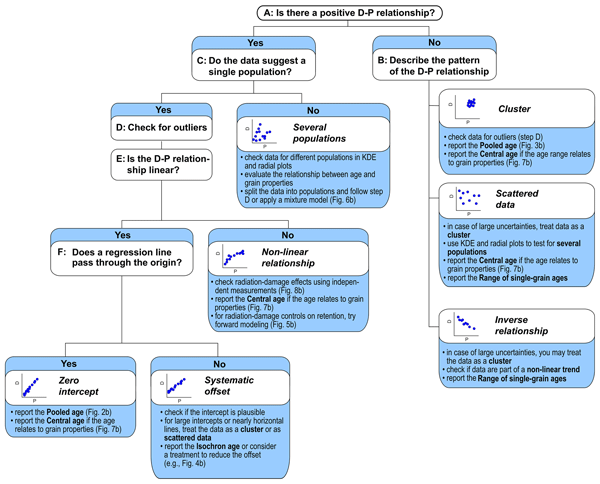
We present a new data analysis workflow for thermochronological data based on plots of radiogenic daughter vs. radioactive parent concentration. The daughter–parent relationship helps to identify the sources of age variation. Our workflow classifies the daughter–parent relationship and provides further suggestions, e.g., if a dataset can be described by a sample age and which type of sample age to report. We also introduce Incaplot, which is software for creating daughter–parent plots.
Raymond Jonckheere, Florian Trilsch, Birk Härtel, and Thorsten Nagel
EGUsphere, https://doi.org/10.5194/egusphere-2026-1924, https://doi.org/10.5194/egusphere-2026-1924, 2026
Short summary
Short summary
Fission-track modelling rest on empirical equations fitted to lab datasets. It is therefore doubtful that a specific set applies to all samples, protocols, and analysts, while there also remain unresolved issues. We propose a different take on the data. Our aim is not to improve existing equations, but to construct the basis of an alternative approach, as a reference for interrogating current assumptions, and perhaps as the beginnings of a model that can connect with the latent-track properties.
Tobias Stephan, Taís Fontes Pinto, and Eva Enkelmann
EGUsphere, https://doi.org/10.5194/egusphere-2026-1279, https://doi.org/10.5194/egusphere-2026-1279, 2026
Preprint archived
Short summary
Short summary
Geologists can model how rocks cooled over time to reconstruct Earth’s history, but these models can produce many different solutions. We developed a statistical method that groups similar cooling histories and reveals the main patterns in the results. By comparing and clustering modeled histories, the method objectively identifies consistent solutions enabling reproducible analysis of complex datasets. The method is implemented in the freely available software thermoclustr written in R.
Birk Härtel and Eva Enkelmann
Geochronology, 6, 429–448, https://doi.org/10.5194/gchron-6-429-2024, https://doi.org/10.5194/gchron-6-429-2024, 2024
Short summary
Short summary
We present a new data analysis workflow for thermochronological data based on plots of radiogenic daughter vs. radioactive parent concentration. The daughter–parent relationship helps to identify the sources of age variation. Our workflow classifies the daughter–parent relationship and provides further suggestions, e.g., if a dataset can be described by a sample age and which type of sample age to report. We also introduce Incaplot, which is software for creating daughter–parent plots.
Cited articles
Beranek, L. P., Mortensen, J. K., Lane, L. S., Allen, T. L., Fraser, T. A., Hadlari, T., and Zantvoort, W. G.: Detrital zircon geochronology of the western Ellesmerian clastic wedge, northwestern Canada: insights on Arctic tectonics and the evolution of the northern Cordilleran miogeocline, Geol. Soc. Am. Bull., 122, 1899–1911, https://doi.org/10.1130/B30120.1, 2010.
Bernet, M. and Garver, J. I.: Fission-track analysis of detrital zircon, Rev. Mineral. Geochem., 58, 205–238, https://doi.org/10.2138/rmg.2005.58.8, 2005.
Bootes, N., Enkelmann, E., and Lease, R.: Late Miocene to Pleistocene source to sink record of exhumation and sediment routing in the Gulf of Alaska from detrital zircon fission-track and U-Pb double dating, Tectonics, 38, 2703–2726, https://doi.org/10.1029/2019TC005497, 2019.
Boyce, J. W., Hodges, K. V., Olszewski, W. J., Jercinovic, M. J., Carpenter, B. D., and Reiners, P. W.: Laser microprobe (U-Th)
Carlson, W. D., Donelick, R. A., and Ketcham, R. A.: Variability of apatite fission-track annealing kinetics; I, Experimental results, Am. Miner., 84, 1213–1223, https://doi.org/10.2138/am-1999-0901, 1999.
Carter, A. and Moss, S. J.: Combined detrital-zircon fission-track and U-Pb dating: A new approach to understanding hinterland evolution, Geology, 27, 235–238, https://doi.org/10.1130/0091-7613(1999)027<0235:CDZFTA>2.3.CO;2, 1999.
Cawood, P. A., Hawkesworth, C. J., and Dhuime, B.: Detrital zircon record and tectonic setting, Geology, 40, 875–878, https://doi.org/10.1130/G32945.1, 2012.
Cecil, M. R., Saleeby, Z., Saleeby, J., and Farley, K. A.: Pliocene–Quaternary subsidence and exhumation of the southeastern San Joaquin Basin, California, in response to mantle lithosphere removal, Geosphere, 10, 129–147, https://doi.org/10.1130/GES00882.1, 2014.
Cherniak, D. J.: Diffusion in accessory minerals: zircon, titanite, apatite, monazite and xenotime, Rev. Mineral. Geochem., 72, 827–869, https://doi.org/10.2138/rmg.2010.72.18, 2010.
Chew, D. and Donelick, R. A.: Combined apatite fission track and U-Pb dating by LA-ICP-MS and its application in apatite provenance analysis, in: Quantitative mineralogy and microanalysis of sediments and sedimentary rocks, edited by: Sylvester, P., Mineralogical Association of Canada, Sudbury, 219–247, https://doi.org/10.3749/9780921294825.ch12, 2012.
Corfu, F., Hanchar, J. M., Hoskin, P. W. O., and Kinny, P.: Atlas of zircon textures, Rev. Mineral. Geochem., 53, 469–500, https://doi.org/10.2113/0530469, 2003.
Crank, J. and Nicolson, P.: A practical method for numerical evaluation of solutions of partial differential equations of the heat-conduction type, Math. Proc. Camb. Phil. Soc., 43, 50–67, https://doi.org/10.1017/S0305004100023197, 1947.
Daniels, B. G., Auchter, N. C., Hubbard, S. M., Romans, B. W., Matthews, W. A., and Stright, L.: Timing of deep-water slope evolution constrained by large-n detrital volcanic ash zircon geochronology, Cretaceous Magallanes Basin, Chile, Geol. Soc. Am. Bull., 130, 438–454, https://doi.org/10.1130/B31757.1, 2018.
Danišik, M.: Integration of fission-track thermochronology with other geochronologic methods on single crystals, in: Fission-track thermochronology and its application to Geology, edited by: Malusà, M. G. and Fitzgerald, P. G., Springer International Publishing, New York, 93–108, https://doi.org/10.1007/978-3-319-89421-8_5, 2019.
Duddy, I. R., Green, P. F., and Laslett, G. M.: Thermal annealing of fission tracks in apatite 3. Variable temperature behaviour, Chem. Geol., 73, 25–38, https://doi.org/10.1016/0168-9622(88)90019-X, 1988.
Dunkl, I., Mallis, F., Lünsdorf, N. K., Schönig, J., and von Eynatten, H.: Zircon U-Pb-He double dating of modern sands from the Inn River catchment: assessing resolution and potential in a complex orogenic setting, J. Geophys. Res.-Earth Surf., 129, e2023JF007360, https://doi.org/10.1029/2023JF007360, 2024.
Enkelmann, E., Garver, J. I., and Pavlis, T. L.: Rapid exhumation of ice-covered rocks of the Chugach–St. Elias orogen, Southeast Alaska, Geology, 36, 915–918, https://doi.org/10.1130/G2252A.1, 2008.
Enkelmann, E., Ridgway, K. E., Carignano, C., and Linnemann, U.: A thermochronometric view into an ancient landscape: tectonic setting, development, and inversion of the Paleozoic eastern Paganzo basin, Argentina, Lithosphere, 6, 93–107, https://doi.org/10.1130/L309.1, 2014.
Enkelmann, E., Finzel, E., and Arkle, J.: Deformation at the eastern margin of the Northern Canadian Cordillera: Potentially related to opening of the North Atlantic, Terra Nova, 31, 151–158, https://doi.org/10.1111/ter.12374, 2019a.
Enkelmann, E., Sanchez-Lohff, S. K., and Finzel, E. S.: Detrital zircon double-dating of forearc basin strata reveals magmatic, exhumational, and thermal history of sediment source areas, Geol. Soc. Am. Bull., 131, 1364–1384, https://doi.org/10.1130/B35043.1, 2019b.
Evans, N. J., McInnes, B. I. A., McDonald, B., Danišik, M., Becker, T., Vermeesch, P., Shelley, M., Marillo-Sialer, E., and Patterson, D. B.: An in situ technique for (U-Th-Sm)
Falkowski, S., Enkelmann, E. Drost, K., Pfänder, J. A., Stübner, K., and Ehlers, T. A.: Cooling history of the St. Elias syntaxis, southeast Alaska, revealed by geo- and thermochronology of cobble-size glacial detritus, Tectonics, 35, 447–468, https://doi.org/10.1002/2015TC004086, 2016.
Farley, K. A.: Helium diffusion from apatite: General behavior as illustrated by Durango fluorapatite, J. Geophys. Res.-Sol. Ea., 105, 2903–2914, https://doi.org/10.1029/1999JB900348, 2000.
Fechtig, H., Gentner, W., and Kalbitzer, S.: Argonbestimmungen an Kaliummineralien – IX: Messungen zu den verschiedenen Arten der Argondiffusion, Geochim. Cosmochim. Ac., 25, 297–311, https://doi.org/10.1016/0016-7037(61)90064-3, 1961.
Fillon, C., Gautheron, C., and van der Beek, P.: Oligocene–Miocene burial and exhumation of the Southern Pyrenean foreland quantified by low-temperature thermochronology, J. Geol. Soc. London, 170, 67–77, https://doi.org/10.1144/jgs2012-051, 2013.
Flowers, R. M., Ketcham, R. A., Shuster, D. L., and Farley, K. A.: Apatite (U-Th)
Flowers, R. M., Ketcham, R. A., Enkelmann, E., Gautheron, C., Reiners, P. W., Metcalf, J. R., Danišik, M., Stockli, D. F., and Brown, R. W.: (U-Th)
Forte, A. M., Gutterman, K. R., van Soest, M. C., and Gallagher, K.: Building a young mountain range: insights into the growth of the Greater Caucasus Mountains from detrital zircon (U-Th)
Fosdick, J. C., Grove, M., Graham, S. A., Hourigan, J. K., Lovera, O., and Romans, B. W.: Detrital thermochronologic record of burial heating and sediment recycling in the Magallanes foreland basin, Patagonian Andes, Basin Res., 27, 546–572, https://doi.org/10.1111/bre.12088, 2015.
Fosdick, J. C., Stevens Goddard, A. L., Mackaman-Lofland, C., Lossada, A. C., Rodríguez, M. P., and Carrapa, B.: Eocene exhumation of the High Andes at ∼30° S differentiated by detrital multimethod U-Pb-He thermochronology, Geology, 52, 678–682, https://doi.org/10.1130/G52272.1, 2024.
Fox, M., Dai, J.-G., and Carter, A.: Badly behaved detrital (U-Th)
Gallagher, K.: Transdimensional inverse thermal history modeling for quantitative thermochronology, J. Geophys. Res., 117, B02408, https://doi.org/10.1029/2011JB008825, 2012.
Garver, J. I., Brandon, M. T., Roden-Tice, M., and Kamp, P. J. J.: Exhumation history of orogenic highlands determined by detrital fission-track thermochronology, in: Exhumation processes: normal faulting, ductile flow and erosion, edited by: Ring, U., Brandon, M. T., Lister, G. S., and Willett, S. D., Geol. Soc. Spec. Pub., 154, London, 283–304, https://doi.org/10.1144/GSL.SP.1999.154.01.13, 1999.
Geisler, T., Pidgeon, R. T., Van Bronswijk, W., and Pleysier, R.: Kinetics of thermal recovery and recrystallization of partially metamict zircon: a Raman spectroscopic study, Eur. J. Mineral., 13, 1163–1176, https://doi.org/10.1127/0935-1221/2001/0013-1163, 2001.
Gérard, B., Robert, X., Grujic, D., Gautheron, C., Audin, L., Bernet, M., and Balvay, M.: Zircon (U-Th)
Ginster, U., Reiners, P. W., Nasdala, L., and Chanmuang N. C.: Annealing kinetics of radiation damage in zircon, Geochim. Cosmochim. Ac., 249, 225–246, https://doi.org/10.1016/j.gca.2019.01.033, 2019.
Grabowski, D., Enkelmann, E., and Ehlers, T. A.: Spatial extend of rapid denudation in the glaciated St. Elias syntaxis region, SE Alaska, J. Geophys. Res.-Earth Surf., 118, 1–18, https://doi.org/10.1002/jgrf.20136, 2013.
Green, P. F.: The relationship between track shortening and fission track age reduction in apatite: combined influences of inherent instability, annealing anisotropy, length bias and system calibration, Earth Planet. Sc. Lett., 89, 335–352, https://doi.org/10.1016/0012-821X(88)90121-5, 1988.
Guenthner, W. R.: Implementation of an alpha damage annealing model for zircon (U-Th)
Guenthner, W. R., Reiners, P. W., Ketcham, R. A., Nasdala, L., and Giester, G.: Helium diffusion in natural zircon: radiation damage, anisotropy, and the interpretation of zircon (U-Th)
Guenthner, W. R., Reiners, P. W., DeCelles, P. G., and Kendall, J.: Sevier belt exhumation in central Utah constrained from complex zircon (U-Th)
Hadlari, T., Tylosky, S. A., Lemieux, Y., Zantvoort, W. G., and Catuneanu, O.: Slope and submarine fan turbidite facies of the Upper Devonian Imperial Formation, Northern Mackenzie Mountains, NWT, Bull. Can. Energy Geosci., 57, 192–208, https://doi.org/10.2113/gscpgbull.57.2.192, 2009.
Harrison, T. M. and Zeitler, P. K.: Fundamentals of noble gas thermochronometry, Rev. Mineral. Geochem., 58, 123–149, https://doi.org/10.2138/rmg.2005.58.5, 2005.
Härtel, B.: PaRACAS (Partial Reset Analysis for Cooling Ages of Sources) (v1.02), Zenodo [code], https://doi.org/10.5281/zenodo.18248224, 2026.
Härtel, B. and Enkelmann, E.: The daughter–parent plot: a tool for analyzing thermochronological data, Geochronology, 6, 429–448, https://doi.org/10.5194/gchron-6-429-2024, 2024.
Härtel, B., Jonckheere, R., Wauschkuhn, B., and Ratschbacher, L.: The closure temperature(s) of zircon Raman dating, Geochronology, 3, 259–272, https://doi.org/10.5194/gchron-3-259-2021, 2021.
Härtel, B., Enkelmann, E., and Whelan, E.: Combined zircon
Hasebe, N., Barbarand, J., Jarvis, K., Carter, A., and Hurford, A. J.: Apatite fission-track chronometry using laser ablation icp-ms, Chem. Geol., 207, 135–145, https://doi.org/10.1016/j.chemgeo.2004.01.007, 2004.
Haynes, W. M., Lide, D. R., and Bruno, T. J. (Eds.): CRC Handbook of Chemistry and Physics, 95th Edition, CRC Press, Taylor and Francis Group, Boca Raton, Florida, 2666 pp., ISBN 978-1482208672, 2014.
Hurley, P. M., Larsen, E. S., and Gottfried, D.: Comparison of radiogenic helium and lead in zircon, Geochim. Cosmochim. Ac., 9, 98–102, https://doi.org/10.1016/0016-7037(56)90060-6, 1956.
Issler, D. R., Grist, A. M., and Stasiuk, L. D.: Post-Early Devonian thermal constraints on hydrocarbon source rock maturation in the Keele Tectonic Zone, Tulita area, NWT, Canada, from multi-kinetic apatite fission track thermochronology, vitrinite reflectance and shale compaction, Bull. Can. Pet. Geol., 53, 405–431, https://doi.org/10.2113/53.4.405, 2005.
Jensen, P. K. and Hansen, K.: Deconvolution of fission-track length distributions and its application to dating and separating pre- and post-depositional components, Geochronology, 3, 561–575, https://doi.org/10.5194/gchron-3-561-2021, 2021.
Jensen, P. K., Hansen, K., and Kunzendorf, H.: A numerical model for the thermal history of rocks based on confined horizontal fission tracks, Nucl. Tracks Radiat. Meas., 20, 349–359, https://doi.org/10.1016/1359-0189(92)90064-3, 1992.
Jess, S., Enkelmann, E., and Matthews, W.: The effect of sediment storage in glaciated catchments on multimineral detrital geochronology: deciphering conflicting zircon and apatite U-Pb dates, J. Geophys. Res.-Earth Surf., 128, e2022JF006738, https://doi.org/10.1029/2022JF006738, 2023.
Jost, W.: Diffusion in solids, liquids and gases, Academic Press Inc., New York, 558 p.p, ISBN 978-0123907509, 1952.
Keil, R., Pahl, M., and Bertagnolli, E.: Thermal history and length distribution of fission tracks: Part II, Nucl. Tracks Radiat. Meas.,13, 25–33, https://doi.org/10.1016/1359-0189(87)90004-5, 1987.
Ketcham, R. A.: Forward and inverse modeling of low-temperature thermochronometry data, Rev. Mineral. Geochem., 58, 275–314, https://doi.org/10.2138/rmg.2005.58.11, 2005.
Ketcham, R. A.: Thermal history inversion from thermochronometric data and complementary information: New methods and recommended practices, Chem. Geol., 653, 122042, https://doi.org/10.1016/j.chemgeo.2024.122042, 2024.
Ketcham, R. A., Gautheron, C., and Tassan-Got, L.: Accounting for long alpha-particle stopping distances in (U-Th-Sm)
Lemieux, Y., Hadlari, T., and Simonetti, A.: Detrital zircon geochronology and provenance of Devono-Mississippian strata in the northern Canadian Cordilleran miogeocline, Can. J. Earth Sci., 48, 515–541, https://doi.org/10.1139/E10-056, 2011.
Lovera, O. M., Richter, F. M., and Harrison, T. M.: The
Malusà, M. G. and Fitzgerald, P. G.: The geologic interpretation of the detrital thermochronology record within a stratigraphic framework, with examples from the European Alps, Taiwan and the Himalayas, Earth-Sci. Rev., 201, 103074, https://doi.org/10.1016/j.earscirev.2019.103074, 2020.
Malusà, M. G., Anfinson, O. A., and Stockli, D. F.: (Mis)identification of magmatic and exhumation ages by detrital zircon U-Pb and He double dating: a case study from the Bergell-Gonfolite system (European Alps), Chem. Geol., 606, 120970, https://doi.org/10.1016/j.chemgeo.2022.120970, 2022.
McKay, R., Enkelmann, E., Hadlari, T., Matthews, W., and Mouthereau, F.: Cenozoic exhumation history of the eastern margin of the Northern Canadian Cordillera, Tectonics, 40, e2020TC006582, https://doi.org/10.1029/2020TC006582, 2021.
Meesters, A. G. C. A. and Dunai, T. J.: Solving the production–diffusion equation for finite diffusion domains of various shapes Part II. Application to cases with α-ejection and nonhomogeneous distribution of the source, Chem. Geol., 186, 57–73, https://doi.org/10.1016/S0009-2541(01)00423-5, 2002.
Morton, A. C.: The provenance and diagenesis of Palaeogene sandstones of southeast England as indicated by heavy mineral analysis, Proc. Geol. Assoc., 93, 263–274, https://doi.org/10.1016/S0016-7878(82)80003-5, 1982.
O'Sullivan, G., Chew, D., Kenny, G., Henrichs, I., and Mulligan, D.: The trace element composition of apatite and its application to detrital provenance, Earth-Sci. Rev., 201, 103044, https://doi.org/10.1016/j.earscirev.2019.103044, 2020.
Powell, J. and Schneider, D. A.: Preliminary results of detrital muscovite 40Ar
Powell, J. W., Schneider, D., Stockli, D., and Fallas, K.: Zircon (U-Th)
Powell, J. W., Issler, D. R., Schneider, D. A., Fallas, K. M., and Stockli, D. F.: Thermal history of the Mackenzie Plain, Northwest Territories, Canada: Insights from low-temperature thermochronology of the Devonian Imperial Formation, Geol. Soc. Am. Bull., 132, 767–783, https://doi.org/10.1130/B35089.1, 2020.
Rahl, J. M., Reiners, P. W., Campbell, I. H., Nicolescu, S., and Allen, C. M.: Combined single-grain (U-Th)
Rahl, J. M., Haines, S. H., and van der Pluijm, B. A.: Links between orogenic wedge deformation and erosional exhumation: Evidence from illite age analysis of fault rock and detrital thermochronology of syn-tectonic conglomerates in the Spanish Pyrenees, Earth Planet. Sc. Lett., 307, 180–190, https://doi.org/10.1016/j.epsl.2011.04.036, 2011.
Reiners, P. W.: Zircon (U-Th)
Reiners, P. W. and Farley, K. A.: Influence of crystal size on apatite (U-Th)
Reiners, P. W., Spell, T. L., Nicolescu, S., and Zanetti, K. A.: Zircon (U-Th)
Reiners, P. W., Campbell, I. H., Nicolescu, S., Allen, C. M., Hourigan, J. K., Garver, J. I., Mattinson, J. M., and Cowan, D. S.: (U-Th)/(He-Pb) double dating of detrital zircons, Am. J. Sci., 305, 259–311, https://doi.org/10.2475/ajs.305.4.259, 2005.
Resentini, A., Malusà, M. G., Favaro, S., Longhi, M., Tiepolo, M., Villa, I. M., and Zanchetta, S.: Bedrock testing of zircon annealing for detrital provenance studies: Raman and U-Pb analysis in the Adamello batholith (Southern Alps, Italy), Chem. Geol., 715, 123486, https://doi.org/10.1016/j.chemgeo.2026.123486, 2026.
Rufino, M., Lixandrão-Filho, A. L., and Guedes, S.: A reappraisal of the principle of equivalent time based on physicochemical methods, Chem. Geol., 627, 121459, https://doi.org/10.1016/j.chemgeo.2023.121459, 2023.
Satopää, V., Albrecht, J., Irwin, D., and Raghavan, B.: Finding a “kneedle” in a haystack: Detecting knee points in system behavior, in: Proceedings of the 31st International Conference on Distributed Computing Systems, Minneapolis, Minnesota, June 2011, Workshops, 166–171, https://doi.org/10.1109/ICDCSW.2011.20, 2011.
Saylor, J. E., Stockli, D. F., Horton, B. K., Nie, J., and Mora, A.: Discriminating rapid exhumation from syndepositional volcanism using detrital zircon double dating: Implications for the tectonic history of the Eastern Cordillera, Colombia, Geol. Soc. Am. Bull., 124, 762–779, https://doi.org/10.1130/B30534.1, 2012.
Spalding, J., Powell, J. W., Schneider, D. A., and Fallas, K. M.: Thermal history of the Peel Plateau, northern Canadian Cordillera, resolved through multikinetic apatite fission-track dating, Mar. Pet. Geol., 155, 106358, https://doi.org/10.1016/j.marpetgeo.2023.106358, 2023.
Stevens Goddard, A. L., Black, S. R., Balgord, E. A., Anderson, Z. W., Leary, R. J., Thurston, O. G., and Yonkee, W. A.: Detrital thermochronology histories preserved in Paleogene strata of Utah (USA) provide distant records of Paleozoic Alleghanian orogenesis and sediment dispersal, Geology, 53, 217–221, https://doi.org/10.1130/G52736.1, 2024.
Sundell, K. E. and Saylor, J. E.: Two-dimensional quantitative comparison of density distributions in detrital geochronology and geochemistry, Geochem. Geophys. Geosys., 22, e2020GC009559, https://doi.org/10.1029/2020GC009559, 2021.
Tripathy-Lang, A., Hodges, K. V., Monteleone, B. D., and van Soest, M. C.: Laser (U-Th)
Vermeesch, P., Sherlock, S. C., Roberts, N. M. W., and Carter, A.: A simple method for in-situ U-Th-He dating, Geochim. Cosmochim. Ac., 79, 140–147, https://doi.org/10.1016/j.gca.2011.11.042, 2012.
von Eynatten, H. and Dunkl, I.: Assessing the sediment factory: The role of single grain analysis, Earth-Sci. Rev., 115, 97–120, https://doi.org/10.1016/j.earscirev.2012.08.001, 2012.
Yonkee, W. A., Eleogram, B., Wells, M. L., Stockli, D. F., Kelley, S., and Barber, D. E.: Fault slip and exhumation history of the Willard thrust sheet, Sevier fold-and-thrust belt, Utah: relations to wedge propagation, hinterland uplift, and foreland basin sedimentation, Tectonics, 38, 2850–2893, https://doi.org/10.1029/2018TC005444, 2019.
Zawacki, E. E., van Soest, M. C., Hodges, K. V., Scott, J. J., Barboni, M., Strecker, M. R., Feibel, C. S., Campisano, C. J., and Arrowsmith, J. R.: Sediment provenance and silicic volcano-tectonic revolution of the northern East-African Rift System from
Ziegler, J. F.: SRIM – The Stopping and Range of Ions in Matter, http://www.srim.org (last access: 25 April 2026), 2013.
Short summary
We present a new strategy for extracting information on the thermal history of sedimentary samples that lost part of their radiogenic helium during sediment burial. It uses combined U/Pb and (U-Th)/He dating of zircon to find grains that formed just before deposition and use them to model the basin thermal history. The model also estimates the time when the source rock of each grain cooled. We discuss the advantages and limitations of our approach and its application to other methods.
We present a new strategy for extracting information on the thermal history of sedimentary...


Special issue