
Articles | Volume 8, issue 1
https://doi.org/10.5194/gchron-8-19-2026
© Author(s) 2026. This work is distributed under
the Creative Commons Attribution 4.0 License.
the Creative Commons Attribution 4.0 License.
https://doi.org/10.5194/gchron-8-19-2026
© Author(s) 2026. This work is distributed under
the Creative Commons Attribution 4.0 License.
the Creative Commons Attribution 4.0 License.
Research article
| 
16 Jan 2026
Research article |
| 16 Jan 2026
| 16 Jan 2026
Cosmogenic 3He exposure dating in mafic rocks by “Virtual mineral separation” of pyroxene

Berkeley Geochronology Center, 2455 Ridge Road, Berkeley, CA 94709, USA
Department of Earth and Planetary Science, University of California, Berkeley, 307 McCone Hall, Berkeley, CA 94720, USA
Greg Balco
Lawrence Livermore National Laboratory, 7000 East Avenue, Livermore, CA 94550, USA
Berkeley Geochronology Center, 2455 Ridge Road, Berkeley, CA 94709, USA
Richard A. Ketcham
Jackson School of Geosciences, The University of Texas at Austin, 23 San Jacinto Blvd, Austin, Texas, 78712, USA
Related authors
Marie Bergelin, Andrew L. Gorin, Greg Balco, and William S. Cassata
Geochronology, 7, 493–511, https://doi.org/10.5194/gchron-7-493-2025, https://doi.org/10.5194/gchron-7-493-2025, 2025
Short summary
Short summary
Helium gas accumulates over time in minerals, but loss can occur depending on temperature. If partially retained, its loss can potentially be used for determining past surface temperatures. This study uses a model that accounts for complex gas loss to analyze helium retention in two minerals commonly found on the surface of Antarctica. We find one of the minerals retains helium, while the other loses nearly all of the gas within 100 years, making it unsuitable as a climate reconstruction.
Andrew L. Gorin, Joshua M. Gorin, Marie Bergelin, and David L. Shuster
Geochronology, 6, 521–540, https://doi.org/10.5194/gchron-6-521-2024, https://doi.org/10.5194/gchron-6-521-2024, 2024
Short summary
Short summary
The multiple-diffusion domain (MDD) model quantifies the temperature dependence of noble gas diffusivity in minerals. However, current methods for tuning MDD parameters can yield biased results, leading to underestimates of sample temperatures through geologic time. Our "MDD Tool Kit" software optimizes all MDD parameters simultaneously, overcoming these biases. We then apply this software to a previously published 40Ar/39Ar dataset (Wong, 2023) to showcase its efficacy.
Marie Bergelin, Greg Balco, Lee B. Corbett, and Paul R. Bierman
Geochronology, 6, 491–502, https://doi.org/10.5194/gchron-6-491-2024, https://doi.org/10.5194/gchron-6-491-2024, 2024
Short summary
Short summary
Cosmogenic nuclides, such as 10Be, are rare isotopes produced in rocks when exposed at Earth's surface and are valuable for understanding surface processes and landscape evolution. However, 10Be is usually measured in quartz minerals. Here we present advances in efficiently extracting and measuring 10Be in the pyroxene mineral. These measurements expand the use of 10Be as a dating tool for new rock types and provide opportunities to understand landscape processes in areas that lack quartz.
Maximilian K. Ehrenfels, Daniel F. Stockli, Richard A. Ketcham, Desmond B. Patterson, and Michael G. Prior
EGUsphere, https://doi.org/10.5194/egusphere-2026-4367, https://doi.org/10.5194/egusphere-2026-4367, 2026
Short summary
Short summary
Minerals can be dated by measuring helium produced by radioactive decay of uranium and thorium to reveal when rocks cooled. Extracting this helium from within mineral grains with a laser instead of dissolving whole crystals is faster and more versatile, but the ages scatter more than expected. Using machine learning on over 800 measurements with our improved workflow, we trace most of this scatter to uneven uranium hidden in a polished-away part of the crystal that future methods must capture.
Kendra E. Murray, Richard A. Ketcham, and Andrea L. Stevens Goddard
EGUsphere, https://doi.org/10.5194/egusphere-2026-2525, https://doi.org/10.5194/egusphere-2026-2525, 2026
Short summary
Short summary
We demonstrate the ability and limitations of a new Controlled Random Search (CRS) algorithm in the thermal history modeling software HeFTy using synthetic and real datasets. We demonstrate the CRS returns solutions efficiently. However, in CRS results some solution clustering is inevitable. We discuss not only how to identify CRS solution clustering but also how to leverage it to find solution families that can help one build a robust thermal history analysis of thermochronologic data.
Anna Ruth W. Halberstadt and Greg Balco
The Cryosphere, 20, 931–961, https://doi.org/10.5194/tc-20-931-2026, https://doi.org/10.5194/tc-20-931-2026, 2026
Short summary
Short summary
We developed a new framework for testing how well computer models of the Antarctic ice sheet match geological measurements of past ice thinning. By using more data and higher-spatial-resolution modeling, we improve how well models capture complex regions. Our approach also makes it easier to include new data as they become available. We describe multiple metrics for comparing models and data. This can help scientists better understand how the ice sheet changed in the past.
Marie Bergelin, Andrew L. Gorin, Greg Balco, and William S. Cassata
Geochronology, 7, 493–511, https://doi.org/10.5194/gchron-7-493-2025, https://doi.org/10.5194/gchron-7-493-2025, 2025
Short summary
Short summary
Helium gas accumulates over time in minerals, but loss can occur depending on temperature. If partially retained, its loss can potentially be used for determining past surface temperatures. This study uses a model that accounts for complex gas loss to analyze helium retention in two minerals commonly found on the surface of Antarctica. We find one of the minerals retains helium, while the other loses nearly all of the gas within 100 years, making it unsuitable as a climate reconstruction.
Richard A. Ketcham
Geochronology, 7, 449–458, https://doi.org/10.5194/gchron-7-449-2025, https://doi.org/10.5194/gchron-7-449-2025, 2025
Short summary
Short summary
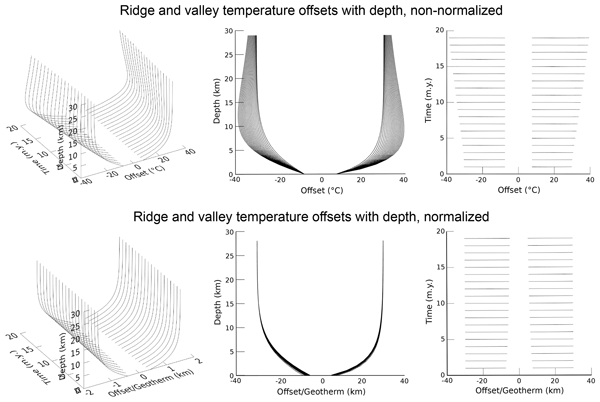
This technical note develops and demonstrates an improvement in how to calculate the temperatures experienced by rocks as they come from deep in the Earth to the surface due to erosion in mountainous regions that feature significant topographic relief. The solution is fast and flexible, and works even in areas where erosion rates have varied through time. The new method has been added to software used to interpret thermochronologic data to help discern the history of mountain ranges.
Greg Balco
Geochronology, 7, 247–253, https://doi.org/10.5194/gchron-7-247-2025, https://doi.org/10.5194/gchron-7-247-2025, 2025
Short summary
Short summary
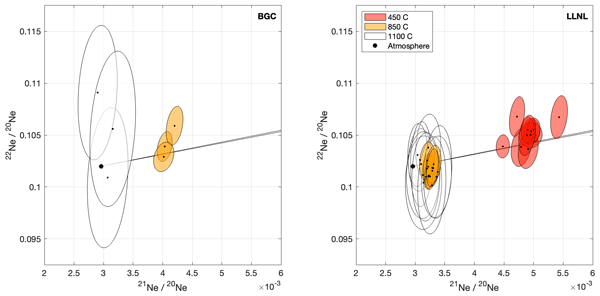
This paper describes measurements of cosmogenic neon-21 concentrations in a widely distributed mineral standard material that is routinely used for quality control and interlaboratory comparison for measurements of other cosmic-ray-produced nuclides useful for various geochronology applications. Broadly, this facilitates improvement of precision and accuracy of these measurements and their applications in geochronology.
Murat T. Tamer, Ling Chung, Richard A. Ketcham, and Andrew J. W. Gleadow
Geochronology, 7, 45–58, https://doi.org/10.5194/gchron-7-45-2025, https://doi.org/10.5194/gchron-7-45-2025, 2025
Short summary
Short summary
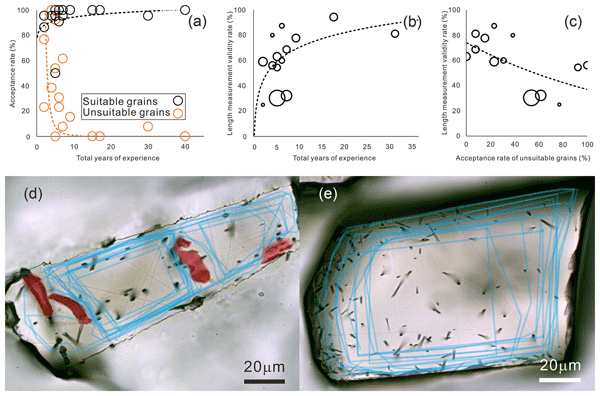
We present the first new image-based study to reveal how choices made by different analysts affect the results obtained by fission-track analysis. Participants analyzed an identical image dataset with varying grain quality. Experienced analysts tend to select lower numbers of unsuitable grains and conduct lower numbers of invalid length measurements. Fission-track studies need image data repositories, teaching modules, guidelines, an open science culture, and new approaches for calibration.
Joanne S. Johnson, John Woodward, Ian Nesbitt, Kate Winter, Seth Campbell, Keir A. Nichols, Ryan A. Venturelli, Scott Braddock, Brent M. Goehring, Brenda Hall, Dylan H. Rood, and Greg Balco
The Cryosphere, 19, 303–324, https://doi.org/10.5194/tc-19-303-2025, https://doi.org/10.5194/tc-19-303-2025, 2025
Short summary
Short summary
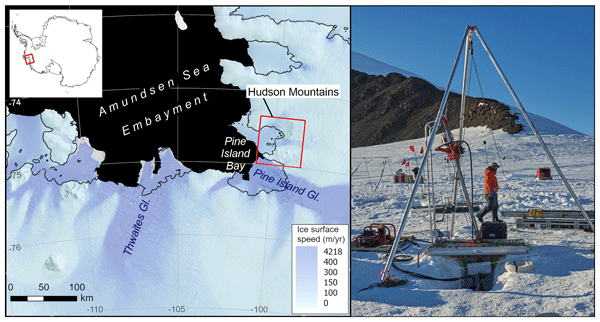
Determining where and when the Antarctic ice sheet was smaller than present requires recovery and exposure dating of subglacial bedrock. Here we use ice sheet model outputs and field data (geological and glaciological observations, bedrock samples, and ground-penetrating radar) to assess the suitability for subglacial drilling of sites in the Hudson Mountains, West Antarctica. We find that no sites are perfect, but two are feasible, with the most suitable being Winkie Nunatak (74.86°S, 99.77°W).
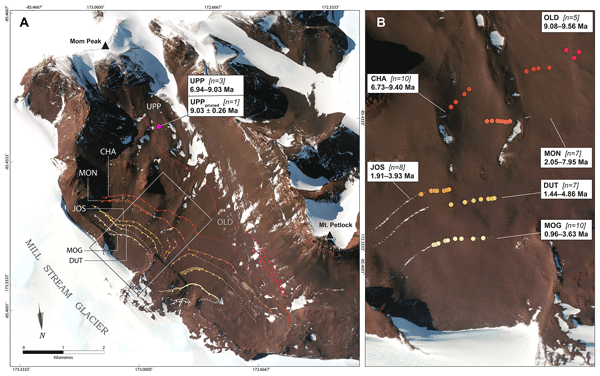
Gordon R. M. Bromley, Greg Balco, Margaret S. Jackson, Allie Balter-Kennedy, and Holly Thomas
Clim. Past, 21, 145–160, https://doi.org/10.5194/cp-21-145-2025, https://doi.org/10.5194/cp-21-145-2025, 2025
Short summary
Short summary
We constructed a geologic record of East Antarctic Ice Sheet thickness from deposits at Otway Massif to directly assess how Earth's largest ice sheet responds to warmer-than-present climate. Our record confirms the long-term dominance of a cold polar climate but lacks a clear ice sheet response to the mid-Pliocene Warm Period, a common analogue for the future. Instead, an absence of moraines from the late Miocene–early Pliocene suggests the ice sheet was less extensive than present at that time.
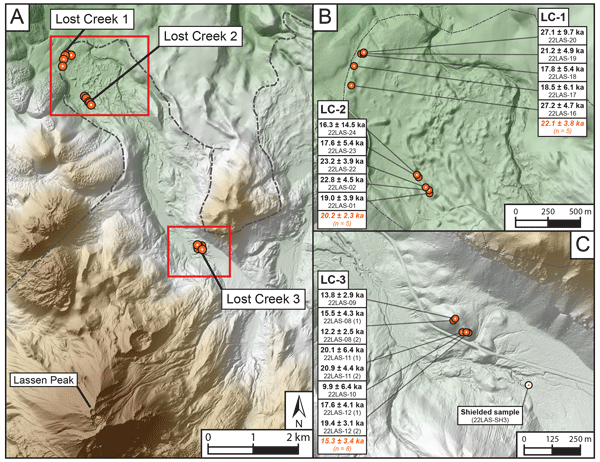
Joseph P. Tulenko, Greg Balco, Michael A. Clynne, and L. J. Patrick Muffler
Geochronology, 6, 639–652, https://doi.org/10.5194/gchron-6-639-2024, https://doi.org/10.5194/gchron-6-639-2024, 2024
Short summary
Short summary
Cosmogenic nuclide exposure dating is an exceptional tool for reconstructing glacier histories, but reconstructions based on common target nuclides (e.g., 10Be) can be costly and time-consuming to generate. Here, we present a cost-effective proof-of-concept 21Ne exposure age chronology from Lassen Volcanic National Park, CA, USA, that broadly agrees with nearby 10Be chronologies but at lower precision.
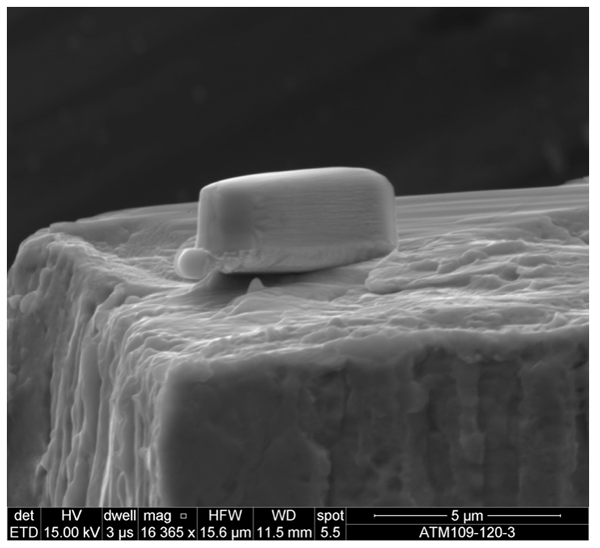
Greg Balco, Andrew J. Conant, Dallas D. Reilly, Dallin Barton, Chelsea D. Willett, and Brett H. Isselhardt
Geochronology, 6, 571–584, https://doi.org/10.5194/gchron-6-571-2024, https://doi.org/10.5194/gchron-6-571-2024, 2024
Short summary
Short summary
This paper describes how krypton isotopes produced by nuclear fission can be used to determine the age of microscopic particles of used nuclear fuel. This is potentially useful for international safeguard applications aimed at tracking and identifying nuclear materials, as well as geoscience applications involving dating post-1950s sediments or understanding environmental transport of nuclear materials.
Andrew L. Gorin, Joshua M. Gorin, Marie Bergelin, and David L. Shuster
Geochronology, 6, 521–540, https://doi.org/10.5194/gchron-6-521-2024, https://doi.org/10.5194/gchron-6-521-2024, 2024
Short summary
Short summary
The multiple-diffusion domain (MDD) model quantifies the temperature dependence of noble gas diffusivity in minerals. However, current methods for tuning MDD parameters can yield biased results, leading to underestimates of sample temperatures through geologic time. Our "MDD Tool Kit" software optimizes all MDD parameters simultaneously, overcoming these biases. We then apply this software to a previously published 40Ar/39Ar dataset (Wong, 2023) to showcase its efficacy.
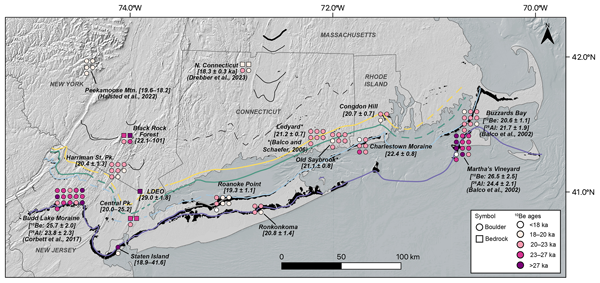
Allie Balter-Kennedy, Joerg M. Schaefer, Greg Balco, Meredith A. Kelly, Michael R. Kaplan, Roseanne Schwartz, Bryan Oakley, Nicolás E. Young, Jean Hanley, and Arianna M. Varuolo-Clarke
Clim. Past, 20, 2167–2190, https://doi.org/10.5194/cp-20-2167-2024, https://doi.org/10.5194/cp-20-2167-2024, 2024
Short summary
Short summary
We date sedimentary deposits showing that the southeastern Laurentide Ice Sheet was at or near its southernmost extent from ~ 26 000 to 21 000 years ago, when sea levels were at their lowest, with climate records indicating glacial conditions. Slow deglaciation began ~ 22 000 years ago, shown by a rise in modeled local summer temperatures, but significant deglaciation in the region did not begin until ~ 18 000 years ago, when atmospheric CO2 began to rise, marking the end of the last ice age.
Marie Bergelin, Greg Balco, Lee B. Corbett, and Paul R. Bierman
Geochronology, 6, 491–502, https://doi.org/10.5194/gchron-6-491-2024, https://doi.org/10.5194/gchron-6-491-2024, 2024
Short summary
Short summary
Cosmogenic nuclides, such as 10Be, are rare isotopes produced in rocks when exposed at Earth's surface and are valuable for understanding surface processes and landscape evolution. However, 10Be is usually measured in quartz minerals. Here we present advances in efficiently extracting and measuring 10Be in the pyroxene mineral. These measurements expand the use of 10Be as a dating tool for new rock types and provide opportunities to understand landscape processes in areas that lack quartz.
Greg Balco, Alan J. Hidy, William T. Struble, and Joshua J. Roering
Geochronology, 6, 71–76, https://doi.org/10.5194/gchron-6-71-2024, https://doi.org/10.5194/gchron-6-71-2024, 2024
Short summary
Short summary
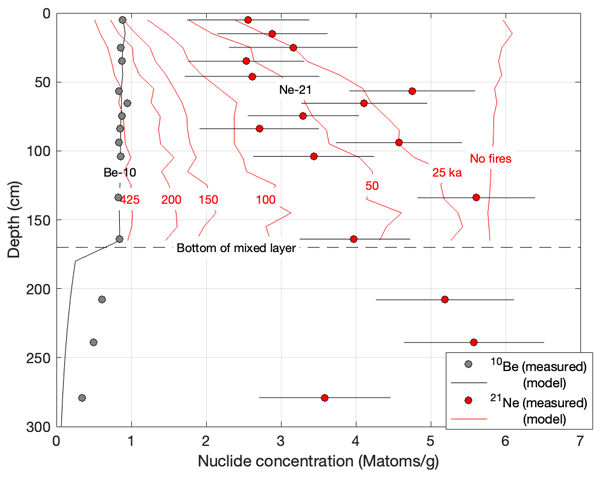
We describe a new method of reconstructing the long-term, pre-observational frequency and/or intensity of wildfires in forested landscapes using trace concentrations of the noble gases helium and neon that are formed in soil mineral grains by cosmic-ray bombardment of the Earth's surface.
Benoit S. Lecavalier, Lev Tarasov, Greg Balco, Perry Spector, Claus-Dieter Hillenbrand, Christo Buizert, Catherine Ritz, Marion Leduc-Leballeur, Robert Mulvaney, Pippa L. Whitehouse, Michael J. Bentley, and Jonathan Bamber
Earth Syst. Sci. Data, 15, 3573–3596, https://doi.org/10.5194/essd-15-3573-2023, https://doi.org/10.5194/essd-15-3573-2023, 2023
Short summary
Short summary
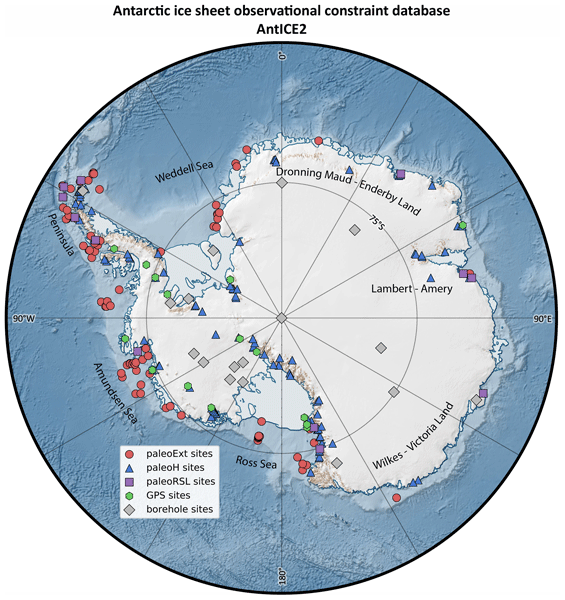
The Antarctic Ice Sheet Evolution constraint database version 2 (AntICE2) consists of a large variety of observations that constrain the evolution of the Antarctic Ice Sheet over the last glacial cycle. This includes observations of past ice sheet extent, past ice thickness, past relative sea level, borehole temperature profiles, and present-day bedrock displacement rates. The database is intended to improve our understanding of past Antarctic changes and for ice sheet model calibrations.
Allie Balter-Kennedy, Joerg M. Schaefer, Roseanne Schwartz, Jennifer L. Lamp, Laura Penrose, Jennifer Middleton, Jean Hanley, Bouchaïb Tibari, Pierre-Henri Blard, Gisela Winckler, Alan J. Hidy, and Greg Balco
Geochronology, 5, 301–321, https://doi.org/10.5194/gchron-5-301-2023, https://doi.org/10.5194/gchron-5-301-2023, 2023
Short summary
Short summary
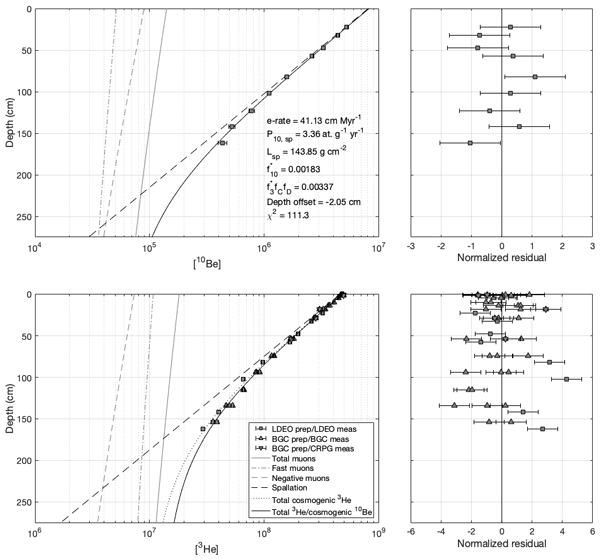
Cosmogenic nuclides like 10Be are rare isotopes created in rocks exposed at the Earth’s surface and can be used to understand glacier histories and landscape evolution. 10Be is usually measured in the mineral quartz. Here, we show that 10Be can be reliably measured in the mineral pyroxene. We use the measurements to determine exposure ages and understand landscape processes in rocks from Antarctica that do not have quartz, expanding the use of this method to new rock types.
Greg Balco, Nathan Brown, Keir Nichols, Ryan A. Venturelli, Jonathan Adams, Scott Braddock, Seth Campbell, Brent Goehring, Joanne S. Johnson, Dylan H. Rood, Klaus Wilcken, Brenda Hall, and John Woodward
The Cryosphere, 17, 1787–1801, https://doi.org/10.5194/tc-17-1787-2023, https://doi.org/10.5194/tc-17-1787-2023, 2023
Short summary
Short summary
Samples of bedrock recovered from below the West Antarctic Ice Sheet show that part of the ice sheet was thinner several thousand years ago than it is now and subsequently thickened. This is important because of concern that present ice thinning in this region may lead to rapid, irreversible sea level rise. The past episode of thinning at this site that took place in a similar, although not identical, climate was not irreversible; however, reversal required at least 3000 years to complete.
Anna Ruth W. Halberstadt, Greg Balco, Hannah Buchband, and Perry Spector
The Cryosphere, 17, 1623–1643, https://doi.org/10.5194/tc-17-1623-2023, https://doi.org/10.5194/tc-17-1623-2023, 2023
Short summary
Short summary
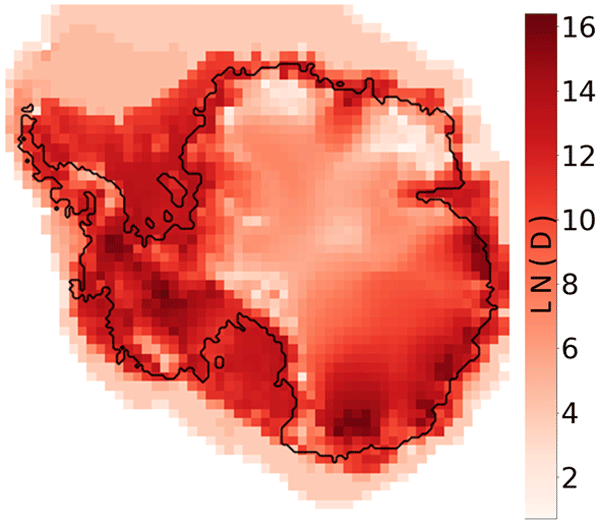
This paper explores the use of multimillion-year exposure ages from Antarctic bedrock outcrops to benchmark ice sheet model predictions and thereby infer ice sheet sensitivity to warm climates. We describe a new approach for model–data comparison, highlight an example where observational data are used to distinguish end-member models, and provide guidance for targeted sampling around Antarctica that can improve understanding of ice sheet response to climate warming in the past and future.
Alyssa J. McKanna, Isabel Koran, Blair Schoene, and Richard A. Ketcham
Geochronology, 5, 127–151, https://doi.org/10.5194/gchron-5-127-2023, https://doi.org/10.5194/gchron-5-127-2023, 2023
Short summary
Short summary
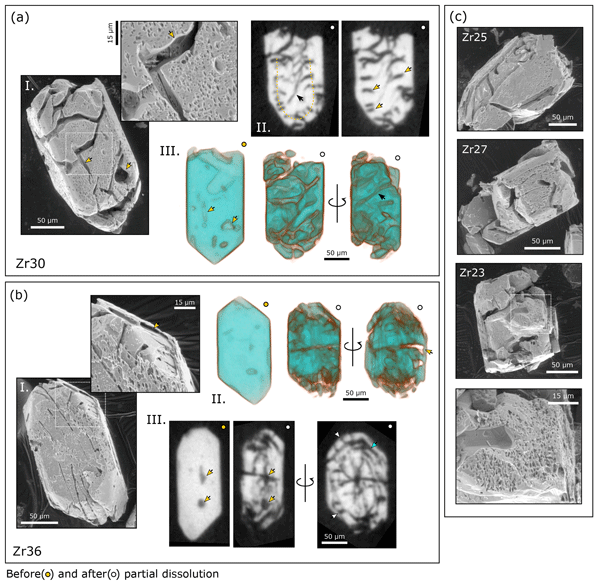
Acid leaching is commonly used to remove damaged portions of zircon crystals prior to U–Pb dating. However, a basic understanding of the microstructural processes that occur during leaching is lacking. We present the first 3D view of zircon dissolution based on X-ray computed tomography data acquired before and after acid leaching. These data are paired with images of etched grain surfaces and Raman spectral data. We also reveal exciting opportunities for imaging radiation damage zoning in 3D.

Jonathan R. Adams, Joanne S. Johnson, Stephen J. Roberts, Philippa J. Mason, Keir A. Nichols, Ryan A. Venturelli, Klaus Wilcken, Greg Balco, Brent Goehring, Brenda Hall, John Woodward, and Dylan H. Rood
The Cryosphere, 16, 4887–4905, https://doi.org/10.5194/tc-16-4887-2022, https://doi.org/10.5194/tc-16-4887-2022, 2022
Short summary
Short summary
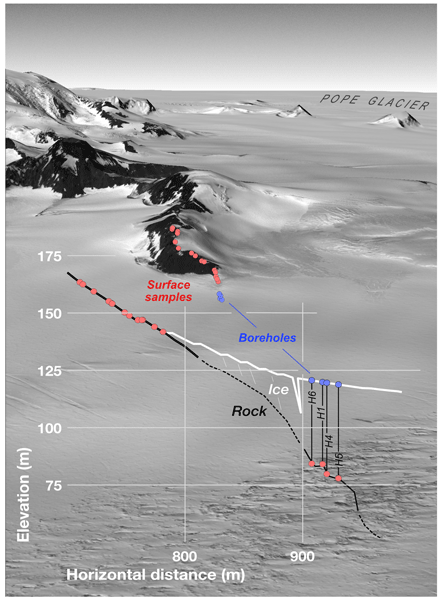
Glaciers in West Antarctica are experiencing significant ice loss. Geological data provide historical context for ongoing ice loss in West Antarctica, including constraints on likely future ice sheet behaviour in response to climatic warming. We present evidence from rare isotopes measured in rocks collected from an outcrop next to Pope Glacier. These data suggest that Pope Glacier thinned faster and sooner after the last ice age than previously thought.

Natacha Gribenski, Marissa M. Tremblay, Pierre G. Valla, Greg Balco, Benny Guralnik, and David L. Shuster
Geochronology, 4, 641–663, https://doi.org/10.5194/gchron-4-641-2022, https://doi.org/10.5194/gchron-4-641-2022, 2022
Short summary
Short summary
We apply quartz 3He paleothermometry along two deglaciation profiles in the European Alps to reconstruct temperature evolution since the Last Glacial Maximum. We observe a 3He thermal signal clearly colder than today in all bedrock surface samples exposed prior the Holocene. Current uncertainties in 3He diffusion kinetics do not permit distinguishing if this signal results from Late Pleistocene ambient temperature changes or from recent ground temperature variation due to permafrost degradation.
Marie Bergelin, Jaakko Putkonen, Greg Balco, Daniel Morgan, Lee B. Corbett, and Paul R. Bierman
The Cryosphere, 16, 2793–2817, https://doi.org/10.5194/tc-16-2793-2022, https://doi.org/10.5194/tc-16-2793-2022, 2022
Short summary
Short summary
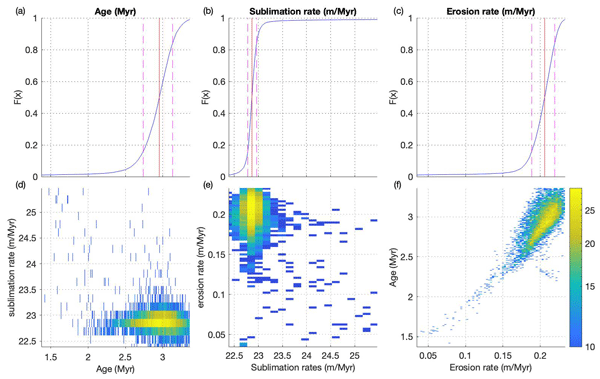
Glacier ice contains information on past climate and can help us understand how the world changes through time. We have found and sampled a buried ice mass in Antarctica that is much older than most ice on Earth and difficult to date. Therefore, we developed a new dating application which showed the ice to be 3 million years old. Our new dating solution will potentially help to date other ancient ice masses since such old glacial ice could yield data on past environmental conditions on Earth.
Mae Kate Campbell, Paul R. Bierman, Amanda H. Schmidt, Rita Sibello Hernández, Alejandro García-Moya, Lee B. Corbett, Alan J. Hidy, Héctor Cartas Águila, Aniel Guillén Arruebarrena, Greg Balco, David Dethier, and Marc Caffee
Geochronology, 4, 435–453, https://doi.org/10.5194/gchron-4-435-2022, https://doi.org/10.5194/gchron-4-435-2022, 2022
Short summary
Short summary
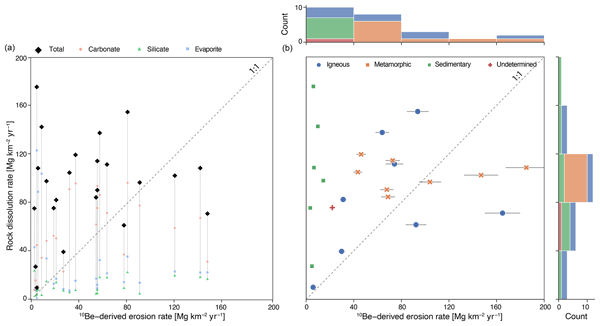
We used cosmogenic radionuclides in detrital river sediment to measure erosion rates of watersheds in central Cuba; erosion rates are lower than rock dissolution rates in lowland watersheds. Data from two different cosmogenic nuclides suggest that some basins may have a mixed layer deeper than is typically modeled and could have experienced significant burial after or during exposure. We conclude that significant mass loss may occur at depth through chemical weathering processes.

Joanne S. Johnson, Ryan A. Venturelli, Greg Balco, Claire S. Allen, Scott Braddock, Seth Campbell, Brent M. Goehring, Brenda L. Hall, Peter D. Neff, Keir A. Nichols, Dylan H. Rood, Elizabeth R. Thomas, and John Woodward
The Cryosphere, 16, 1543–1562, https://doi.org/10.5194/tc-16-1543-2022, https://doi.org/10.5194/tc-16-1543-2022, 2022
Short summary
Short summary
Recent studies have suggested that some portions of the Antarctic Ice Sheet were less extensive than present in the last few thousand years. We discuss how past ice loss and regrowth during this time would leave its mark on geological and glaciological records and suggest ways in which future studies could detect such changes. Determining timing of ice loss and gain around Antarctica and conditions under which they occurred is critical for preparing for future climate-warming-induced changes.
David M. Whipp, Dawn A. Kellett, Isabelle Coutand, and Richard A. Ketcham
Geochronology, 4, 143–152, https://doi.org/10.5194/gchron-4-143-2022, https://doi.org/10.5194/gchron-4-143-2022, 2022
Short summary
Short summary
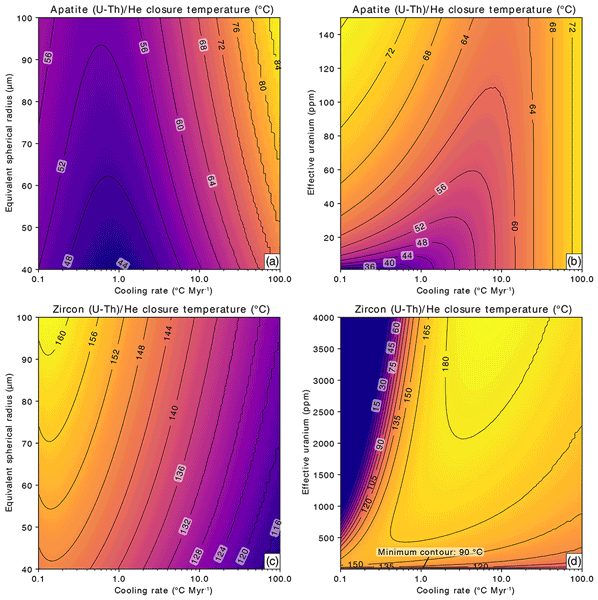
Multi-thermochronometry, in which methods such as (U-Th)/He dating of zircon and apatite and apatite fission track dating are combined, is used to reconstruct rock thermal histories. Our ability to reconstruct thermal histories and interpret the geological significance of measured ages requires modeling. Here we use forward models to explore effects of grain size and chemistry on cooling ages and closure temperatures for the (U-Th)/He decay systems in apatite and zircon.
Jamey Stutz, Andrew Mackintosh, Kevin Norton, Ross Whitmore, Carlo Baroni, Stewart S. R. Jamieson, Richard S. Jones, Greg Balco, Maria Cristina Salvatore, Stefano Casale, Jae Il Lee, Yeong Bae Seong, Robert McKay, Lauren J. Vargo, Daniel Lowry, Perry Spector, Marcus Christl, Susan Ivy Ochs, Luigia Di Nicola, Maria Iarossi, Finlay Stuart, and Tom Woodruff
The Cryosphere, 15, 5447–5471, https://doi.org/10.5194/tc-15-5447-2021, https://doi.org/10.5194/tc-15-5447-2021, 2021
Short summary
Short summary
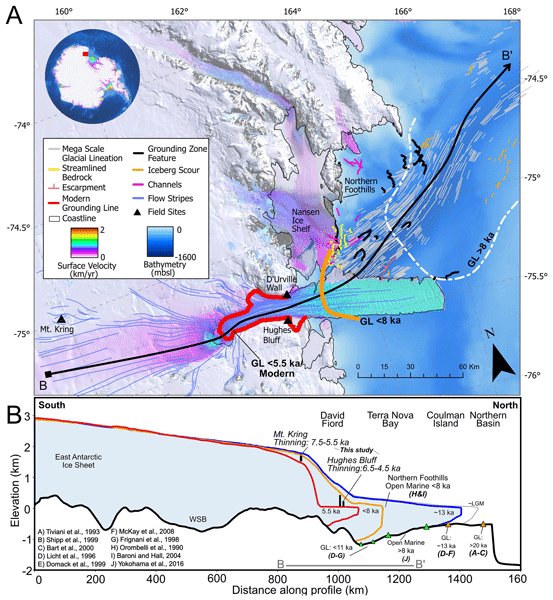
Understanding the long-term behaviour of ice sheets is essential to projecting future changes due to climate change. In this study, we use rocks deposited along the margin of the David Glacier, one of the largest glacier systems in the world, to reveal a rapid thinning event initiated over 7000 years ago and endured for ~ 2000 years. Using physical models, we show that subglacial topography and ocean heat are important drivers for change along this sector of the Antarctic Ice Sheet.
Cited articles
Amidon, W. H. and Farley, K. A.: Mass spectrometric 3He measurement in 4He-rich phases: Techniques and limitations for cosmogenic 3He dating of zircon, apatite, and titanite, Geochemistry, Geophysics, Geosystems, 11, https://doi.org/10.1029/2010gc003178, 2010.
Applegate, P. J., Urban, N. M., Laabs, B. J. C., Keller, K., and Alley, R. B.: Modeling the statistical distributions of cosmogenic exposure dates from moraines, Geosci. Model Dev., 3, 293–307, https://doi.org/10.5194/gmd-3-293-2010, 2010.
Applegate, P. J., Urban, N. M., Keller, K., Lowell, T. V., Laabs, B. J. C., Kelly, M. A., and Alley, R. B.: Improved moraine age interpretations through explicit matching of geomorphic process models to cosmogenic nuclide measurements from single landforms, Quaternary Research, 77, 293–304, https://doi.org/10.1016/j.yqres.2011.12.002, 2012.
Balco, G.: Contributions and unrealized potential contributions of cosmogenic-nuclide exposure dating to glacier chronology, 1990–2010, Quaternary Science Reviews, 30, 3–27, https://doi.org/10.1016/j.quascirev.2010.11.003, 2011.
Balco, G.: Glacier Change and Paleoclimate Applications of Cosmogenic-Nuclide Exposure Dating, Annual Review of Earth and Planetary Sciences, 48, 21–48, https://doi.org/10.1146/annurev-earth-081619-052609, 2020.
Balter-Kennedy, A., Bromley, G., Balco, G., Thomas, H., and Jackson, M. S.: A 14.5-million-year record of East Antarctic Ice Sheet fluctuations from the central Transantarctic Mountains, constrained with cosmogenic 3He, 10Be, 21Ne, and 26Al, The Cryosphere, 14, 2647–2672, https://doi.org/10.5194/tc-14-2647-2020, 2020.
Bergelin, M., Balco, G., Corbett, L. B., and Bierman, P. R.: Production rate calibration for cosmogenic 10Be in pyroxene by applying a rapid fusion method to 10Be-saturated samples from the Transantarctic Mountains, Antarctica, Geochronology, 6, 491–502, https://doi.org/10.5194/gchron-6-491-2024, 2024.
Bergelin, M., Gorin, A. L., Balco, G., and Cassata, W. S.: Diffusion kinetics of 3He in pyroxene and plagioclase and applications to cosmogenic exposure dating and paleothermometry in mafic rocks, Geochronology, 7, 493–511, https://doi.org/10.5194/gchron-7-493-2025, 2025.
Blard, P. H., Lavé, J., Farley, K. A., Fornari, M., Jiménez, N., and Ramirez, V.: Late local glacial maximum in the Central Altiplano triggered by cold and locally-wet conditions during the paleolake Tauca episode (17–15 ka, Heinrich 1), Quaternary Science Reviews, 28, 3414–3427, https://doi.org/10.1016/j.quascirev.2009.09.025, 2009.
Blard, P. H., Balco, G., Burnard, P. G., Farley, K. A., Fenton, C. R., Friedrich, R., Jull, A. J. T., Niedermann, S., Pik, R., Schaefer, J. M., Scott, E. M., Shuster, D. L., Stuart, F. M., Stute, M., Tibari, B., Winckler, G., and Zimmermann, L.: An inter-laboratory comparison of cosmogenic 3He and radiogenic 4He in the CRONUS-P pyroxene standard, Quat. Geochronol., 26, 11–19, https://doi.org/10.1016/j.quageo.2014.08.004, 2015.
Bromley, G. R. M., Winckler, G., Schaefer, J. M., Kaplan, M. R., Licht, K. J., and Hall, B. L.: Pyroxene separation by HF leaching and its impact on helium surface-exposure dating, Quat. Geochronol., 23, 1–8, https://doi.org/10.1016/j.quageo.2014.04.003, 2014.
Bromley, G. R. M., Balco, G., Jackson, M. S., Balter-Kennedy, A., and Thomas, H.: East Antarctic Ice Sheet variability in the central Transantarctic Mountains since the mid Miocene, Clim. Past, 21, 145–160, https://doi.org/10.5194/cp-21-145-2025, 2025.
Brook, E. J., Brown, E. T., Kurz, M. D., Ackert, R. P., Raisbeck, G. M., and Yiou, F.: Constraints on age, erosion, and uplift of Neogene glacial deposits in the Transantarctic Mountains determined from in situ cosmogenic 10Be and 26Al, Geology, 23, 1063–1066, https://doi.org/10.1130/0091-7613(1995)023<1063:Coaeau>2.3.Co;2, 1995.
Bruno, L. A., Baur, H., Graf, T., Schlu, C., Signer, P., and Wieler, R.: Dating of Sirius Group tillites in the Antarctic Dry Valleys with cosmogenic 3He and 21Ne, Earth and Planetary Science Letters, 147, 37–54, 1997.
Burgess, S. D., Bowring, S. A., Fleming, T. H., and Elliot, D. H.: High-precision geochronology links the Ferrar large igneous province with early-Jurassic ocean anoxia and biotic crisis, Earth and Planetary Science Letters, 415, 90–99, https://doi.org/10.1016/j.epsl.2015.01.037, 2015.
Cerling, T. E.: Dating Geomorphologic Surfaces Using Cosmogenic 3He, Quaternary Research, 33, 148–156, https://doi.org/10.1016/0033-5894(90)90015-d, 1990.
Cooperdock, E. H. G., Hofmann, F., Tibbetts, R. M. C., Carrera, A., Takase, A., and Celestian, A. J.: Technical note: Rapid phase identification of apatite and zircon grains for geochronology using X-ray micro-computed tomography, Geochronology, 4, 501–515, https://doi.org/10.5194/gchron-4-501-2022, 2022.
Diaz, M. A., Li, J., Michalski, G., Darrah, T. H., Adams, B. J., Wall, D. H., Hogg, I. D., Fierer, N., Welch, S. A., Gardner, C. B., and Lyons, W. B.: Stable Isotopes of Nitrate, Sulfate, and Carbonate in Soils From the Transantarctic Mountains, Antarctica: A Record of Atmospheric Deposition and Chemical Weathering, Frontiers in Earth Science, 8, https://doi.org/10.3389/feart.2020.00341, 2020.
Eaves, S. R., Collins, J. A., Jones, R. S., Norton, K. P., Tims, S. G., and Mackintosh, A. N.: Further constraint of the in situ cosmogenic 10Be production rate in pyroxene and a viability test for late Quaternary exposure dating, Quat. Geochronol., 48, 121–132, https://doi.org/10.1016/j.quageo.2018.09.006, 2018.
Eberhardt, P., Geiss, J., and Grögler, N.: Distribution of rare gases in the pyroxene and feldspar of the Khor Temiki meteorite, Earth and Planetary Science Letters, 1, 7–12, https://doi.org/10.1016/0012-821x(66)90096-3, 1966.
Elliot, D. H. and Fleming, T. H.: Chapter 2.1b Ferrar Large Igneous Province: petrology, Geological Society, London, Memoirs, 55, 93–119, https://doi.org/10.1144/m55-2018-39, 2021.
Farley, K. A., Malespin, C., Mahaffy, P., Grotzinger, J. P., Vasconcelos, P. M., Milliken, R. E., Malin, M., Edgett, K. S., Pavlov, A. A., Hurowitz, J. A., Grant, J. A., Miller, H. B., Arvidson, R., Beegle, L., Calef, F., Conrad, P. G., Dietrich, W. E., Eigenbrode, J., Gellert, R., Gupta, S., Hamilton, V., Hassler, D. M., Lewis, K. W., McLennan, S. M., Ming, D., Navarro-Gonzalez, R., Schwenzer, S. P., Steele, A., Stolper, E. M., Sumner, D. Y., Vaniman, D., Vasavada, A., Williford, K., Wimmer-Schweingruber, R. F., and Team, M. S. L. S.: In situ radiometric and exposure age dating of the martian surface, Science, 343, 1247166, https://doi.org/10.1126/science.1247166, 2014.
Fechtig, H. and Kalbitzer, S.: The diffusion of argon in potassium-bearing solids, in: Potassium–Argon Dating, edited by: Schaeffer, O. A., and Zahringer, J., Heidelberg, Spinger, 68–106, https://doi.org/10.1007/978-3-642-87895-4_4, 1966.
Futagami, T., Ozima, M., Nagal, S., and Aoki, Y.: Experiments on thermal release of implanted noble gases from minerals and their implications for noble gases in lunar soil grains, Geochimica et Cosmochimica Acta, 57, 3177–3194, https://doi.org/10.1016/0016-7037(93)90302-d, 1993.
Grootes, P. M., Steig, E. J., and Stuwer, M.: Taylor Ice Dome study 1993–1994: An ice core to bedrock, Antarctic Journal of the United States, 29, 79–81, 1994.
Hofmann, F., Cooperdock, E. H. G., West, A. J., Hildebrandt, D., Strößner, K., and Farley, K. A.: Exposure dating of detrital magnetite using 3He enabled by microCT and calibration of the cosmogenic 3He production rate in magnetite, Geochronology, 3, 395–414, https://doi.org/10.5194/gchron-3-395-2021, 2021.
Kaplan, M. R., Licht, K. J., Winckler, G., Schaefer, J. M., Bader, N., Mathieson, C., Roberts, M., Kassab, C. M., Schwartz, R., and Graly, J. A.: Middle to Late Pleistocene stability of the central East Antarctic Ice Sheet at the head of Law Glacier, Geology, 45, 963–966, https://doi.org/10.1130/g39189.1, 2017.
Ketcham, R. A.: Computational methods for quantitative analysis of three-dimensional features in geological specimens, Geosphere, 1, https://doi.org/10.1130/ges00001.1, 2005.
Ketcham, R. A. and Mote, A. S.: Accurate Measurement of Small Features in X-Ray CT Data Volumes, Demonstrated Using Gold Grains, Journal of Geophysical Research: Solid Earth, 124, 3508–3529, https://doi.org/10.1029/2018jb017083, 2019.
Ketcham, R. A., Slottke, D. T., and Sharp, J. M.: Three-dimensional measurement of fractures in heterogeneous materials using high-resolution X-ray computed tomography, Geosphere, 6, 499–514, https://doi.org/10.1130/ges00552.1, 2010.
Kurz, M. D.: In situ production of terrestrial cosmogenic helium and some applications to geochronology, Geochimica et Cosmochimica Acta, 50, 2855–2862, https://doi.org/10.1016/0016-7037(86)90232-2, 1986.
Larsen, I. J., Farley, K. A., and Lamb, M. P.: Cosmogenic 3He production rate in ilmenite and the redistribution of spallation 3He in fine-grained minerals, Geochimica et Cosmochimica Acta, 265, 19–31, https://doi.org/10.1016/j.gca.2019.08.025, 2019.
Licciardi, J. M., Kurz, M. D., Clark, P. U., and Brook, E. J.: Calibration of cosmogenic 3He production rates from Holocene lava flows in Oregon, USA, and effects of the Earth's magnetic field, Earth and Planetary Science Letters, 172, 261–271, https://doi.org/10.1016/s0012-821x(99)00204-6, 1999.
Lovera, O. M., Richter, F. M., and Harrison, T. M.: The
Lovera, O. M., Grove, M., Mark Harrison, T., and Mahon, K. I.: Systematic analysis of K-feldspar step heating results: I. Significance of activation energy determinations, Geochimica et Cosmochimica Acta, 61, 3171–3192, https://doi.org/10.1016/s0016-7037(97)00147-6, 1997.
Lyons, W. B., Deuerling, K., Welch, K. A., Welch, S. A., Michalski, G., Walters, W. W., Nielsen, U., Wall, D. H., Hogg, I., and Adams, B. J.: The Soil Geochemistry in the Beardmore Glacier Region, Antarctica: Implications for Terrestrial Ecosystem History, Sci. Rep., 6, 26189, https://doi.org/10.1038/srep26189, 2016.
Margerison, H. R., Phillips, W. M., Stuart, F. M., and Sugden, D. E.: Cosmogenic 3He concentrations in ancient flood deposits from the Coombs Hills, northern Dry Valleys, East Antarctica: interpreting exposure ages and erosion rates, Earth and Planetary Science Letters, 230, 163–175, https://doi.org/10.1016/j.epsl.2004.11.007, 2005.
Putkonen, J., Balco, G., and Morgan, D.: Slow regolith degradation without creep determined by cosmogenic nuclide measurements in Arena Valley, Antarctica, Quaternary Research, 69, 242–249, https://doi.org/10.1016/j.yqres.2007.12.004, 2008.
Schäfer, J. M., Ivy-Ochs, S., Wieler, R., Leya, I., Baur, H., Denton, G. H., and Schlüchter, C.: Cosmogenic noble gas studies in the oldest landscape on earth: surface exposure ages of the Dry Valleys, Antarctica, Earth and Planetary Science Letters, 167, 215–226, https://doi.org/10.1016/s0012-821x(99)00029-1, 1999.
Schaller, M., Ehlers, T. A., Blum, J. D., and Kallenberg, M. A.: Quantifying glacial moraine age, denudation, and soil mixing with cosmogenic nuclide depth profiles, Journal of Geophysical Research, 114, https://doi.org/10.1029/2007jf000921, 2009.
Shuster, D. L. and Farley, K. A.: Diffusion kinetics of proton-induced 21Ne, 3He, and 4He in quartz, Geochimica et Cosmochimica Acta, 69, 2349–2359, https://doi.org/10.1016/j.gca.2004.11.002, 2005.
Shuster, D. L., Farley, K. A., Sisterson, J. M., and Burnett, D. S.: Quantifying the diffusion kinetics and spatial distributions of radiogenic 4He in minerals containing proton-induced 3He, Earth and Planetary Science Letters, 217, 19–32, https://doi.org/10.1016/s0012-821x(03)00594-6, 2004.
Steig, E. J., Morse, D. L., Waddington, E. D., Stuiver, M., Grootes, P. M., Mayewski, P. A., Twickler, M. S., and Whitlow, S. I.: Wisconsinan and holocene climate history from an ice core at taylor dome, western ross embayment, Antarctica, Geografiska Annaler: Series A, 82, 213–235, https://doi.org/10.1111/j.0435-3676.2000.00122.x, 2000.
Swanger, K. M., Babcock, E., Winsor, K., Lamp, J. L., and Winckler, G.: Moraines and dead ice in Taylor Valley, Antarctica, record retreat of alpine and outlet glaciers from Marine Isotope Stage 5 to 4, Arctic, Antarctic, and Alpine Research, 57, https://doi.org/10.1080/15230430.2025.2478696, 2025.
Tremblay, M. M., Shuster, D. L., and Balco, G.: Diffusion kinetics of 3He and 21Ne in quartz and implications for cosmogenic noble gas paleothermometry, Geochimica et Cosmochimica Acta, 142, 186–204, https://doi.org/10.1016/j.gca.2014.08.010, 2014.
Tremblay, M. M., Shuster, D. L., Balco, G., and Cassata, W. S.: Neon diffusion kinetics and implications for cosmogenic neon paleothermometry in feldspars, Geochimica et Cosmochimica Acta, 205, 14–30, https://doi.org/10.1016/j.gca.2017.02.013, 2017.
Trull, T. W., Kurz, M. D., and Jenkins, W. J.: Diffusion of cosmogenic 3He in olivine and quartz: implications for surface exposure dating, Earth and Planetary Science Letters, 103, 241–256, https://doi.org/10.1016/0012-821x(91)90164-d, 1991.
Short summary
We developed a faster and simpler method to measure helium gas in targeted minerals within whole rocks to determine how long they have been exposed at Earth's surface. Instead of manually separating minerals, our method uses heat to release gas from the specific minerals of interest. This reduces time, cost, and physical effort, making it easier to collect large amounts of data when studying landscape change or when only small rock samples are available.
We developed a faster and simpler method to measure helium gas in targeted minerals within whole...


