
Articles | Volume 8, issue 3
https://doi.org/10.5194/gchron-8-547-2026
© Author(s) 2026. This work is distributed under
the Creative Commons Attribution 4.0 License.
the Creative Commons Attribution 4.0 License.
https://doi.org/10.5194/gchron-8-547-2026
© Author(s) 2026. This work is distributed under
the Creative Commons Attribution 4.0 License.
the Creative Commons Attribution 4.0 License.
Research article
| 
15 Sep 2026
Research article |
| 15 Sep 2026
| 15 Sep 2026
Meteoric beryllium-10 fluxes from soil inventory measurements in the East River watershed, Colorado, USA
José M. Marmolejo-Cossío
Department of Earth, Geographic, and Climate Sciences, University of Massachusetts, Amherst, 01003, USA

Department of Earth, Geographic, and Climate Sciences, University of Massachusetts, Amherst, 01003, USA
Rocky Mountain Biological Laboratory, Crested Butte, CO, 81224, USA
Eyal Marder
Department of Earth, Geographic, and Climate Sciences, University of Massachusetts, Amherst, 01003, USA
Alan J. Hidy
Center for Accelerator Mass Spectrometry, Lawrence Livermore National Laboratory, Livermore, CA, 94550, USA
Related authors
No articles found.
Gregor M. Rink, Gordon R. M. Bromley, Brenda L. Hall, Alan J. Hidy, and Zuzanna M. Swirad
EGUsphere, https://doi.org/10.5194/egusphere-2026-3761, https://doi.org/10.5194/egusphere-2026-3761, 2026
This preprint is open for discussion and under review for Earth Surface Dynamics (ESurf).
Short summary
Short summary
To identify drivers of coastal erosion in western Ireland, we reconstructed cliff-retreat rates at two sites via cosmogenic nuclide geochemistry and modelling. At both sites, cliff retreat decelerated during the Holocene, but the rate of deceleration was spatially non-uniform due to differences in relative sea level. Variations in modern retreat rates likely reflect contrasting geomorphology, geology and different marine environments.
Tyler S. Anderson and Alan Hidy
EGUsphere, https://doi.org/10.5194/egusphere-2026-4091, https://doi.org/10.5194/egusphere-2026-4091, 2026
Short summary
Short summary
We have developed a new method to measure stable Cl isotope ratios in rocks, improving on the standard method by preparing our samples in niobium instead of a silver bromide. This technique improves signal to noise by a factor of ~100, reduces sample measurement time and cost, and makes isotopic analyses of as little as 1 microgram of Cl extracted from a rock possible. This improves measurement of 36Cl and makes small or chlorine-poor samples accessible for stable isotope analysis.
John C. Gosse, Alan J. Hidy, Lauren MacLellan, Joel Pederson, Maya Soukup, Gerald Raab, Matt Drew, Sophie Norris, Marie-Cécile Piro, and William U. Woodley
EGUsphere, https://doi.org/10.5194/egusphere-2025-4370, https://doi.org/10.5194/egusphere-2025-4370, 2025
Short summary
Short summary
A novel approach, µ-paleotopometry, bridges gaps among tools used to quantify landscape evolution. It computes landscape change by using concentrations of isotopes produced by cosmic rays deep below the Earth's surface to gauge changes in crustal shielding above each sample. We provide a state of knowledge, strategies, and limitations of this potentially useful approach to study landscape evolution at timescales that are important to tectonic and climatic processes and nuclear waste management.
Alia J. Lesnek, Joseph M. Licciardi, Alan J. Hidy, and Tyler S. Anderson
Geochronology, 6, 475–489, https://doi.org/10.5194/gchron-6-475-2024, https://doi.org/10.5194/gchron-6-475-2024, 2024
Short summary
Short summary
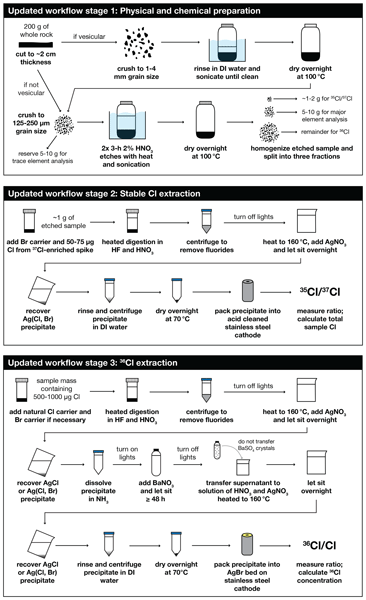
We present an improved workflow for extracting and measuring chlorine isotopes in rocks and minerals. Experiments on seven geologic samples demonstrate that our workflow provides reliable results while offering several distinct advantages over traditional methods. Most notably, our workflow reduces the amount of isotopically enriched chlorine spike used per rock sample by up to 95 %, which will allow researchers to analyze more samples using their existing laboratory supplies.
Greg Balco, Alan J. Hidy, William T. Struble, and Joshua J. Roering
Geochronology, 6, 71–76, https://doi.org/10.5194/gchron-6-71-2024, https://doi.org/10.5194/gchron-6-71-2024, 2024
Short summary
Short summary
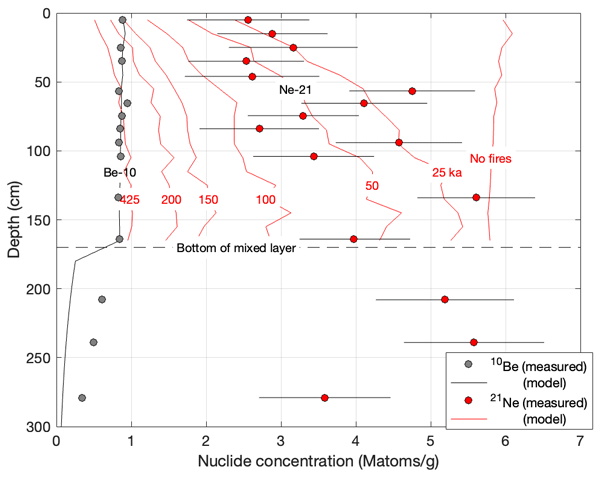
We describe a new method of reconstructing the long-term, pre-observational frequency and/or intensity of wildfires in forested landscapes using trace concentrations of the noble gases helium and neon that are formed in soil mineral grains by cosmic-ray bombardment of the Earth's surface.
Jacob T. H. Anderson, Toshiyuki Fujioka, David Fink, Alan J. Hidy, Gary S. Wilson, Klaus Wilcken, Andrey Abramov, and Nikita Demidov
The Cryosphere, 17, 4917–4936, https://doi.org/10.5194/tc-17-4917-2023, https://doi.org/10.5194/tc-17-4917-2023, 2023
Short summary
Short summary
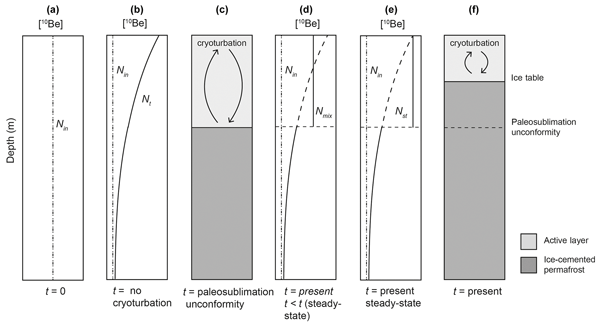
Antarctic permafrost processes are not widely studied or understood in the McMurdo Dry Valleys. Our data show that near-surface permafrost sediments were deposited ~180 000 years ago in Pearse Valley, while in lower Wright Valley sediments are either vertically mixed after deposition or were deposited < 25 000 years ago. Our data also record Taylor Glacier retreat from Pearse Valley ~65 000–74 000 years ago and support antiphase dynamics between alpine glaciers and sea ice in the Ross Sea.
Allie Balter-Kennedy, Joerg M. Schaefer, Roseanne Schwartz, Jennifer L. Lamp, Laura Penrose, Jennifer Middleton, Jean Hanley, Bouchaïb Tibari, Pierre-Henri Blard, Gisela Winckler, Alan J. Hidy, and Greg Balco
Geochronology, 5, 301–321, https://doi.org/10.5194/gchron-5-301-2023, https://doi.org/10.5194/gchron-5-301-2023, 2023
Short summary
Short summary
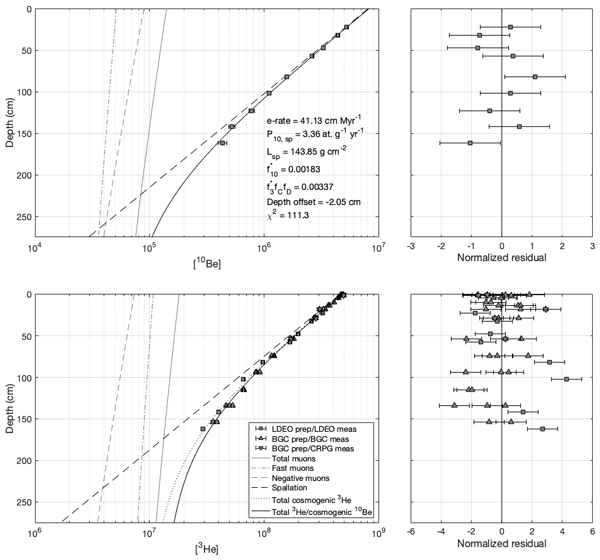
Cosmogenic nuclides like 10Be are rare isotopes created in rocks exposed at the Earth’s surface and can be used to understand glacier histories and landscape evolution. 10Be is usually measured in the mineral quartz. Here, we show that 10Be can be reliably measured in the mineral pyroxene. We use the measurements to determine exposure ages and understand landscape processes in rocks from Antarctica that do not have quartz, expanding the use of this method to new rock types.
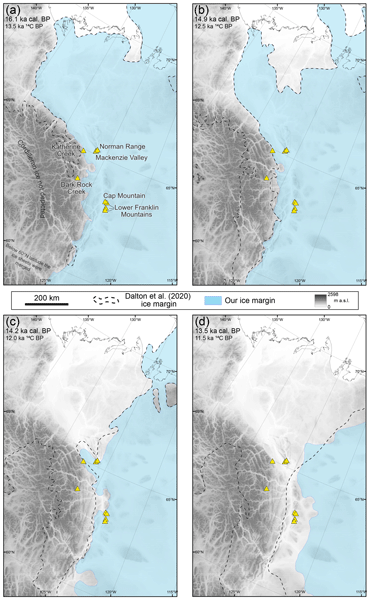
Benjamin J. Stoker, Martin Margold, John C. Gosse, Alan J. Hidy, Alistair J. Monteath, Joseph M. Young, Niall Gandy, Lauren J. Gregoire, Sophie L. Norris, and Duane Froese
The Cryosphere, 16, 4865–4886, https://doi.org/10.5194/tc-16-4865-2022, https://doi.org/10.5194/tc-16-4865-2022, 2022
Short summary
Short summary
The Laurentide Ice Sheet was the largest ice sheet to grow and disappear in the Northern Hemisphere during the last glaciation. In northwestern Canada, it covered the Mackenzie Valley, blocking the migration of fauna and early humans between North America and Beringia and altering the drainage systems. We reconstruct the timing of ice sheet retreat in this region and the implications for the migration of early humans into North America, the drainage of glacial lakes, and past sea level rise.
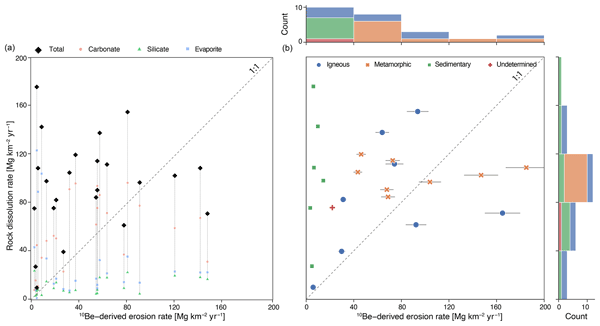
Mae Kate Campbell, Paul R. Bierman, Amanda H. Schmidt, Rita Sibello Hernández, Alejandro García-Moya, Lee B. Corbett, Alan J. Hidy, Héctor Cartas Águila, Aniel Guillén Arruebarrena, Greg Balco, David Dethier, and Marc Caffee
Geochronology, 4, 435–453, https://doi.org/10.5194/gchron-4-435-2022, https://doi.org/10.5194/gchron-4-435-2022, 2022
Short summary
Short summary
We used cosmogenic radionuclides in detrital river sediment to measure erosion rates of watersheds in central Cuba; erosion rates are lower than rock dissolution rates in lowland watersheds. Data from two different cosmogenic nuclides suggest that some basins may have a mixed layer deeper than is typically modeled and could have experienced significant burial after or during exposure. We conclude that significant mass loss may occur at depth through chemical weathering processes.

Leah A. VanLandingham, Eric W. Portenga, Edward C. Lefroy, Amanda H. Schmidt, Paul R. Bierman, and Alan J. Hidy
Geochronology, 4, 153–176, https://doi.org/10.5194/gchron-4-153-2022, https://doi.org/10.5194/gchron-4-153-2022, 2022
Short summary
Short summary
This study presents erosion rates of the George River and seven of its tributaries in northeast Tasmania, Australia. These erosion rates are the first measures of landscape change over millennial timescales for Tasmania. We demonstrate that erosion is closely linked to a topographic rainfall gradient across George River. Our findings may be useful for efforts to restore ecological health to Georges Bay by determining a pre-disturbance level of erosion and sediment delivery to this estuary.
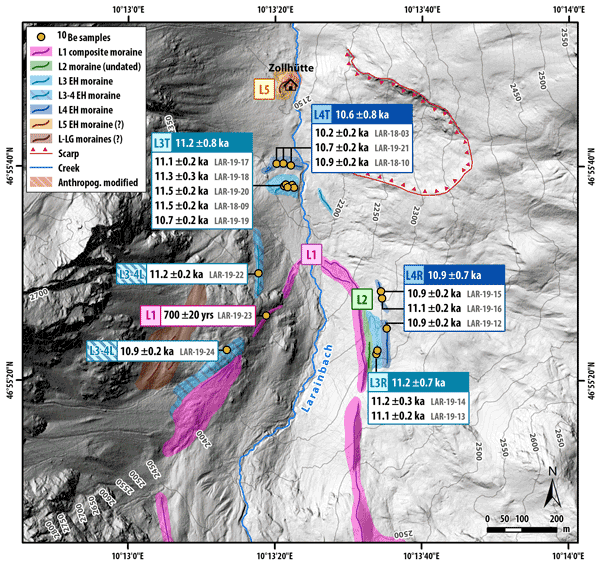
Sandra M. Braumann, Joerg M. Schaefer, Stephanie M. Neuhuber, Christopher Lüthgens, Alan J. Hidy, and Markus Fiebig
Clim. Past, 17, 2451–2479, https://doi.org/10.5194/cp-17-2451-2021, https://doi.org/10.5194/cp-17-2451-2021, 2021
Short summary
Short summary
Glacier reconstructions provide insights into past climatic conditions and elucidate processes and feedbacks that modulate the climate system both in the past and present. We investigate the transition from the last glacial to the current interglacial and generate beryllium-10 moraine chronologies in glaciated catchments of the eastern European Alps. We find that rapid warming was superimposed by centennial-scale cold phases that appear to have influenced large parts of the Northern Hemisphere.
Cited articles
Bacon, A. R., Richter, D. D., Bierman, P. R., and Rood, D. H.: Coupling meteoric 10Be with pedogenic losses of 9Be to improve soil residence time estimates on an ancient North American interfluve, Geology, 40, 847–850, https://doi.org/10.1130/G33449.1, 2012.
Balco, G., Stone, J. O., Lifton, N. A., and Dunai, T. J.: A complete and easily accessible means of calculating surface exposure ages or erosion rates from 10Be and 26Al measurements, Quaternary Geochronol., 3, 174–195, https://doi.org/10.1016/j.quageo.2007.12.001, 2008.
Ball, D. F.: Stone pavements in soils of Caernarvonshire, North Wales, J. Soil Sci., 18, 103–108, https://doi.org/10.1111/j.1365-2389.1967.tb01491.x, 1967.
Barg, E., Lal, D., Pavich, M. J., Caffee, M. W., and Southon, J. R.: Beryllium geochemistry in soils: evaluation of
Bierman, P. R. and Nichols, K. K.: Rock to sediment – slope to sea with 10Be – rates of landscape change, Annu. Rev. Earth Planet. Sci., 32, 215–255, https://doi.org/10.1146/annurev.earth.32.101802.120539, 2004.
Borchers, B., Marrero, S., Balco, G., Caffee, M., Goehring, B., Lifton, N., Nishiizumi, K., Phillips, F., Schaefer, J., and Stone, J.: Geological calibration of spallation production rates in the CRONUS-Earth project, Quaternary Geochronol., 31, 188–198, https://doi.org/10.1016/j.quageo.2015.01.009, 2016.
Boschi, V. and Willenbring, J. K.: The effect of pH, organic ligand chemistry and mineralogy on the sorption of beryllium over time, Environ. Chem., 13, 711–722, https://doi.org/10.1071/EN15107, 2016a.
Boschi, V. and Willenbring, J. K.: Beryllium desorption from minerals and organic ligands over time, Chem. Geol., 439, 52–58, https://doi.org/10.1016/j.chemgeo.2016.06.009, 2016b.
Brown, L.: Applications of Accelerator Mass Spectrometry, Annu. Rev. Earth Planet. Sci., 12, 39-59, https://doi.org/10.1146/ANNUREV.EA.12.050184.000351, 1984.
Brown, L.: 10Be: Recent applications in Earth sciences, Philos. T. R. Soc. Lond. A, 323, 75–86, 1987a.
Brown, L.: 10Be as a tracer of erosion and sediment transport, Chem. Geol. Isotope Geoscience Section, 65, 189–196, https://doi.org/10.1016/0168-9622(87)90002-9, 1987b.
Brown, L., Pavich, M. J., Hickman, R. E., Klein, J., and Middleton, R.: Erosion of the eastern United States observed with 10Be, Earth Surface Process. Land., 13, 441–457, https://doi.org/10.1002/esp.3290130509, 1988.
Brown, L., Stensland, G. J., Klein, J., and Middleton, R.: Atmospheric deposition of 7Be and 10Be, Geochim. Cosmochim. Ac., 53, 135–142, https://doi.org/10.1016/0016-7037(89)90280-9, 1989.
Campforts, B., Vanacker, V., Vanderborght, J., Baken, S., Smolders, E., and Govers, G.: Simulating the mobility of meteoric 10Be in the landscape through a coupled soil-hillslope model (Be2D), Earth Planet. Sc. Lett., 439, 143–157, https://doi.org/10.1016/j.epsl.2016.01.017, 2016.
Chmeleff, J., von Blanckenburg, F., Kossert, K., and Jakob, D.: Determination of the 10Be half-life by multicollector ICP-MS and liquid scintillation counting, Nuclear Instruments and Methods in Physics Research Section B: Beam Interactions with Materials and Atoms, 268, 192–199, https://doi.org/10.1016/j.nimb.2009.09.012, 2010.
Clow, T., Willenbring, J. K., Schaller, M., Blum, J. D., Christl, M., Kubik, P. W., and von Blanckenburg, F.: Calibrating a long-term meteoric 10Be delivery rate into eroding western US glacial deposits by comparing meteoric and in situ produced 10Be depth profiles, Geochronology, 2, 411–423, https://doi.org/10.5194/gchron-2-411-2020, 2020.
Daly, C., Halbleib, M., Smith, J. I., Gibson, W. P., Doggett, M. K., Taylor, G. H., Curtis, J., and Pasteris, P. P.: Physiographically sensitive mapping of climatological temperature and precipitation across the conterminous United States, Int. J. Climatol., 28, 2031–2064, https://doi.org/10.1002/joc.1688, 2008.
Dannhaus, N., Wittmann, H., Krám, P., Christl, M., and von Blanckenburg, F.: Catchment-wide weathering and erosion rates of mafic, ultramafic, and granitic rock from cosmogenic meteoric
Deng, K., Wittmann, H., and von Blanckenburg, F.: The depositional flux of meteoric cosmogenic 10Be from modeling and observation, Earth Planet. Sc. Lett., 550, 116530, https://doi.org/10.1016/J.EPSL.2020.116530, 2020a.
Deng, K., Yang, S., von Blanckenburg, F., and Wittmann, H.: Denudation rate changes along a fast-eroding mountainous river with slate headwaters in Taiwan from 10Be (meteoric)/9Be ratios, J. Geophys. Res.-Earth Surf., 125, e2019JF005251, https://doi.org/10.1029/2019JF005251, 2020b.
Deng, K., Wittmann, H., Hsieh, M. L., Yang, S., and von Blanckenburg, F.: Deposition and retention of meteoric 10Be in Holocene Taiwan river terraces, Quaternary Sci. Rev., 265, 107048, https://doi.org/10.1016/j.quascirev.2021.107048, 2021a.
Deng, K., Wittmann, H., Yang, S., and von Blanckenburg, F.: The upper limit of denudation rate measurement from cosmogenic 10Be (meteoric)/9Be ratios in Taiwan, J. Geophys. Res.-Earth Surf., 126, e2021JF006221, https://doi.org/10.1029/2021JF006221, 2021b.
Dethier, D. P., Birkeland, P. W., and McCarthy, J. A.: Using the accumulation of CBD- extractable iron and clay content to estimate soil age on stable surfaces and nearby slopes, Front Range, Colorado, Geomorphology, 173–174, 17–29, https://doi.org/10.1016/j.geomorph.2012.05.022, 2012.
Dixon, J. L., Chadwick, O. A., and Pavich, M. J.: Climatically controlled delivery and retention of meteoric 10Be in soils, Geology, 46, 899–902, https://doi.org/10.1130/G45176.1, 2018.
Dühnforth, M., Anderson, R. S., Ward, D. J., and Blum, A.: Unsteady late Pleistocene incision of streams bounding the Colorado Front Range from measurements of meteoric and in situ 10Be, J. Geophys. Res.-Earth Surf., 117, F01023, https://doi.org/10.1029/2011JF002232, 2012.
Egli, M., Brandová, D., Böhlert, R., Favilli, F., and Kubik, P. W.: 10Be inventories in Alpine soils and their potential for dating land surfaces. Geomorphology, 119, 62–73, https://doi.org/10.1016/J.GEOMORPH.2010.02.019, 2010.
Field, C. V., Schmidt, G. A., Koch, D., and Salyk, C.: Modeling production and climate-related impacts on 10Be concentration in ice cores, J. Geophys. Res.-Atmos., 111, D15107, https://doi.org/10.1029/2005JD006410, 2006.
Foster, M. A., Anderson, R. S., Wyshnytzky, C. E., Ouimet, W. B., and Dethier, D. P.: Hillslope lowering rates and mobile-regolith residence times from in situ and meteoric 10Be analysis, Boulder Creek Critical Zone Observatory, Colorado, Geol. Soc. Am. Bull., 127, 862–878, https://doi.org/10.1130/B31115.1, 2015.
Gaskill, D. L., Godwin, L. H., and Mutschler, F. E.: Geologic map of the Oh-Be-Joyful quadrangle, Gunnison County, Colorado, scale 1:24 000, U.S. Geological Survey, Geologic Quadrangle, 578, https://doi.org/10.3133/gq578, 1967.
Gaskill, D. L., Mutschler, F. E., Kramer, J. H., Thomas, J. A., and Zahony, S. G.: Geologic map of the Gothic quadrangle, Gunnison County, Colorado, scale 1:24 000, U.S. Geological Survey, Geologic Quadrangle, 1689, https://doi.org/10.3133/gq1689, 1991.
Gosse, J. C. and Phillips, F. M.: Terrestrial in situ cosmogenic nuclides: theory and application, Quaternary Sci. Rev., 20, 1475–1560, https://doi.org/10.1016/S0277-3791(00)00171-2, 2001.
Goulden, T., Hass, B., Brodie, E., Chadwick, K. D., Falco, N., Maher, K., Wainwright, H., and Williams, K.: NEON AOP Survey of Upper East River CO Watersheds: LAZ Files, LiDAR Surface Elevation, Terrain Elevation, and Canopy Height Rasters, Watershed Function SFA, ESS-DIVE [data set], https://doi.org/10.15485/1617203, 2020.
Graham, I., Ditchburn, R., and Barry, B.: Atmospheric deposition of 7Be and 10Be in New Zealand rain (1996–98), Geochim. Cosmochim. Ac., 67, 361–373, https://doi.org/10.1016/S0016-7037(02)01092-X, 2003.
Graly, J. A., Bierman, P. R., Reusser, L. J., and Pavich, M. J.: Meteoric 10Be in soil profiles – A global meta-analysis, Geochim. Cosmochim. Ac., 74, 6814–6829, https://doi.org/10.1016/J.GCA.2010.08.036, 2010.
Graly, J. A., Reusser, L. J., and Bierman, P. R.: Short and long-term delivery rates of meteoric 10Be to terrestrial soils, Earth Planet. Sc. Lett., 302, 329–336, https://doi.org/10.1016/j.epsl.2010.12.020, 2011.
Granger, D. E., Lifton, N. A., and Willenbring, J. K.: A cosmic trip: 25 years of cosmogenic nuclides in geology, Geol. Soc. Am. Bull., 125, 1379–1402, https://doi.org/10.1130/B30774.1, 2013.
Harden, J. W., Fries, T. L., and Pavich, M. J.: Cycling of beryllium and carbon through hillslope soils in Iowa, Biogeochemistry, 60, 317–335, https://doi.org/10.1023/A:1020308729553, 2002.
Harte, J. and Shaw, R.: Shifting dominance within a montane vegetation community: results of a climate-warming experiment, Science, 267, 876–880, https://doi.org/10.1126/science.267.5199.876, 1995.
Heflin, S., Abel, M., Biswas, S., Morales, A., Cifelli, R., Sedlar, J., Feldman, D., Chandrasekar, V., and Kennedy, P., 2024. X-band radar and surface-based observations of cold-season precipitation in western Colorado's complex terrain, J. Hydrometeorol., 25, 1501–1523, https://doi.org/10.1175/JHM-D-23-0147.1, 2024.
Heikkilä, U. and von Blanckenburg, F.: The global distribution of Holocene meteoric 10Be fluxes from atmospheric models: Distribution maps for terrestrial Earth's surface applications, GFZ Data Services [data set], https://doi.org/10.5880/GFZ.3.4.2015.001, 2015.
Heikkilä, U., Beer, J., and Alfimov, V.: Beryllium‐10 and beryllium‐7 in precipitation in Dübendorf (440 m) and at Jungfraujoch (3580 m), Switzerland (1998–2005), J. Geophys. Res.-Atmos., 113, D11104, https://doi.org/10.1029/2007JD009160, 2008.
Hubbard, S. S., Williams, K. H., Agarwal, D., Banfield, J., Beller, H., Bouskill, N., Brodie, E., Carroll, R., Dafflon, B., Dwivedi, D., Falco, N., Faybishenko, B., Maxwell, R., Nico, P., Steefel, C., Steltzer, H., Tokunaga, T., Tran, P. A., Wainwright, H., and Varadharajan, C.: The East River, Colorado, Watershed: A Mountainous Community Testbed for Improving Predictive Understanding of Multiscale Hydrological-Biogeochemical Dynamics, Vadose Zone J., 17, https://doi.org/10.2136/vzj2018.03.0061, 2018.
Jagercikova, M., Cornu, S., Bourlès, D., Antoine, P., Mayor, M., and Guillou, V.: Understanding long-term soil processes using meteoric 10Be: A first attempt on loessic deposits, Quaternary Geochronol., 27, 11–21, https://doi.org/10.1016/j.quageo.2014.12.003, 2015.
Johnson, D. L.: Subsurface stone lines, stone zones, artifact-manuport layers, and biomantles produced by bioturbation via pocket gophers (Thomomys bottae), American Antiquity, 54, 370–389, https://doi.org/10.2307/281712, 1989.
Jordan, C. E., Dibb, J. E., and Finkel, R. C.:
Jungers, M. C., Bierman, P. R., Matmon, A., Nichols, K., Larsen, J., and Finkel, R.: Tracing hillslope sediment production and transport with in situ and meteoric 10Be, J. Geophys. Res.-Earth Surf., 114, F04020, https://doi.org/10.1029/2008JF001086, 2009.
Korschinek, G., Bergmaier, A., Faestermann, T., Gerstmann, U. C., Knie, K., Rugel, G., Wallner, A., Dillmann, I., Dollinger, G., Von Gostomski, C. L., and Kossert, K.: A new value for the half-life of 10Be by heavy-ion elastic recoil detection and liquid scintillation counting, Nuclear Instruments and Methods in Physics Research Section B: Beam Interactions with Materials and Atoms, 268, 187–191, https://doi.org/10.1016/j.nimb.2009.09.020, 2010.
Krone, L. V., Wittmann, H., and von Blanckenburg, F.: Precipitation control on weathering intensity and depositional flux of Meteoric 10Be revealed from soil profiles along a climate gradient (Chile), Geophys. Res. Lett., 51, e2024GL108825, https://doi.org/10.1029/2024GL108825, 2024.
Kwang, J. S., Thaler, E. A., Quirk, B. J., Quarrier, C. L., and Larsen, I. J.: A landscape evolution modeling approach for predicting three‐dimensional soil organic carbon redistribution in agricultural landscapes, J. Geophys. Res.-Biogeo., 127, e2021JG006616, https://doi.org/10.1029/2021JG006616, 2022.
Lal, D. and Peters, B.: Cosmic ray produced radioactivity on the Earth, in: Kosmische Strahlung II/Cosmic rays II, Springer-Verlag, Berlin Heidelberg, 551–612, https://doi.org/10.1007/978-3-642-46079-1_7, 1967.
Lawrence, C. R., Painter, T. H., Landry, C. C., and Neff, J. C.: Contemporary geochemical composition and flux of aeolian dust to the San Juan Mountains, Colorado, United States, J. Geophys. Res.-Biogeo., 115, G03007, https://doi.org/10.1029/2009JG001077, 2010.
Lynn, J. S., Canfield, S., Conover, R. R., Keene, J., and Rudgers, J. A.: Pocket gopher (Thomomys talpoides) soil disturbance peaks at mid-elevation and is associated with air temperature, forb cover, and plant diversity, Arct. Antarct. Alp. Res., 50, e1487659, https://doi.org/10.1080/15230430.2018.1487659, 2018.
Mackey, B. H., Roering, J. J., and McKean, J. A.: Long-term kinematics and sediment flux of an active earthflow, Eel River, California, Geology, 37, 803–806, https://doi.org/10.1130/G30136A.1, 2009.
Marmolejo-Cossío, J., Larsen, I., Marder, E., and Hidy, A.: Meteoric 10Be Flux Calibration Data for the East River Watershed, Colorado, USA. Abiotic and Biotic Controls on Chemical Weathering Rates and Solute Generation, ESS-DIVE repository [data set], https://doi.org/10.15485/3025240, 2026.
Masarik, J. and Beer, J.: Simulation of particle fluxes and cosmogenic nuclide production in the Earth's atmosphere, J. Geophys. Res.-Atmos., 104, 12099–12111, https://doi.org/10.1029/1998JD200091, 1999.
McHargue, L. R. and Damon, P. E.: The global beryllium 10 cycle, Rev. Geophys., 29, 141–158, https://doi.org/10.1029/91RG00072, 1991.
McKean, J. A., Dietrich, W. E., Finkel, R. C., Southon, J. R., and Caffee, M. W.: Quantification of soil production and downslope creep rates from cosmogenic 10Be accumulations on a hillslope profile, Geology, 21, 343–346, https://doi.org/10.1130/0091-7613(1993)021<0343:QOSPAD>2.3.CO;2, 1993.
Mital, U., Dwivedi, D., Brown, J. B., and Steefel, C. I.: Downscaled hyper-resolution (400 m) gridded datasets of daily precipitation and temperature (2008–2019) for the East–Taylor subbasin (western United States), Earth Syst. Sci. Data, 14, 4949–4966, https://doi.org/10.5194/essd-14-4949-2022, 2022.
Monaghan, M. C., Krishnaswami, S., and Thomas, J. H.: 10Be concentrations and the long-term fate of particle-reactive nuclides in five soil profiles from California, Earth Planet. Sc. Lett., 65, 51–60, https://doi.org/10.1016/0012-821X(83)90189-9, 1983.
Monaghan, M. C., Krishnaswami, S., and Turekian, K. K.: The global-average production rate of 10Be, Earth Planet. Sc. Lett., 76, 279–287, https://doi.org/10.1016/0012-821X(86)90079-8, 1986.
Monaghan, M. C., McKean, J., Dietrich, W., and Klein, J.: 10Be chronometry of bedrock-to-soil conversion rates, Earth Planet. Sc. Lett., 111, 483–492, https://doi.org/10.1016/0012-821X(92)90198-5, 1992.
Mudd, S. M., Attal, M., Milodowski, D. T., Grieve, S. W., and Valters, D. A.: A statistical framework to quantify spatial variation in channel gradients using the integral method of channel profile analysis, J. Geophys. Res.-Earth Surf., 119, 138–152, 2014.
Neff, J. C., Ballantyne, A. P., Farmer, G. L., Mahowald, N. M., Conroy, J. L., Landry, C. C., Overpeck, J. T., Painter, T. H., Lawrence, C. R., and Reynolds, R. L.: Increasing eolian dust deposition in the western United States linked to human activity, Nat. Geosci., 1, 189–195, https://doi.org/10.1038/ngeo133, 2008.
Nishiizumi, K., Imamura, M., Caffee, M. W., Southon, J. R., Finkel, R. C., and McAninch, J.: Absolute calibration of 10Be AMS standards, Nuclear Instruments and Methods in Physics Research Section B: Beam Interactions with Materials and Atoms, 258, 403–413, https://doi.org/10.1016/j.nimb.2007.01.297, 2007.
Ouimet, W., Dethier, D., Bierman, P., Wyshnytzky, C., Shea, N., and Rood, D. H.: Spatial and temporal variations in meteoric 10Be inventories and long-term deposition rates, Colorado Front Range, Quaternary Sci. Rev., 109, 1–12, https://doi.org/10.1016/J.QUASCIREV.2014.11.003, 2015.
Painter, T.: ASO L4 Lidar Snow Depth 3m UTM Grid. (ASO_3M_SD, Version 1), NASA National Snow and Ice Data Center Distributed Active Archive Center [data set], https://doi.org/10.5067/KIE9QNVG7HP0, 2018a.
Painter, T.: ASO L4 Lidar Snow Water Equivalent 50m UTM Grid. (ASO_50M_SWE, Version 1), NASA National Snow and Ice Data Center Distributed Active Archive Center [data set], https://doi.org/10.5067/M4TUH28NHL4Z, 2018b.
Painter, T. H., Berisford, D. F., Boardman, J. W., Bormann, K. J., Deems, J. S., Gehrke, F., Hedrick, A., Joyce, M., Laidlaw, R., Marks, D., and Mattmann, C.: The Airborne Snow Observatory: Fusion of scanning lidar, imaging spectrometer, and physically-based modeling for mapping snow water equivalent and snow albedo, Remote Sens. Environ., 184, 139–152, https://doi.org/10.1016/j.rse.2016.06.018, 2016.
Pavich, M. J., Brown, L., Klein, J., and Middleton, R.: 10Be accumulation in a soil chronosequence, Earth Planet. Sc. Lett., 68, 198–204, https://doi.org/10.1016/0012-821X(84)90151-1, 1984.
Panovska, S., Poluianov, S., Gao, J., Korte, M., Mishev, A., Shprits, Y. Y., and Usoskin, I.: Effects of global geomagnetic field variations over the past 100,000 years on cosmogenic radionuclide production rates in the Earth's atmosphere, J. Geophys. Res.-Space Phys., 128, e2022JA031158, https://doi.org/10.1029/2022JA031158, 2023.
Portenga, E. W., Bierman, P. R., Trodick, C. D., Greene, S. E., DeJong, B. D., Rood, D. H., and Pavich, M. J.: Erosion rates and sediment flux within the Potomac River basin quantified over millennial timescales using beryllium isotopes, Geol. Soc. Am. Bull., 131, 1295–1311, https://doi.org/10.1130/B31840.1, 2019.
Prather, R. M., Underwood, N., Dalton, R. M., Barr, B., and Inouye, B. D.: Climate data from the Rocky Mountain Biological Laboratory (1975–2022), Ecology, 104, e4153, https://doi.org/10.1002/ecy.4153, 2023.
Putkonen, J. and Swanson, T.: Accuracy of cosmogenic ages for moraines, Quaternary Res., 59, 255–261, https://doi.org/10.1016/S0033-5894(03)00006-1, 2003.
Quirk, B. J., Larsen, I. J., and Hidy, A. J.: Latest Pleistocene glacial chronology and paleoclimate reconstruction for the East River watershed, Colorado, USA, Quaternary Res., 119, 86–98, https://doi.org/10.1017/qua.2024.5, 2024.
Raisbeck, G., Yiou, F., Fruneau, M., Loiseaux, M., Lieuvin, M., Ravel, J. C., and Lorius, C.: Cosmogenic 10Be concentrations in Antarctic ice during the past 30,000 years, Nature, 292, 825–826, https://doi.org/10.1038/292825a0, 1981.
Reusser, L. J. and Bierman, P. R.: Using meteoric 10Be to track fluvial sand through the Waipaoa River basin, New Zealand, Geology, 38, 47–50, https://doi.org/10.1130/G30395.1, 2010.
Reusser, L., Graly, J., Bierman, P., and Rood, D.: Calibrating a long-term meteoric 10Be accumulation rate in soil, Geophys. Res. Lett., 37, L19403, https://doi.org/10.1029/2010GL044751, 2010.
Richardson, P. W., Perron, J. T., and Schurr, N. D.: Influences of climate and life on hillslope sediment transport, Geology, 47, 423–426, https://doi.org/10.1130/G45305.1, 2019.
Roe, G. H.: Orographic precipitation, Annu. Rev. Earth Planet. Sci., 33, 645–671, https://doi.org/10.1146/annurev.earth.33.092203.122541, 2005.
Stone, J. and Balco, G.: Extraction of beryllium-10 from soil by fusion, University of Washington Cosmogenic Nuclide Laboratory, 6 pp., https://depts.washington.edu/cosmolab/chem/fusionmethod.pdf (last access: 31 August 2026), 2004.
Stone, J. O. H.: A rapid fusion method for separation of beryllium-10 from soils and silicates, Geochim. Cosmochim. Ac., 62, 555–561, https://doi.org/10.1016/S0016-7037(97)00340-2, 1998.
Tran, A. P., Rungee, J., Faybishenko, B., Dafflon, B., and Hubbard, S. S.: Assessment of spatiotemporal variability of evapotranspiration and its governing factors in a mountainous watershed, Water, 11, 243, https://doi.org/10.3390/w11020243, 2019.
Tsai, H., Maejima, Y., and Hseu, Z. Y.: Meteoric 10Be dating of highly weathered soils from fluvial terraces in Taiwan, Quaternary Int., 188, 185–196, https://doi.org/10.1016/j.quaint.2007.06.007, 2008.
von Blanckenburg, F., Bouchez, J., and Wittmann, H.: Earth surface erosion and weathering from the 10Be (meteoric)/9Be ratio, Earth Planet. Sc. Lett., 351–352, 295–305, https://doi.org/10.1016/J.EPSL.2012.07.022, 2012.
West, N., Kirby, E., Bierman, P., and Clarke, B. A.: Aspect-dependent variations in regolith creep revealed by meteoric 10Be, Geology, 42, 507–510, https://doi.org/10.1130/G35357.1, 2014.
Willenbring, J. K. and von Blanckenburg, F.: Meteoric cosmogenic Beryllium-10 adsorbed to river sediment and soil: Applications for Earth-surface dynamics, Earth-Sci. Rev., 98, 105–122, https://doi.org/10.1016/J.EARSCIREV.2009.10.008, 2010.
Wittmann, H., von Blanckenburg, F., Dannhaus, N., Bouchez, J., Gaillardet, J., Guyot, J.L., Maurice, L., Roig, H., Filizola, N., and Christl, M.: A test of the cosmogenic 10Be (meteoric)/9Be proxy for simultaneously determining basin‐wide erosion rates, denudation rates, and the degree of weathering in the Amazon basin, J. Geophys. Res.-Earth Surf., 120, 2498–2528, https://doi.org/10.1002/2015JF003581, 2015.
Yamagata, T., Nagai, H., Matsuzaki, H., and Narasaki, Y.: Decadal variations of atmospheric 7Be and 10Be concentrations between 1998 and 2014 in Japan, Nuclear Instruments and Methods in Physics Research Section B: Beam Interactions with Materials and Atoms, 455, 265–270, https://doi.org/10.1016/j.nimb.2018.12.029, 2019.
You, C. F., Lee, T., and Li, Y. H.: The partition of Be between soil and water, Chem. Geol., 77, 105–118, https://doi.org/10.1016/0009-2541(89)90136-8, 1989.
Zheng, M., Adolphi, F., Sjolte, J., Aldahan, A., Possnert, G., Wu, M., Chen, P., and Muscheler, R.: Solar Activity of the Past 100 Years Inferred From 10Be in Ice Cores – Implications for Long‐Term Solar Activity Reconstructions, Geophys. Res. Lett., 48, e2020GL090896, https://doi.org/10.1029/2020GL090896, 2021.
Zheng, M., Adolphi, F., Ferrachat, S., Mekhaldi, F., Lu, Z., Nilsson, A., and Lohmann, U.: Modeling atmospheric transport of cosmogenic radionuclide 10Be using geos‐chem 14.1. 1 and echam6. 3‐ham2. 3: Implications for solar and geomagnetic reconstructions, Geophys. Res. Lett., 51, e2023GL106642, https://doi.org/10.1029/2023GL106642, 2024.
Short summary
Collision of cosmic rays with the atmosphere produces rare atoms, including beryllium-10, which falls out in precipitation and binds to soils. Measurements on glacial deposits from the last ice age in Colorado, USA show that millions of beryllium-10 atoms fall on each square centimeter of land each year. The rate of delivery increases with elevation and precipitation, which allowed us to make maps of the beryllium-10 flux for an entire watershed that will be used to measure erosion rates.
Collision of cosmic rays with the atmosphere produces rare atoms, including beryllium-10, which...


