
Articles | Volume 8, issue 4
https://doi.org/10.5194/gchron-8-785-2026
© Author(s) 2026. This work is distributed under
the Creative Commons Attribution 4.0 License.
https://doi.org/10.5194/gchron-8-785-2026
© Author(s) 2026. This work is distributed under
the Creative Commons Attribution 4.0 License.
Research article
| 
24 Nov 2026
Research article |
| 24 Nov 2026
Improving the estimation of high natural luminescence doses using OTOR solutions for SAR-derived data

Department of Environment and Biodiversity, University of Salzburg, 5020 Salzburg, Austria
Sebastian Kreutzer
LIAG Institute for Applied Geophysics, 30629 Hannover, Germany
Institute of Geography, Heidelberg University, 69120 Heidelberg, Germany
John Lawless
Redwood Scientific, Pacifica, CA, USA
Related authors
Barbara Mauz, Paul J. Nolan, Sumia Abdualhadi, and Peter G. Appleby
Geochronology, 4, 213–225, https://doi.org/10.5194/gchron-4-213-2022, https://doi.org/10.5194/gchron-4-213-2022, 2022
Short summary
Short summary
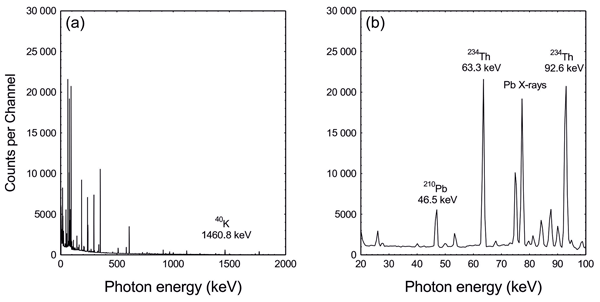
It is of critical importance to dosimetric dating techniques that the quantity of the radiation dose is estimated accurately. Here we describe gamma spectrometry in terms of instrument, measurement procedures, and data analyses required for estimating parent nuclide activities. The description includes analytical procedures required to generate data with sufficient accuracy and precision for samples in secular equilibrium. We also outline procedures required to quantify disequilibrium.
Annette Kadereit, Mariana Sontag-González, Sebastian Kreutzer, Marco Colombo, Christoph Schmidt, and Paul R. Hanson
EGUsphere, https://doi.org/10.5194/egusphere-2025-5978, https://doi.org/10.5194/egusphere-2025-5978, 2025
Short summary
Short summary
Infrared-stimulated luminescence (IRSL) dating of feldspar is an essential tool for dating sediments. Two major challenges of the IRSL signal are its “anomalous” instability potentially leading to age underestimation and its slow bleaching by sunlight which may cause age overestimation. Here we propose a progressively elevated temperature (PET) IRSL single aliquot regenerative (SAR) procedure to isolate a potentially stable IRSL signal from a set of best bleached subsamples.
Sebastian Kreutzer, Loïc Martin, Didier Miallier, and Norbert Mercier
Geochronology, 7, 229–246, https://doi.org/10.5194/gchron-7-229-2025, https://doi.org/10.5194/gchron-7-229-2025, 2025
Short summary
Short summary
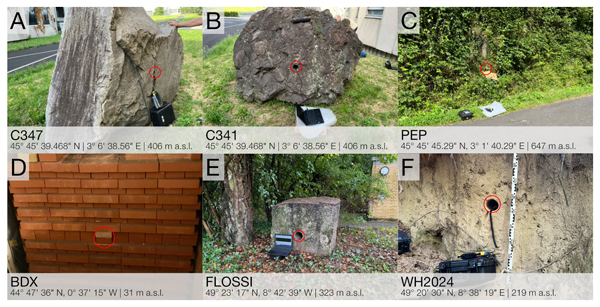
Accurate readings on the environmental gamma dose rate are important. Portable gamma-ray detectors, such as those that are NaI- or LaBr3-based, are easy to handle and affordable. Limited information on alternatives, like CZT (cadmium zinc telluride) detectors, is available. We tested CZT detectors and found them suitable for in-field deployment. We used simulations and field tests to evaluate the optimal energy threshold for direct dose rate readings, making the CZT system a reliable alternative.
Christoph Schmidt, Théo Halter, Paul R. Hanson, Alexey Ulianov, Benita Putlitz, Georgina E. King, and Sebastian Kreutzer
Geochronology, 6, 665–682, https://doi.org/10.5194/gchron-6-665-2024, https://doi.org/10.5194/gchron-6-665-2024, 2024
Short summary
Short summary
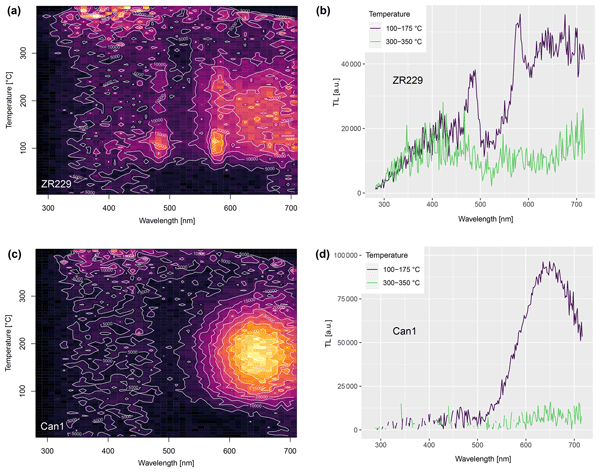
We study the use of zircons as dosimeters using modern techniques, highlighting their advantages such as time-invariant dose rates. We explore the correlation between zircon geochemistry and luminescence properties, observe fast zircon optically stimulated luminescence (OSL) bleaching rates, and assess the potential of auto-regeneration. Low OSL sensitivities require combining natural OSL and auto-regenerated thermoluminescence (TL), with the potential to enhance age accuracy and precision.
Mariana Sontag-González, Raju Kumar, Jean-Luc Schwenninger, Juergen Thieme, Sebastian Kreutzer, and Marine Frouin
Geochronology, 6, 77–88, https://doi.org/10.5194/gchron-6-77-2024, https://doi.org/10.5194/gchron-6-77-2024, 2024
Short summary
Short summary
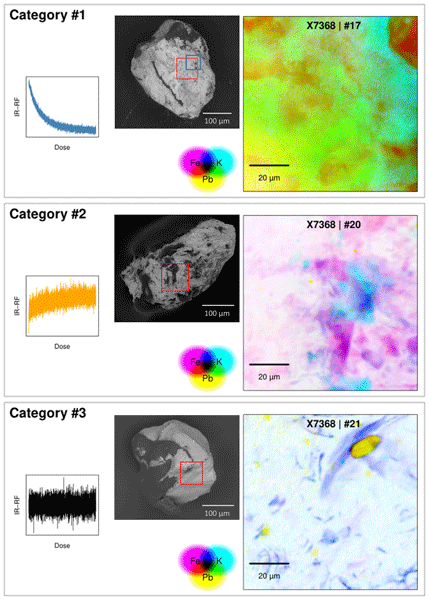
This is a preliminary study using a synchrotron light source to generate elemental maps, incorporating oxidation states, with a spatial resolution of <1 µm for individual grains within the K-feldspar density fraction. The elemental fingerprint characterizing grains with a signal suitable for infrared radiofluorescence dating reveals high levels of K, Pb, and Ba coupled with low levels of Fe and Ca. In contrast, grains exhibiting higher proportions of Fe and Ca produce an odd signal shape.
Nora Pfaffner, Annette Kadereit, Volker Karius, Thomas Kolb, Sebastian Kreutzer, and Daniela Sauer
E&G Quaternary Sci. J., 73, 1–22, https://doi.org/10.5194/egqsj-73-1-2024, https://doi.org/10.5194/egqsj-73-1-2024, 2024
Short summary
Short summary
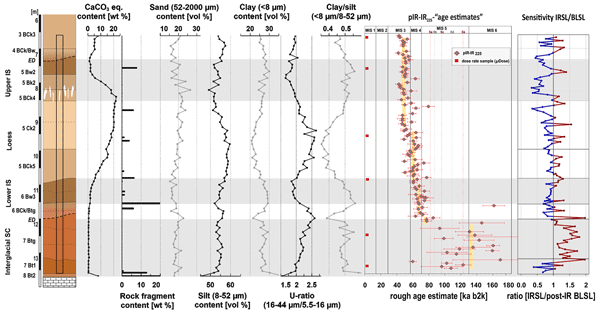
We present results of the Baix loess–palaeosol sequence, SE France. Reconstructed intense soil formation under warm, moist conditions before and into the last ice age and less intense soil formations in warm (temporarily moist) phases during the generally cold, dry ice age were validated with laboratory and dating techniques. This is particularly relevant as Baix is located in the temperate–Mediterranean climate transition zone, a sensitive zone that is susceptible to future climate changes.
Mathieu Bosq, Sebastian Kreutzer, Pascal Bertran, Philippe Lanos, Philippe Dufresne, and Christoph Schmidt
Earth Syst. Sci. Data, 15, 4689–4711, https://doi.org/10.5194/essd-15-4689-2023, https://doi.org/10.5194/essd-15-4689-2023, 2023
Short summary
Short summary
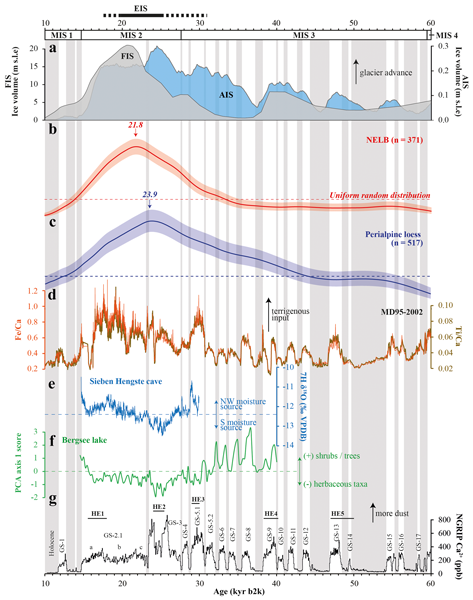
During the last glacial period, cold conditions associated with changes in atmospheric circulation resulted in the deposition of widespread loess. It seems that the phases of loess accumulation were not strictly synchronous. To test this hypothesis, the chronology of loess deposition in different regions of Europe was studied by recalculating 1423 luminescence ages in a database. Our study discusses the link between the main loess sedimentation phases and the maximal advance of glaciers.

Sebastian Kreutzer, Steve Grehl, Michael Höhne, Oliver Simmank, Kay Dornich, Grzegorz Adamiec, Christoph Burow, Helen M. Roberts, and Geoff A. T. Duller
Geochronology, 5, 271–284, https://doi.org/10.5194/gchron-5-271-2023, https://doi.org/10.5194/gchron-5-271-2023, 2023
Short summary
Short summary
The concept of open data has become the modern science meme. Funding bodies and publishers support open data. However, the open data mandate frequently encounters technical obstacles, such as a lack of a suitable data format for data sharing and long-term data preservation. Such issues are often community-specific and demand community-tailored solutions. We propose a new human-readable data format for data exchange and long-term preservation of luminescence data called XLUM.

Michael Dietze, Sebastian Kreutzer, Margret C. Fuchs, and Sascha Meszner
Geochronology, 4, 323–338, https://doi.org/10.5194/gchron-4-323-2022, https://doi.org/10.5194/gchron-4-323-2022, 2022
Short summary
Short summary
The R package sandbox is a collection of functions that allow the creation, sampling and analysis of fully virtual sediment sections, like having a virtual twin of real-world deposits. This article introduces the concept, features, and workflows required to use sandbox. It shows how a real-world sediment section can be mapped into the model and subsequently addresses a series of theoretical and practical questions, exploiting the flexibility of the model framework.

Norbert Mercier, Jean-Michel Galharret, Chantal Tribolo, Sebastian Kreutzer, and Anne Philippe
Geochronology, 4, 297–310, https://doi.org/10.5194/gchron-4-297-2022, https://doi.org/10.5194/gchron-4-297-2022, 2022
Short summary
Short summary
Dosimetric dating methods based on the analysis of luminescence signals emitted by granular minerals extracted from sedimentary deposits now play an important role in the study of the Quaternary. Here we propose a new approach in which the age of the deposit is calculated by combining the equivalent dose and dose-rate distributions. The underlying Bayesian mathematical model and its implementation via an R code are provided, together with the results obtained for a finite set of configurations.
Barbara Mauz, Paul J. Nolan, Sumia Abdualhadi, and Peter G. Appleby
Geochronology, 4, 213–225, https://doi.org/10.5194/gchron-4-213-2022, https://doi.org/10.5194/gchron-4-213-2022, 2022
Short summary
Short summary
It is of critical importance to dosimetric dating techniques that the quantity of the radiation dose is estimated accurately. Here we describe gamma spectrometry in terms of instrument, measurement procedures, and data analyses required for estimating parent nuclide activities. The description includes analytical procedures required to generate data with sufficient accuracy and precision for samples in secular equilibrium. We also outline procedures required to quantify disequilibrium.
Cited articles
Arnold, L. J., Duval, M., Demuro, M., Spooner, N. A., Santonja, M., and Pérez-González, A.: OSL dating of individual quartz `supergrains' from the Ancient Middle Palaeolithic site of Cuesta de la Bajada, Spain, Quat. Geochronol., 36, 78–101, https://doi.org/10.1016/j.quageo.2016.07.003, 2016.
Avram, A., Constantin, D., Veres, D., Kelemen, S., Obreht, I., Hambach, U., Marković, S. B., and Timar-Gabor, A.: Testing polymineral post-IR IRSL and quartz SAR-OSL protocols on Middle to Late Pleistocene loess at Batajnica, Serbia, Boreas, 49, 615–633, https://doi.org/10.1111/bor.12442, 2020.
Avram, A., Constantin, D., Hao, Q., and Timar-Gabor, A.: Optically stimulated luminescence dating of loess in South-Eastern China using quartz and polymineral fine grains, Quat. Geochronol., 67, 101226, https://doi.org/10.1016/j.quageo.2021.101226, 2022.
Avram, A., Mason, J. A., Del Valle Villalonga, L., Constantin, D., Grecu, S., Veres, D., Marković, S., and Timar-Gabor, A.: Revisiting the chronology of a key loess section in North America using multiple luminescence dating methods, Geol. Soc. Am. B., 137, 3207–3220, https://doi.org/10.1130/B38165.1, 2025.
Bailey, R. M.: Towards a general kinetic model for optically and thermally stimulated luminescence of quartz, Radiat. Meas., 33, 17–45, https://doi.org/10.1016/S1350-4487(00)00100-1, 2001.
Bailey, R. M.: Paper I – simulation of dose absorption in quartz over geological timescales and its implications for the precision and accuracy of optical dating, Radiat. Meas., 38, 299–310, https://doi.org/10.1016/j.radmeas.2003.09.005, 2004.
Berger, G. W. and Chen, R.: Error analysis and modelling of double saturating exponential dose response curves from SAR OSL dating, ATL, 29, 9–14, https://doi.org/10.26034/la.atl.2011.444, 2011.
Bulur, E. and Özer, A. M.: Comment on: A cautionary note: apparent sensitivity change resulting from curve fitting, ATL, 10, 12–14, https://doi.org/10.26034/la.atl.1992.191, 1992.
Burbidge, C. I.: A broadly applicable function for describing luminescence dose response, J. Applied Phys., 118, 044904, https://doi.org/10.1063/1.4927214, 2015.
Chapot, M. S., Roberts, H. M., Duller, G. A. T., and Lai, Z. P.: A comparison of natural- and laboratory-generated dose response curves for quartz optically stimulated luminescence signals from Chinese Loess, Radiat. Meas., 47, 1045–1052, https://doi.org/10.1016/j.radmeas.2012.09.001, 2012.
Cunningham, A. C. and Wallinga, J.: Selection of integration time intervals for quartz OSL decay curves, Quat. Geochronol., 5, 657–666, https://doi.org/10.1016/j.quageo.2010.08.004, 2010.
Duller, G. A. T.: Improving the accuracy and precision of equivalent doses determined using the optically stimulated luminescence signal from single grains of quartz, Radiat. Meas., 47, 770–777, https://doi.org/10.1016/j.radmeas.2012.01.006, 2012.
Fuchs, M., Kreutzer, S., Rousseau, D. D., Antoine, P., Hatté, C., Lagroix, F., Moine, O., Gauthier, C., Svoboda, J., and Lisá, L.: The loess sequence of Dolní Věstonice, Czech Republic: A new OSL-based chronology of the last climatic cycle, Boreas, 42, 664–677, https://doi.org/10.1111/j.1502-3885.2012.00299.x, 2013.
Fuchs, M., Kreutzer, S., Rousseau, D.-D., Antoine, P., Hatté, C., Lagroix, F., Moine, O., Gauthier, C., Svoboda, J., and Lisá, L.: The loess sequence of Dolní Věstonice, Czech Republic: A new OSL-based chronology of the last climatic cycle, Zenodo [data set], https://doi.org/10.5281/zenodo.8246533, 2023.
Grün, R. and Rhodes, E. J.: Simulations of saturating exponential ESR/TL dose response curves – weighting of intensity values by inverse variance, ATL, 10, 50–56, https://doi.org/10.26034/la.atl.1992.202, 1992.
Guralnik, B. and King, G. E.: Anomalous fading correction in luminescence dating – a mathematical reappraisal, Geochronology, 8, 589–606, https://doi.org/10.5194/gchron-8-589-2026, 2026.
Guralnik, B., Li, B., Jain, M., Chen, R., Paris, R. B., Murray, A. S., Li, S.-H., Pagonis, V., Valla, P. G., and Herman, F.: Radiation-induced growth and isothermal decay of infrared-stimulated luminescence from feldspar, Radiat. Meas., 81, 224–231, https://doi.org/10.1016/j.radmeas.2015.02.011, 2015.
Hayes, R. B., Haskell, E. H., and Kenner, G. H.: An assessment of the Levenberg-Marquardt fitting algorithm on saturating exponential data sets, Ancient TL, 16, 57–62, https://doi.org/10.26034/la.atl.1998.294, 1998.
Hu, Y., Li, B., and Jacobs, Z.: Single-Grain Quartz OSL Characteristics: Testing for Correlations within and between Sites in Asia, Europe and Africa, MPs, 3, 2, https://doi.org/10.3390/mps3010002, 2019.
Huntley, D. J., Short, M. A., and Dunphy, K.: Deep traps in quartz and their use for optical dating, Can. J. Phys., 74, 81–91, 1996.
Kars, R. H., Wallinga, J., and Cohen, K. M.: A new approach towards anomalous fading correction for feldspar IRSL dating – tests on samples in field saturation, Radiat. Meas., 43, 786–790, https://doi.org/10.1016/j.radmeas.2008.01.021, 2008.
King, G. E., Burow, C., Roberts, H. M., and Pearce, N. J. G.: Age determination using feldspar: Evaluating fading-correction model performance, Radiat. Meas., 119, 58–73, https://doi.org/10.1016/j.radmeas.2018.07.013, 2018.
Kitis, G., Polymeris, G. S., and Pagonis, V.: Stimulated luminescence emission: From phenomenological models to master analytical equations, Appl. Radiat. Isotopes, 153, 108797, https://doi.org/10.1016/j.apradiso.2019.05.041, 2019.
Kitis, G., Peng, J., Li, B., and Pagonis, V.: Testing new analytical expression for dose response curves originating from the OTOR model, J. Lumin., 244, 118747, https://doi.org/10.1016/j.jlumin.2022.118747, 2022.
Kitis, G., Polymeris, G. S., and Peng, J.: Determining equivalent dose for optically stimulated luminescence (OSL) dating with physically meaningful dose response curves, Quat. Geochronol., 88, 101671, https://doi.org/10.1016/j.quageo.2025.101671, 2025.
Kreutzer, S., Burow, C., Dietze, M., Fuchs, M. C., Schmidt, C., Fischer, M., Friedrich, J., Mercier, N., Philippe, A., Riedesel, S., Autzen, M., Mittelstrass, D., Gray, H. J., Galharret, J.-M., Colombo, M., Steinbuch, L., de Boer, A.-M., and Bluszcz, A.: Luminescence: Comprehensive luminescence dating data analysis (1.2.1), CRAN [code], https://doi.org/10.32614/CRAN.package.Luminescence, 2026.
Lawless, J. L. and Timar-Gabor, A.: A new analytical model to fit both fine and coarse grained quartz luminescence dose response curves, Radiat. Meas., 170, 107045, https://doi.org/10.1016/j.radmeas.2023.107045, 2024 (code available at: https://github.com/jll2/LumDRC, last access: May 2026).
Lawless, J. L., Chen, R., Lo, D., and Pagonis, V.: A model for non-monotonic dose dependence of thermoluminescence (TL), J. Phys.: Condens. Matter, 17, 737–753, https://doi.org/10.1088/0953-8984/17/4/016, 2005.
Lawless, J. L., Chen, R., and Pagonis, V.: Sublinear dose dependence of thermoluminescence and optically stimulated luminescence prior to the approach to saturation level, Radiat. Meas., 44, 606–610, https://doi.org/10.1016/j.radmeas.2009.03.003, 2009.
Li, B., Jacobs, Z., and Roberts, R. G.: Investigation of the applicability of standardised growth curves for OSL dating of quartz from Haua Fteah cave, Libya, Quat. Geochronol., 35, 1–15, https://doi.org/10.1016/j.quageo.2016.05.001, 2016.
Lowick, S. E. and Preusser, F.: Investigating age underestimation in the high dose region of optically stimulated luminescence using fine grain quartz, Quat. Geochronol., 6, 33–41, https://doi.org/10.1016/j.quageo.2010.08.001, 2011.
Lyons, R. G., Brennan, B. J., Hosking, P. L., and Brennan, B. J.: Estimation of accumulated dose and its uncertainties: potential pitfalls in curve fitting, ATL, 10, 42–49, https://doi.org/10.26034/la.atl.1992.201, 1992.
Mauz, B., Kreutzer, S., and Lawless, J.: Improving the estimation of high natural luminescence doses using OTOR solutions for SAR-derived data (Version 1.0), Zenodo [data set], https://doi.org/10.5281/zenodo.21226350, 2026.
Moré, J. J., Garbow, B. S., and Hillstrom, K. E.: User Guide for MINPACK-1, https://cds.cern.ch/record/126569/files/CM-P00068642.pdf (last access: 23 May 2026), 1980.
McKeever, W. S. and Chen, R.: Luminescence models, Radiat. Meas. 27, 625–661, https://doi.org/10.1016/S1350-4487(97)00203-5, 1997.
Meszner, S., Kreutzer, S., Fuchs, M., and Faust, D.: Late Pleistocene landscape dynamics in Saxony, Germany: Paleoenvironmental reconstruction using loess-paleosol sequences, Quaternary Int., 296, 94–107, https://doi.org/10.1016/j.quaint.2012.12.040, 2013.
Moska, P., Adamiec, G., and Jary, Z.: High resolution dating of loess profile from Biały Kościół, south–west Poland, Quat. Geochronol., 10, 87–93, https://doi.org/10.1016/j.quageo.2012.04.003, 2012.
Murray, A. S. and Wintle, A. G.: The single aliquot regenerative dose protocol: potential for improvements in reliability, Radiat. Meas., 37, 377–381, https://doi.org/10.1016/S1350-4487(03)00053-2, 2003.
Murray, A. S., Svendsen, J. I., Mangerud, J., and Astakhov, V. I.: Testing the accuracy of quartz OSL dating using a known-age Eemian site on the river Sula, northern Russia, Quat. Geochronol., 2, 102–109, https://doi.org/10.1016/j.quageo.2006.04.004, 2007.
Murray, A., Arnold, L. J., Buylaert, J.-P., Guerin, G., Qin, J., Singhvi, A. S., Smedley, R. and Thomsen, K. J.: Optically stimulated luminescence dating using quartz. Nature Reviews, Methods Primers, 1, 72, https://doi.org/10.1038/s43586-021-00068-5, 2021.
Pagonis, V., Kitis, G., and Chen, R.: A new analytical equation for the dose response of dosimetric materials, based on the Lambert W function, J. Lumin., 225, 117333, https://doi.org/10.1016/j.jlumin.2020.117333, 2020.
Peng, J. and Li, B.: Single-aliquot Regenerative-Dose (SAR) and Standardised Growth Curve (SGC) Equivalent Dose Determination in a Batch Model Using the R Package `numOSL', Ancient TL, 35, 32–53, https://doi.org/10.26034/la.atl.2017.516, 2017.
Peng, J., Wang, X., and Adamiec, G.: The build-up of the laboratory-generated dose-response curve and underestimation of equivalent dose for quartz OSL in the high dose region: A critical modelling study, Quat. Geochronol., 67, 101231, https://doi.org/10.1016/j.quageo.2021.101231, 2022.
R Core Team: R: A language and environment for statistical computing (v4.6.0), https://r-project.org/ (last access: 23 May 2026), 2026.
Singarayer, J. S. and Bailey, R. M.: Component-resolved bleaching spectra of quartz optically stimulated luminescence: preliminary results and implications for dating, Radiat. Meas., 38, 111–118, https://doi.org/10.1016/S1350-4487(03)00250-6, 2004.
Thomsen, K. J., Murray, A. S., Jain, M., and Bøtter-Jensen, L.: Laboratory fading rates of various luminescence signals from feldspar-rich sediment extracts, Radiat. Meas., 43, 1474–1486, https://doi.org/10.1016/j.radmeas.2008.06.002, 2008.
Thomsen, K. J., Murray, A. S., Buylaert, J. P., Jain, M., Hansen, J. H., and Aubry, T.: Testing single-grain quartz OSL methods using sediment samples with independent age control from the Bordes-Fitte rockshelter (Roches d'Abilly site, Central France), Quat. Geochronol., 31, 77–96, https://doi.org/10.1016/j.quageo.2015.11.002, 2016.
Timar, A., Vandenberghe, D., Panaiotu, E. C., Panaiotu, C. G., Necula, C., Cosma, C., and Van Den Haute, P.: Optical dating of Romanian loess using fine-grained quartz, Quat. Geochronol., 5, 143–148, https://doi.org/10.1016/j.quageo.2009.03.003, 2010.
Timar-Gabor, A., Vasiliniuc, Ş., Vandenberghe, D. A. G., Cosma, C., and Wintle, A. G.: Investigations into the reliability of SAR-OSL equivalent doses obtained for quartz samples displaying dose response curves with more than one component, Radiat. Meas., 47, 740–745, https://doi.org/10.1016/j.radmeas.2011.12.001, 2012.
Timar-Gabor, A. and Wintle, A. G.: On natural and laboratory generated dose response curves for quartz of different grain sizes from Romanian loess, Quat. Geochronol., 18, 34–40, https://doi.org/10.1016/j.quageo.2013.08.001, 2013.
Timar-Gabor, A., Constantin, D., Buylaert, J. P., Jain, M., Murray, A. S., and Wintle, A. G.: Fundamental investigations of natural and laboratory generated SAR dose response curves for quartz OSL in the high dose range, Radiat. Meas., 81, 150–156, https://doi.org/10.1016/j.radmeas.2015.01.013, 2015.
Timar-Gabor, A., Buylaert, J.-P., Guralnik, B., Trandafir-Antohi, O., Constantin, D., Anechitei-Deacu, V., Jain, M., Murray, A. S., Porat, N., Hao, Q., and Wintle, A. G.: On the importance of grain size in luminescence dating using quartz, Radiat. Meas., 106, 464–471, https://doi.org/10.1016/j.radmeas.2017.01.009, 2017.
Townsend, P. D., Wang, Y., and McKeever, S. W. S.: Spectral evidence for defect clustering: Relevance to radiation dosimetry materials, Radiat. Meas., 147, 106634, https://doi.org/10.1016/j.radmeas.2021.106634, 2021.
Tribolo, C., Mercier, N., Dumottay, C., Cantin, N., Banks, W. E., Stratford, D., De La Peña, P., Backwell, L., Wadley, L., and d'Errico, F.: Luminescence dating at Border Cave: attempts, questions, and new results, Quaternary Sci. Rev., 296, 107787, https://doi.org/10.1016/j.quascirev.2022.107787, 2022.
Veres, D., Tecsa, V., Gerasimenko, N., Zeeden, C., Hambach, U., and Timar-Gabor, A.: Short-term soil formation events in last glacial east European loess, evidence from multi-method luminescence dating, Quaternary Sci. Rev., 200, 34–51, https://doi.org/10.1016/j.quascirev.2018.09.037, 2018.
Wintle, A. G. and Murray, A. S.: A review of quartz optically stimulated luminescence characteristics and their relevance in single-aliquot regeneration dating protocols, Radiat. Meas., 41, 369–391, https://doi.org/10.1016/j.radmeas.2005.11.001, 2006.
Yoshida, H., Roberts, R. G., Olley, J. M., Laslett, G. M., and Galbraith, R. F.: Extending the age range of optical dating using single 'supergrains' of quartz, Radiat. Meas., 32, 439–446, https://doi.org/10.1016/S1350-4487(99)00287-5, 2000.
Short summary
Our study addresses a common problem in luminescence dating: age underestimation when the dose to be determined is relatively high. Using the simplest of all models applicable to the system, we show that the dose estimate is considerably higher when a particular parameter is included in the function used to fit the measurement data. Our study benefits from the combination of theory, software development and empirical evidence obtained from real-world samples.
Our study addresses a common problem in luminescence dating: age underestimation when the dose...


